
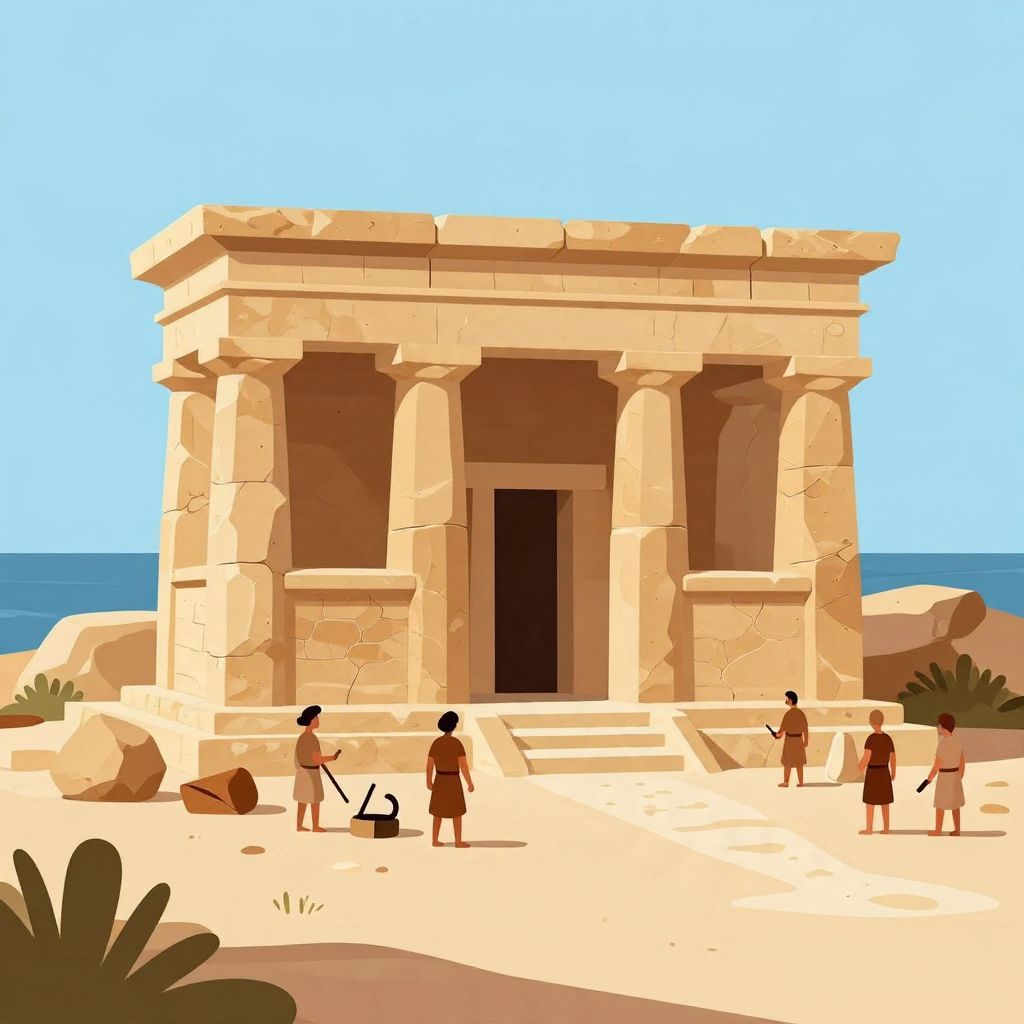
When people ask, “What is the oldest building in the world?” they are usually looking for a single oldest structure still standing. The honest historical answer is more complicated. It depends on what counts as a building, how much of the original structure survives, and whether we mean the oldest house, temple, monument, or large architectural complex.
Still, one place is often named first in this discussion: the megalithic temples of Malta, especially Ġgantija, which dates to roughly 3600–3200 BCE. These are among the oldest free-standing stone buildings known anywhere in the world, and they help define the deep origins of monumental architecture.
What is the oldest building in the world?
The oldest surviving buildings are generally considered to be the Maltese megalithic temples, with Ġgantija on the island of Gozo often cited as the oldest. Built in the late Neolithic period, it predates the pyramids of Egypt and most other famous ancient monuments. However, “oldest” depends on definition: some sites are older as settlements, but not as standing buildings.
Why the answer is not as simple as one name
History and archaeology rarely give neat superlatives. A structure may be older than another but only partly preserved. Some ancient dwellings were rebuilt many times. Others survive in foundations rather than full walls. So when scholars discuss the oldest building in the world, they usually mean the oldest substantial standing structure that can still be identified as a building.
Different meanings of “oldest”
- Oldest surviving building: the earliest structure still standing in recognizable form.
- Oldest occupied building: a structure still used or inhabited today.
- Oldest religious building: a temple, shrine, or sacred enclosure.
- Oldest architectural complex: a group of buildings rather than one single structure.
Because of these differences, there is no universally accepted single winner. The safest historical answer is that the Maltese temples, especially Ġgantija, are among the oldest known freestanding buildings on Earth.
The strongest candidate: Ġgantija in Malta
Ġgantija, on the island of Gozo in Malta, is usually dated to around 3600–3200 BCE. It is part of a wider tradition of Maltese temple-building that flourished in the Neolithic era. The site consists of massive limestone blocks arranged into temple chambers and courtyards, showing remarkable planning for a society that had no metal tools or wheeled transport.
Why Ġgantija matters
Ġgantija is important because it is not just old; it is also architecturally sophisticated. Its builders created large, carefully arranged megalithic spaces long before the rise of the great urban civilizations of Mesopotamia and Egypt. That makes it one of the clearest examples of early monumental architecture in the prehistoric Mediterranean.
The name and the legend
The name Ġgantija comes from a local tradition that giants built the temple. This is folklore, not history. The actual builders were Neolithic communities whose names are unknown to us. Archaeology, not legend, provides the evidence for the temple’s age and function.
Other very ancient buildings often mentioned
Several other sites are sometimes included in lists of the world’s oldest buildings. Some are older in origin but less complete; others are better preserved but slightly later. Comparing them helps show why the question is debated.
Skara Brae, Scotland
Skara Brae in Orkney, Scotland, dates to about 3180–2500 BCE. It is one of the best-preserved prehistoric village sites in Europe, with stone houses, furniture, and passageways still visible. It is older than many famous ancient monuments, but it is usually described as a settlement or village rather than a single building.
Cairn of Barnenez, France
The Cairn of Barnenez in Brittany, France, is an early Neolithic burial monument dating to around 4850 BCE. It is extremely old, but it is a cairn and tomb complex rather than a conventional building. That distinction matters when answering the question precisely.
Jericho and Çatalhöyük
Sites such as Jericho and Çatalhöyük are among the earliest known human settlements. They are crucial to the history of architecture and urban life, but much of what survives is in the form of foundations, reconstructions, or buried remains. They show the beginnings of built environments, not necessarily the oldest standing building in the strict sense.
What makes the Maltese temples so exceptional?
The Maltese temple culture is unusual because it produced large stone sanctuaries on a small island group with no known written records. The builders quarried, transported, and shaped enormous limestone blocks using prehistoric methods. Their temples also show repeated phases of construction, use, and remodeling, suggesting a long-lived ritual tradition.
Materials and construction
The temples were built mainly from local limestone. Some stones are massive, weighing many tons. Archaeologists believe the builders used rollers, levers, and coordinated labor, though the exact techniques remain partly uncertain. The achievement is impressive not because it required modern technology, but because it did not.
Religious purpose
Most scholars interpret these sites as ceremonial or religious buildings. Offerings, altars, and shaped interior spaces support that view. Since the people who built them left no written explanation, the precise rituals remain unknown. What is clear is that these were not ordinary homes: they were special places in prehistoric society.
How old is “old” in world history?
The oldest buildings belong to the late Stone Age, before the invention of writing in most regions. That means their history must be reconstructed from archaeology rather than texts. This is one reason the answer to “what is the oldest building in the world?” is always provisional: new excavations, new dating methods, and new interpretations can change the picture.
Why archaeology changes the answer
- Radiocarbon dating can refine or revise older estimates.
- Sites may be reclassified as houses, shrines, tombs, or enclosures.
- Erosion and reconstruction can make a structure appear older or younger than it is.
- Scholars may disagree over whether a ruin counts as a “building.”
Oldest building versus oldest civilization
It is easy to confuse the oldest building with the oldest civilization. They are not the same. A civilization may be famous for writing, cities, and states, yet its surviving architecture may be younger than a prehistoric monument elsewhere. Likewise, a prehistoric temple can be older than a literate empire without belonging to a civilization in the later historical sense.
The broader historical significance
The oldest buildings show that human beings were creating sacred and communal spaces long before the first kingdoms and empires. They reveal organization, shared belief, technical skill, and the ability to mobilize labor. In that sense, these structures are not just old stones; they are evidence of early social complexity.
So what is the best short answer?
If you want the most accurate concise answer, it is this: the oldest surviving buildings in the world are generally considered to be the Neolithic megalithic temples of Malta, especially Ġgantija, dating to around 3600–3200 BCE. They are among the earliest known freestanding stone buildings and a landmark in the history of architecture.
Why this question still matters
People ask about the oldest building in the world because it connects us to the deep past in a tangible way. A building can outlast the language of its makers, the political system they lived under, and even the memory of their names. What survives is evidence of human creativity, belief, and endurance.
That is why the oldest building question is not just about age. It is about how historians define evidence, how archaeologists reconstruct prehistory, and how ancient people first turned stone into meaningful space. If you want to keep exploring early monuments, you may also enjoy reading about what the Acropolis is and which country has the most pyramids.