
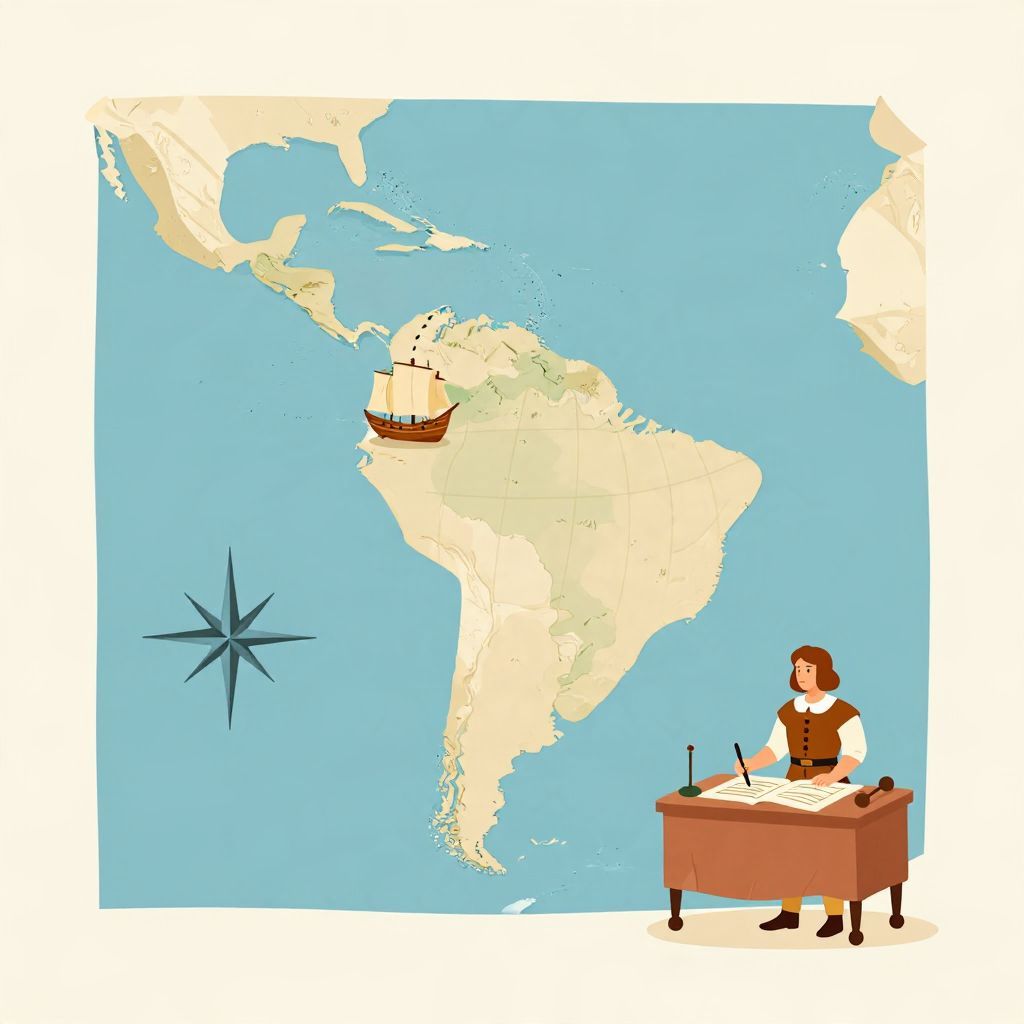
What was America called before America? The short answer is that there was no single, universal name for the lands later called America. Different Indigenous nations had their own names for their homelands, while Europeans used terms such as the Indies, the New World, and, later, the Americas.
The word America itself is relatively recent, appearing on European maps in the early 1500s. To answer the question properly, we have to separate Indigenous geography from European naming, because the continent already had many names long before Europeans arrived.
What Was America Called Before America?
Before the name America became common, the land was known by many different names depending on who was speaking. Indigenous peoples used their own names for regions, nations, and homelands. Europeans, meanwhile, often called the land the Indies, the New World, or simply parts of Asia until they understood it was a separate landmass.
The Land Had Many Indigenous Names Long Before Europe Arrived
There was never one single pre-Columbian name for “America,” because the continent was home to hundreds of distinct societies with their own languages and geographic terms. In many Indigenous traditions, identity was tied to nation, river, valley, mountain, or homeland rather than to a continent-wide label. That means the most accurate answer is plural: there were many names, not one.
Examples of Indigenous place names
- Turtle Island — a name used in some Indigenous traditions, especially among certain North American peoples, for the land of North America.
- Anáhuac — used in Nahua contexts for the central Mexican region.
- Abya Yala — a term used by the Guna people and later adopted by some Indigenous activists for the Americas.
- Tahuantinsuyu — the Inca state’s name for its empire in the Andes, not the whole continent, but an important example of pre-European regional naming.
These names were not interchangeable and did not describe one unified continent in the modern sense. They reflected local political and cultural worlds. In other words, the question “What was America called before America?” can only be answered carefully: Indigenous peoples called their own lands by many different names, and those names remain historically important.
When Did the Name “America” Appear?
The name America became associated with the lands across the Atlantic in the early 16th century. It is usually linked to the German cartographer Martin Waldseemüller, who used the feminine Latin form “America” on a world map published in 1507. He intended it to honor Amerigo Vespucci, whose writings suggested that the newly encountered lands were not Asia but a separate continent.
Why Vespucci mattered
Vespucci did not “discover” America in the modern sense, and he did not name the continent himself. But his accounts helped European readers understand that these lands were not simply the eastern edge of Asia. That idea was crucial. Once Europeans accepted that the Atlantic lands were a separate world, mapmakers needed a new label for them.
Waldseemüller’s 1507 map is often treated as the first major use of the name, though the naming process was not immediate or uniform. Mapmakers and writers did not all adopt “America” at once. The term spread gradually through European cartography and scholarship.
What Europeans Called the Land Before “America”
Before “America” became standard, Europeans used several different terms, often based on incomplete knowledge. The most common were the Indies, the New World, and, in some contexts, parts of Asia. These names reveal how Europeans first understood the lands they encountered: as places connected to existing trade dreams, not yet as a separate hemisphere.
The Indies
When Christopher Columbus crossed the Atlantic in 1492, he believed he had reached the outskirts of Asia. Because of that, Europeans often called the islands and mainland they encountered the Indies. This is why the Caribbean was long called the West Indies, a name that survived even after Europe realized the region was not in Asia.
The New World
The phrase New World became a popular European term in the 16th century. It contrasted with the “Old World” of Europe, Asia, and Africa. The phrase did not mean the land was literally new; rather, it was new to Europeans. That distinction matters, because the Americas were inhabited for thousands of years before European arrival.
Asia, India, and other mistaken labels
Early European explorers sometimes described the lands as parts of Asia or “India” because they were searching for a westward route to Asian markets. These labels were products of uncertainty, not accurate geography. As more voyages accumulated evidence, European cartographers slowly revised the map of the world.
Why There Was No Single Pre-American Name
The idea of one name for the entire landmass is a modern habit. Before European colonization, the Americas were not usually imagined as a single political or cultural unit. They contained many civilizations, languages, trade networks, and ecological zones. The concept of one continent called “America” emerged from European mapping, not from a shared Indigenous continental identity.
Different regions, different worlds
In North America, peoples such as the Haudenosaunee, Navajo, Anishinaabe, and many others had their own names for their territories. In Mesoamerica, societies such as the Mexica and Maya used their own regional and political terms. In South America, the Inca and numerous other peoples had distinct place names and state names. A single continental label would have obscured these differences.
This is one reason historians are careful with the phrase “before America.” It can imply that the continent was waiting to be named, when in fact it was already full of named places and peoples.
Did Indigenous Peoples Call It “Turtle Island”?
Turtle Island is widely used today, but it is not a universal ancient name for all of North America. It comes from certain Indigenous creation traditions, especially among some peoples in the northeastern part of the continent. In modern usage, it has also become a broader Indigenous and decolonial term for North America. That makes it important culturally, but it should not be presented as the single original name of the continent.
Similarly, Abya Yala is often used as a pan-Indigenous name for the Americas, especially in Latin American Indigenous activism. It is meaningful in modern political and cultural contexts, but it is not evidence that all Indigenous peoples historically shared one name for the whole landmass.
How the Name “America” Changed History
The adoption of the name America was more than a cartographic detail. It helped Europeans frame the lands as a distinct place open to conquest, settlement, extraction, and empire. Naming and power were closely linked. Once mapped as a separate world, the continent became easier for European states to claim and divide.
From map label to political reality
Over time, “America” came to mean different things in different contexts:
- Geographically, it referred to one or both continents in the Western Hemisphere.
- Politically, it could mean the United States of America after the late 18th century.
- Culturally, it became associated with a wide range of identities across North, Central, and South America.
This layered meaning is why the word can be confusing. In everyday speech, “America” often means the United States, but historically the term originally referred more broadly to the lands of the New World.
The Historical Answer in Plain Terms
If you are asking what the land was called before the word America existed, the answer depends on whose perspective you mean. Indigenous peoples used many names for their own homelands. Early Europeans called the region the Indies, the New World, or even Asia before they understood it was separate. There was no single original name for the entire continent.
Why This Question Still Matters
Asking what America was called before America is really a question about perspective, power, and memory. Names are not just labels; they reflect who is naming, what they know, and what they want to claim. For Indigenous peoples, the continent was never nameless. For Europeans, the act of naming helped turn a diverse inhabited world into a colonial map.
The best historical takeaway is simple: America was not “discovered” as a blank space, and it was not called one thing before it was called America. It had many names, many peoples, and many histories long before the word appeared on European maps. For related reading, see where the name America came from and why Europeans came to America.