
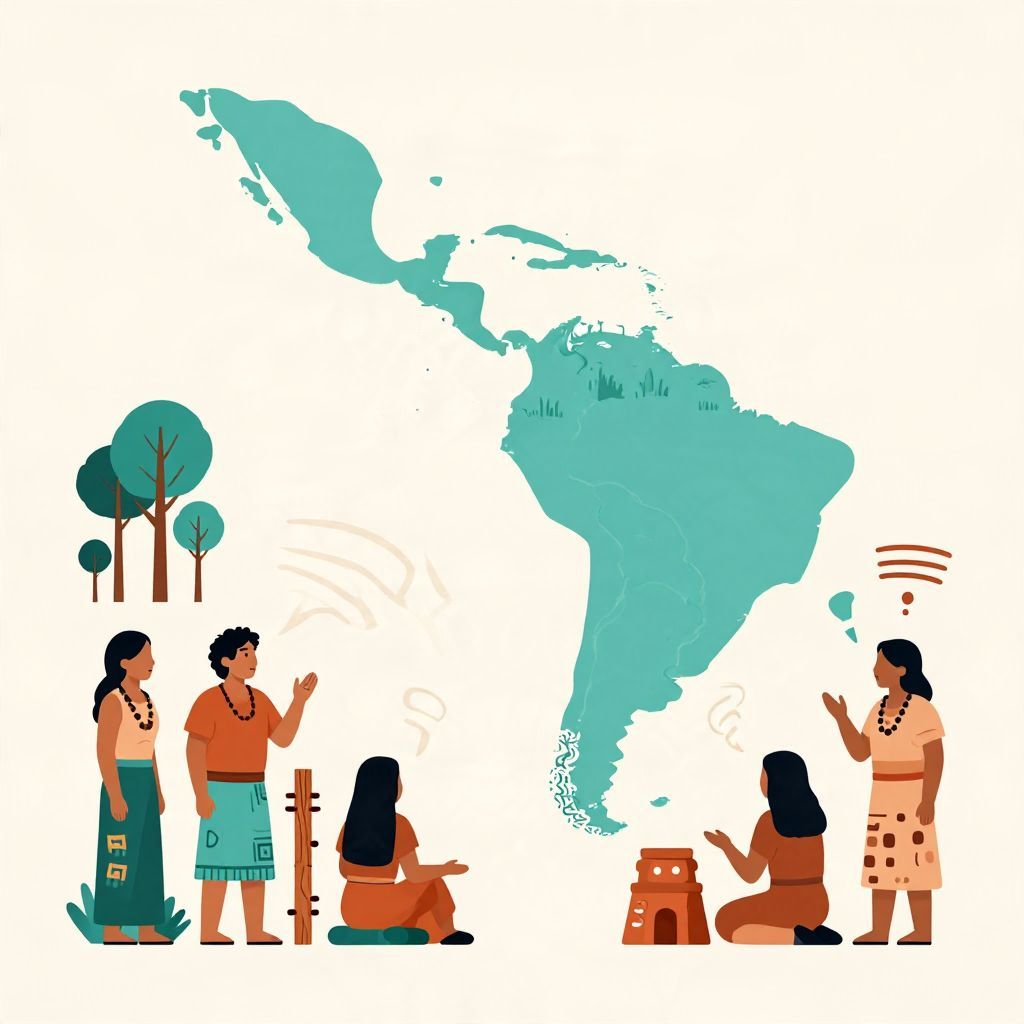
What was America’s first language? The short answer is that there was no single “first language” for America as a whole. Long before English, Spanish, or French arrived, the lands now called the Americas were home to thousands of Indigenous languages, each with its own history.
So the answer depends on what “America” means: the continent, the United States, or the first European colonies. In historical terms, the earliest languages spoken in the Americas were Indigenous languages that developed over many thousands of years, while the first European colonial languages appeared only after 1492.
What Was America’s First Language?
There was no single first language of America. The earliest known languages in the Americas were the many Indigenous languages spoken by Native peoples long before Europeans arrived. If the question means the first European language in what became the United States, Spanish came first in the 1500s, followed later by English, French, Dutch, and others.
The Earliest Languages in the Americas Were Indigenous
Human beings had already lived in the Americas for many millennia before any European contact. Those communities developed and passed down languages over long periods, creating a rich linguistic landscape. Because writing systems were limited or absent in many regions, historians and linguists reconstruct these languages from later records, oral traditions, and comparative study rather than from a single “first” document.
Why there was never just one language
The Americas were never linguistically uniform. Geography alone encouraged diversity: mountains, rainforests, deserts, plains, islands, and river systems often separated communities and allowed languages to evolve independently. Trade, migration, conquest, and alliance also shaped language change, but not toward one common tongue. Instead, the continent developed hundreds of language families and many more individual languages.
Some of the best-known Indigenous language families include:
- Algonquian languages in much of eastern North America
- Iroquoian languages in the Northeast and Great Lakes region
- Siouan languages across parts of the Plains and Southeast
- Uto-Aztecan languages in the Southwest and Mexico
- Mayan languages in Mesoamerica
- Quechuan and Aymaran languages in the Andes
These are only a few examples. Many other language families and isolates existed as well. The important historical point is that the first languages of America were not imported from Europe; they were native to the hemisphere.
How Long Have Languages Been Spoken in the Americas?
The exact date when the first human languages were spoken in the Americas is impossible to know. Humans likely entered the continent at least by the late Ice Age, with many scholars placing initial settlement roughly between 15,000 and 20,000 years ago, though some evidence suggests even earlier presence may be possible. Language would have been present wherever human communities lived, but it left no direct fossil record.
What historians and linguists can say with confidence
Researchers can identify language relationships, estimate how languages evolved, and sometimes reconstruct older forms of speech. But they cannot name a single “first” American language. That is because language changes continuously. Over thousands of years, even closely related languages become distinct. A language spoken by the first settlers would not have remained unchanged into later centuries.
In other words, the earliest languages of America were ancient, but they were not static. They evolved into the diverse linguistic world encountered by Europeans after 1492.
What Was the First European Language in America?
If “America” means the lands colonized by Europeans after Columbus, then the first European language in parts of the Americas was Spanish. Spanish explorers and settlers reached the Caribbean in the late 1400s and early 1500s, and Spanish became the dominant colonial language in large parts of Latin America and the Southwest of what is now the United States.
Spanish arrived before English in many regions
Christopher Columbus’s voyages beginning in 1492 opened sustained European contact with the Caribbean. Spanish colonization followed quickly. By the early 1500s, Spanish was being used in administration, religion, trade, and settlement across Spanish America. In North America, Spanish presence appeared early in Florida, the Southwest, and along the Gulf Coast.
English came later. English colonies were established in North America in the early 1600s, most famously at Jamestown in 1607 and Plymouth in 1620. French and Dutch also established colonial settlements in parts of North America during the same broad period. So if the question is about colonial languages in the future United States, Spanish arrived before English, but English eventually became the dominant national language through later settlement and political power.
What Was the First Language in the Land That Became the United States?
The first languages spoken in the territory that became the United States were Indigenous languages, not English. Native peoples had lived across the region for thousands of years before European settlement. Their languages included dozens of distinct language families and hundreds of local varieties, from the Northeast woodlands to the Southwest deserts and the Pacific coast.
Examples from different regions
In the Northeast, peoples such as the Wampanoag, Lenape, and Mohawk spoke languages from different families. In the Southeast, languages such as Cherokee and Muskogean languages were prominent. In the Great Plains, Siouan languages were widely spoken. In the Southwest, many communities spoke Uto-Aztecan, Puebloan, and other languages. On the Pacific coast and in Alaska, still other language traditions existed.
This diversity matters because it shows that “America’s first language” is not a single answer but a historical category shaped by how the question is asked.
Why the Question Is Hard to Answer in One Sentence
The phrase “America’s first language” can mean several different things, and each produces a different answer. Historians must separate those meanings to avoid oversimplifying the past.
- If “America” means the continents, the first languages were Indigenous languages spoken by the earliest inhabitants.
- If “America” means the United States, the first languages were also Indigenous languages, long before English.
- If “first European language” is meant, Spanish was among the earliest in the Americas and in parts of what is now the United States.
- If “national language” is meant, English became dominant in the United States only after colonization, immigration, and state formation.
This is why a careful historical answer must begin with definitions. “First” is not always a simple chronological label; it often depends on which people, which region, and which period are being discussed.
How Indigenous Languages Shaped Early American History
Indigenous languages were central to diplomacy, trade, war, kinship, religion, and everyday life. Early European settlers depended on Native interpreters to communicate, negotiate alliances, and survive. In many places, Europeans learned local languages because they had to. Language was not only a means of communication but also a source of power and cultural continuity.
Language contact changed the continent
As Europeans arrived, language contact produced new forms of speech and new communities. Some Native languages borrowed European words for new goods and technologies. Some colonial languages borrowed Indigenous words for places, foods, animals, and political concepts. Over time, forced displacement, boarding schools, missionary efforts, and assimilation policies caused severe language loss in many Native communities.
Even so, many Indigenous languages survived. Today, language revitalization efforts across the Americas are helping communities teach, preserve, and expand the use of ancestral languages. That modern work is part of the long history of the continent’s first languages.
Common Misconceptions About America’s First Language
One common misconception is that English was America’s first language because it became the language of the United States. That is not historically accurate. English became politically dominant much later, and only in a limited geographic sense at first.
Another misconception is that there was a single ancient “American language” spoken by all Native peoples. There is no evidence for that. The linguistic diversity of the Americas was immense, and while some scholars have proposed distant relationships among language families, those theories remain debated and do not reduce the continent to one original tongue.
A third misconception is that written records are the only valid evidence of language history. In reality, oral tradition, comparative linguistics, archaeology, and colonial documentation all help reconstruct the past, even when no early written texts survive.
The Historical Meaning of “First Language”
In everyday speech, “first language” can mean the language a person learns first at home. In history, however, the phrase can also mean the earliest language spoken in a place, the earliest written language, or the first colonial language introduced by outsiders. Those are very different questions.
For America, the most historically responsible answer is that the first languages were Indigenous languages, spoken for thousands of years before European colonization. There was never one single “America language,” and the continent’s linguistic history is one of diversity, migration, contact, and survival.
Conclusion: So What Was America’s First Language?
America’s first language was not English, Spanish, or French. It was the many Indigenous languages spoken by the first peoples of the Americas long before Europeans arrived. If you mean the first European language in the Americas, Spanish came early; if you mean the language that later became dominant in the United States, that was English. For more context, see what languages Native Americans spoke and what America was called before America.