
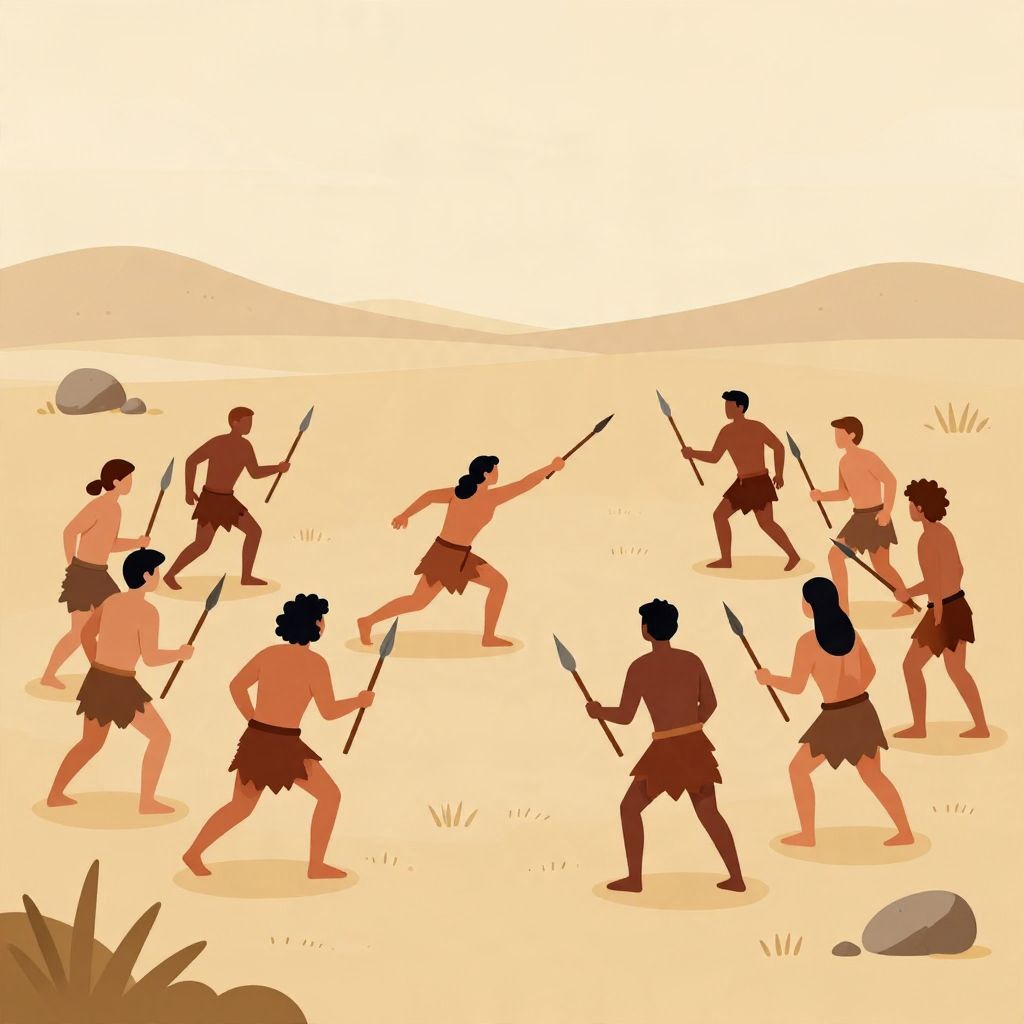
People often ask what the first sport invented was, but the answer depends on how you define “sport.” If you mean the earliest organized physical competition with rules, the evidence points to ancient wrestling, running, and ball games appearing in multiple early civilizations. If you mean the first sport with a clearly documented tradition, ancient wrestling is one of the strongest candidates.
The history is less about a single invention and more about humans turning useful skills—running, throwing, grappling, and hunting—into formal contests. Those contests became sports when societies added rules, spectators, prizes, and ritual meaning.
What Was the First Sport Invented?
There is no single universally accepted “first sport.” The best historical answer is that wrestling is among the oldest documented sports, with evidence from ancient Mesopotamia and Egypt dating back more than 4,000 years. Running contests and ball games are also extremely ancient, so the first sport was likely not one event but several early forms of competition developing independently.
Why the Question Is Hard to Answer
Modern sports are defined by written rules, leagues, and standardized competition. Ancient societies did not always separate “sport” from ritual, military training, or festival entertainment. That means historians must ask a broader question: when did people first organize physical contests for skill, honor, or public display?
Sport before modern sport
Long before stadiums and scoreboards, people competed in activities that tested strength, speed, balance, and coordination. These contests may have begun as training for survival or warfare, then became ceremonial or recreational. In that sense, sport emerged gradually rather than being invented at one exact moment.
Evidence versus legend
Some popular claims name a single “first sport,” but the historical record rarely supports that. Archaeology, wall art, and early texts show multiple ancient sports at roughly similar times. Because evidence survives unevenly, the earliest known sport may simply be the one we can document best, not necessarily the one that truly came first.
Wrestling: The Strongest Candidate for the Earliest Sport
Wrestling is often considered the oldest sport because it appears in some of the earliest surviving records of organized competition. Images and scenes of grappling are found in ancient Egyptian tombs and Mesopotamian art from the third millennium BCE, showing that people were already formalizing hand-to-hand contests very early in recorded history.
Why wrestling appears so early
Wrestling is simple to organize, requires little equipment, and can be practiced almost anywhere. It also naturally fits human physical instincts: balance, leverage, and controlled force. These qualities made it ideal for both training and public competition in early societies.
Ancient examples
- Mesopotamia: Early art and reliefs show grappling scenes in the third millennium BCE.
- Egypt: Tomb paintings from the Old Kingdom period, around 2300 BCE, depict many wrestling holds.
- Greece: Wrestling later became a formal Olympic event by 708 BCE, but it was already ancient by then.
These examples do not prove wrestling was invented in one place. They do show that it was one of the earliest sports to become visible in the historical record.
Other Very Early Sports and Competitive Games
Although wrestling is the leading candidate, several other sports are nearly as old. The first sport may have been running, boxing, or a ball game, depending on how one defines “sport” and which evidence one prioritizes.
Running
Running is likely older than any written record. Humans have always run, but a race becomes a sport only when people compete under agreed conditions. Ancient footraces were part of festivals and military training in many cultures. The famous Olympic stadion race in Greece, for example, was a formal sprint event by the eighth century BCE.
Boxing
Boxing is also ancient. Egyptian and later Greek evidence shows hand-to-hand striking contests. In Greece, boxing became a recognized athletic event, though the earliest origins are probably much older and harder to trace. Like wrestling, it grew naturally from combat skills.
Ball games
Ball games are among the oldest known team or group competitions. Ancient Mesoamerican cultures developed sophisticated ball games thousands of years ago, while other civilizations had their own versions of kicking, throwing, or striking a ball. Some of these games were deeply religious as well as athletic, which makes them important but difficult to compare directly with modern sports.
How Ancient Sports Developed
Early sports did not appear fully formed. They developed from practical human activities that became socialized over time. Hunting skills, combat training, seasonal festivals, and community gatherings all helped shape the first formal contests.
From survival skill to public spectacle
A person who could run fast, wrestle well, or throw accurately had obvious advantages in daily life. Communities eventually turned those abilities into contests, often to honor gods, celebrate rulers, or strengthen group identity. Once rules and audiences were added, the activity became a sport in the historical sense.
Why societies valued competition
Ancient sports served several purposes:
- They trained warriors and hunters.
- They displayed strength, discipline, and honor.
- They entertained crowds at festivals.
- They reinforced social and religious traditions.
This is why sports spread across many early civilizations. They answered practical needs while also satisfying cultural ones.
The Role of Ancient Civilizations
Several early societies left evidence of organized competition, and each contributed to the history of sport in different ways. No single civilization can claim to have invented all sports, but some preserved the earliest records.
Egypt
Ancient Egypt provides some of the clearest visual evidence for early athletics. Tomb art shows wrestling, archery, swimming, and other physical contests. These images suggest that sport was part of elite culture and ritual life, not just casual play.
Mesopotamia
In Mesopotamia, early art and literature show that physical contests were well known. While the exact rules are often lost, the repeated appearance of grappling scenes indicates that competition had social importance.
Greece
The ancient Greeks did not invent sport from nothing, but they systematized it. The Olympic Games, beginning in 776 BCE according to traditional dating, created a famous model of regular athletic competition. Greek sports helped define the idea of formal contests with prizes, records, and public prestige.
China and Mesoamerica
Other regions also developed early sports and games independently. China had long traditions of archery, cuju, and other physical contests, while Mesoamerican societies developed ceremonial ball games with deep cultural meaning. These traditions remind us that “the first sport” is not a purely European story.
What Counts as a Sport?
The answer changes depending on definition. If sport means any physical contest, then wrestling, running, and throwing games may all qualify very early. If sport means a codified activity with fixed rules and public competition, then the Greek and later Roman worlds become more important. If sport means a game played mainly for recreation, then the history stretches even further back into prehistory.
Three useful definitions
- Physical contest: the broadest definition, including informal races or grappling.
- Organized athletic event: a contest with rules, judges, and spectators.
- Modern sport: standardized competition with formal institutions and written regulations.
Under the first definition, the earliest sport may be prehistoric and impossible to name with certainty. Under the second, wrestling is one of the oldest clear candidates. Under the third, no ancient civilization invented “sport” as we know it today; modern sport emerged much later.
So, Was There a Single First Sport?
Probably not. The historical evidence suggests that several sports emerged independently in different places as people transformed everyday physical skills into organized contests. Wrestling stands out because it is both ancient and well documented, but running, boxing, and ball games are also extremely old. The safest historical conclusion is that sport was invented gradually, not all at once.
Why This History Still Matters
Tracing the first sport helps explain why athletics remain so universal. Competition is part of human culture, but the form it takes depends on society. Ancient sports were tied to religion, training, status, and community identity. Over time, those contests evolved into the modern games we recognize today.
So, if you are looking for the shortest answer to “What was the first sport invented?”, wrestling is the best-supported candidate—but the deeper truth is that sport has multiple origins. For more on early historical “firsts,” you may also enjoy what was the first and, for a different kind of origin story, what was the first war.