
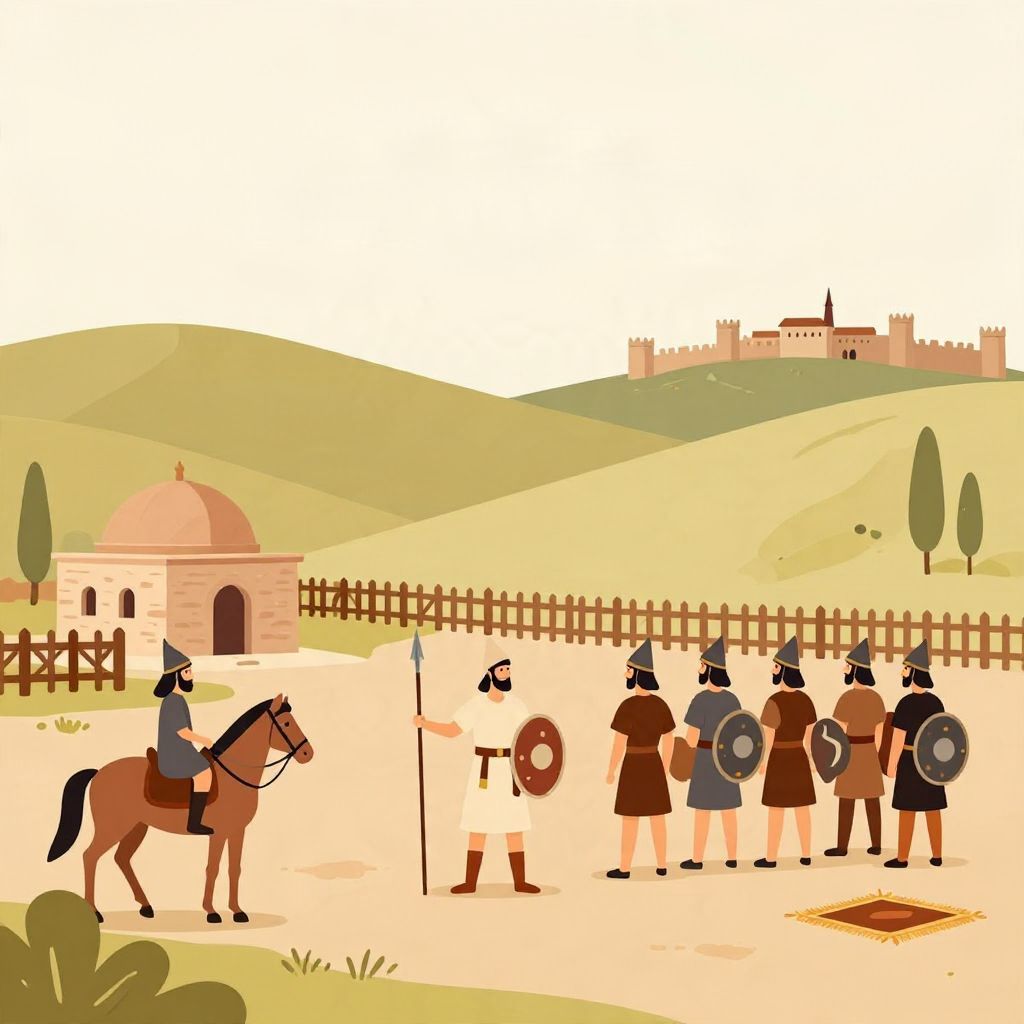
When did the Ottoman Empire start? The short answer is that historians usually date its beginnings to 1299, when Osman I emerged as an independent ruler in northwestern Anatolia. But the empire did not appear overnight. It grew out of a frontier beylik, or small principality, in the collapsing world of the Seljuk Turks and Byzantine borderlands.
That means the Ottoman Empire’s “start” depends a little on how you define an empire: as a ruling house, a political state, or a major imperial power. The dynasty began in the late 13th century, but its real transformation into an empire came later, especially in the 14th and 15th centuries.
When Did the Ottoman Empire Start?
The Ottoman Empire is most commonly said to have started in 1299, the traditional date associated with Osman I’s emergence as an independent leader in Anatolia. However, this date is partly conventional. The Ottoman state developed gradually, and many historians see its rise as a process that unfolded between the late 1200s and early 1300s rather than a single founding moment.
Why 1299 Is the Traditional Starting Date
1299 became the standard date because it marks the point when Osman I is traditionally understood to have acted as a sovereign ruler rather than a subordinate frontier lord. In Ottoman historical memory, this date symbolized the birth of a new dynasty. Modern scholars, however, note that contemporary records are limited, so the exact year is less certain than the broader historical trend.
Osman I and the Ottoman Beylik
Osman I, from whom the Ottoman dynasty takes its name, ruled a small frontier principality in northwestern Anatolia. This region sat between the weakening Byzantine Empire and other Turkish beyliks that had emerged after the decline of Seljuk power. The Ottomans were not yet an empire in the grand sense; they were one ambitious local ruling house among several competing for land, warriors, and prestige.
A frontier state, not yet an empire
Early Ottoman power grew in a borderland environment shaped by raiding, migration, religious patronage, and shifting alliances. Such frontier politics helped the Ottomans attract warriors and settlers. Their early success came less from a single founding event than from steady expansion, military adaptation, and the ability to absorb neighboring territories.
The Historical Background: How the Ottoman State Emerged
The Ottoman Empire began in the aftermath of the weakening of larger powers in Anatolia and the eastern Mediterranean. The Seljuk Sultanate of Rum had fractured, Mongol pressure destabilized the region, and Byzantine authority in Anatolia had declined. This created an opening for local Turkish rulers like Osman to build new political structures.
The collapse of older powers
By the late 13th century, the political map of Anatolia had become fragmented. The Seljuks were no longer able to dominate the region, and the Byzantine Empire had lost much of its control in Asia Minor. In this unstable setting, small principalities could grow quickly if they secured fertile land, strategic towns, and reliable military support.
Why the Ottomans succeeded
The Ottomans benefited from geography, timing, and flexible leadership. Their position near Byzantine frontier zones gave them opportunities for expansion. They also proved unusually effective at incorporating different groups into their service, including Muslim warriors, local populations, and eventually Christian soldiers through later institutions such as the devshirme system. Their rise was gradual but unusually durable.
A Short Timeline of the Ottoman Empire’s Early Rise
The early history of the Ottoman Empire is best understood as a sequence of expansion rather than a single founding date. Here is a simplified timeline of the key stages.
- c. 1280s–1299: Osman I leads a small principality in northwestern Anatolia.
- 1299: Traditional date for the beginning of Ottoman independence.
- 1326: Bursa is captured under Osman’s son, Orhan, becoming an important Ottoman capital.
- mid-1300s: The Ottomans expand into the Balkans, crossing into Europe.
- 1389: Battle of Kosovo strengthens Ottoman influence in southeastern Europe.
- 1453: Constantinople falls to Mehmed II, marking the empire’s transformation into a major imperial power.
Was the Ottoman Empire Really an “Empire” at the Beginning?
Not in the full sense. In its earliest phase, the Ottoman polity was more accurately a beylik, a small Turkish principality. The word “empire” fits better after the Ottomans had expanded far beyond their original Anatolian base and ruled diverse peoples across Europe, Asia, and the Middle East. The imperial phase became unmistakable in the 14th and 15th centuries.
From principality to imperial dynasty
The transition happened as the Ottomans conquered cities, controlled trade routes, and developed more complex institutions. They moved from frontier raiding to organized state-building. Administrative practices, taxation, military organization, and dynastic legitimacy all became more sophisticated as the ruling house expanded its authority.
Who Founded the Ottoman Empire?
The Ottoman Empire is traditionally credited to Osman I, the dynasty’s namesake and founder figure. He is the symbolic starting point of Ottoman rule. Yet the empire was not the work of one man alone. His successors, especially Orhan, Murad I, and later Mehmed II, were crucial in turning a small principality into a vast empire.
Osman I in historical memory
Much of what is popularly told about Osman comes from later Ottoman chronicles, which were written after the dynasty had become powerful. That means some stories about his life may reflect legend, political memory, or later idealization. Historians therefore treat the early narrative carefully, distinguishing between likely historical fact and dynastic myth.
The role of later rulers
Orhan expanded Ottoman control in Anatolia and established a stronger political center. Murad I pushed into the Balkans and built a more durable military state. Mehmed II, by capturing Constantinople in 1453, gave the dynasty a new imperial capital and a powerful symbol of legitimacy. In that sense, the empire’s true consolidation was a multi-generational achievement.
Why the Start Date Is Sometimes Disputed
There is no single universally accepted “birth certificate” for the Ottoman Empire. The dispute comes from the nature of the evidence and from different ways of defining the empire’s origin. Some historians emphasize the dynasty’s independence around 1299, while others focus on later milestones such as the first major conquests or the creation of imperial institutions.
Different ways to define a beginning
- Dynastic beginning: the emergence of Osman I as an independent ruler.
- Political beginning: the point when the Ottomans became clearly sovereign and expanded as a state.
- Imperial beginning: the stage when they ruled large, diverse territories across continents.
Because of these different definitions, 1299 is best understood as a traditional founding date rather than an exact moment when a fully formed empire suddenly appeared.
What Made the Ottoman Rise Historically Important?
The Ottoman Empire became one of the most influential states in world history. Its rise changed the balance of power between the Islamic world and Christian Europe, reshaped trade and diplomacy, and linked Anatolia, the Balkans, the eastern Mediterranean, and the Middle East under one ruling house. Its beginnings matter because they explain how a small frontier principality became a long-lasting imperial system.
Military and administrative innovation
The Ottomans were effective not only because they conquered territory, but because they governed it. Over time, they developed institutions that helped them hold land, collect revenue, and manage a diverse population. Their success lay in combining military expansion with administrative flexibility.
Religious and cultural context
The early Ottomans operated in a Muslim frontier environment, but their empire later governed large Christian, Jewish, and Muslim populations. This diversity shaped Ottoman law, taxation, diplomacy, and urban life. The empire’s roots in Anatolian frontier Islam were important, but its strength came from adapting beyond that original setting.
Key Facts About the Ottoman Empire’s Beginning
- Traditional start date: 1299
- Founder figure: Osman I
- Original region: Northwestern Anatolia
- Early political form: A frontier beylik, not yet a full empire
- Major early capital: Bursa, captured in 1326
- Imperial turning point: The conquest of Constantinople in 1453
Conclusion: So, When Did the Ottoman Empire Start?
The Ottoman Empire is usually said to have started in 1299, the traditional date linked to Osman I’s rise as an independent ruler. But historically, the empire emerged gradually from a small Anatolian principality into a major imperial power over the following centuries. Its “start” is best seen as the beginning of a long process, not a single dramatic event. For more context, see how long the Ottoman Empire lasted and how Islam spread.