
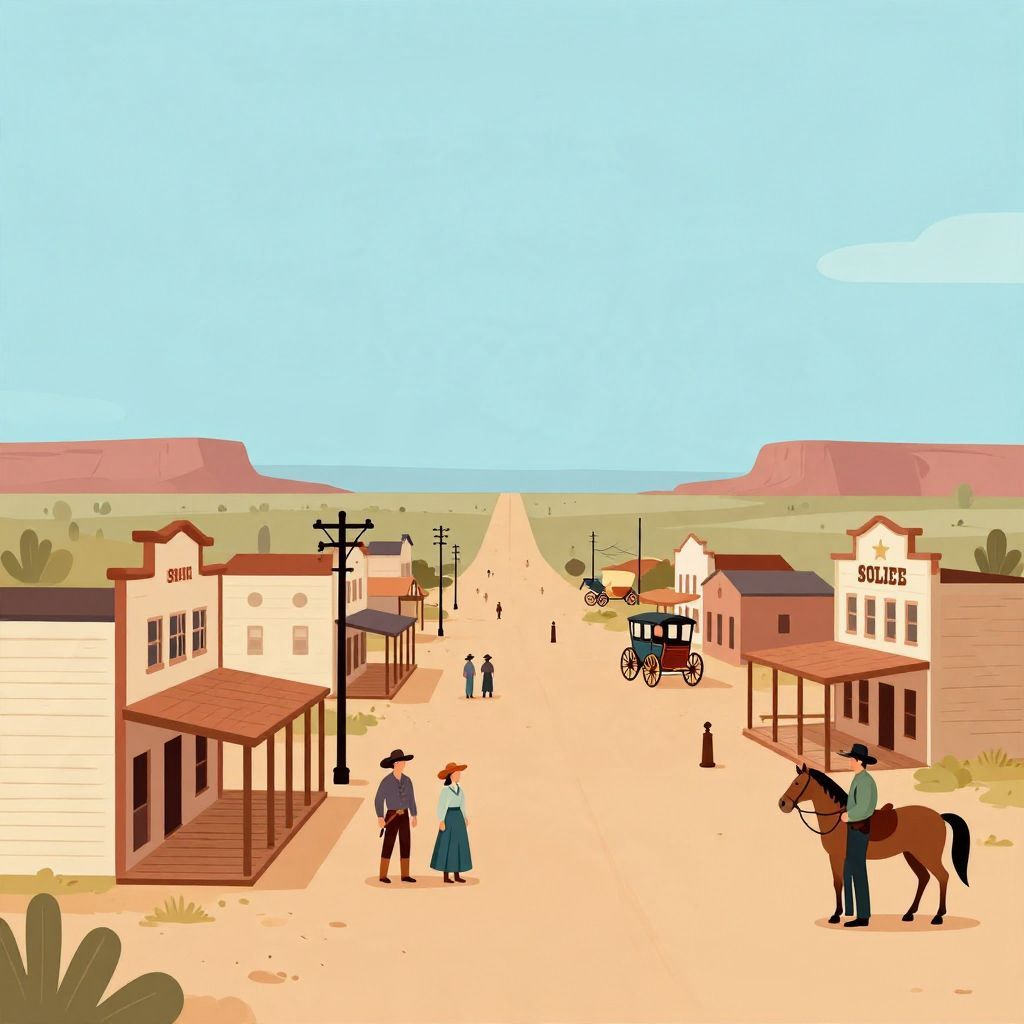
The question “When did the Wild West end?” does not have one exact date. The American frontier era faded gradually, and different historians use different markers depending on whether they mean the closing of the frontier, the end of frontier violence, or the end of the cowboy-and-gunfighter era.
In the broadest sense, the Wild West ended in the late 19th and early 20th centuries, with the U.S. Census Bureau declaring the frontier effectively closed in 1890. But the culture associated with the Wild West—cowboys, cattle drives, mining camps, and lawless boomtowns—lingered into the early 1900s in some places.
When Did the Wild West End?
The Wild West is usually considered to have ended around 1890, when the U.S. Census Bureau announced that there was no longer a clearly defined frontier line. In practice, however, frontier life disappeared unevenly. Some regions became settled earlier, while remote parts of the West kept frontier conditions well into the early 20th century.
What historians mean by “the Wild West”
The term “Wild West” is popular shorthand for the American frontier period, especially in the decades after the Civil War. It usually refers to the western territories and states where settlement, railroad expansion, mining, ranching, and conflict with Indigenous nations reshaped the region between roughly the 1860s and 1890s.
It is important to separate the historical West from the later myth. Popular films and dime novels often made the Wild West seem like a nonstop world of gunfights and outlaws. In reality, most western communities were made up of families, farmers, merchants, laborers, and local officials trying to build stable towns and economies.
Three ways people define its “end”
- Frontier closure: The symbolic end came in 1890, when the frontier was said to have disappeared.
- Law-and-order consolidation: Some say it ended when railroads, courts, sheriffs, and state governments made western life more regulated in the 1880s and 1890s.
- Cultural end: Others point to the early 1900s, when the last major cattle drives, open-range ranching, and frontier-style boomtowns declined.
The 1890 frontier declaration
The most famous date associated with the end of the Wild West is 1890. In that year, the U.S. Census Bureau reported that the western frontier line could no longer be drawn because settlement had become too widespread. This did not mean the West was instantly “civilized,” but it did mark a major historical turning point.
The census statement mattered because the frontier had been a powerful idea in American history. For decades, the existence of unsettled land had shaped migration, politics, land policy, and national identity. Once that line was declared closed, Americans increasingly thought of the West as a settled region rather than a moving edge of expansion.
Why 1890 matters
By 1890, railroads linked many western communities to national markets. Territorial governments had become states. Large-scale cattle ranching had changed. Mining camps had matured or declined. The federal government also expanded its control over land, resources, and Native peoples. These changes made the classic frontier environment much less common.
What changed before and after 1890
The end of the Wild West was not a single event but a long transition. The region changed through railroads, telegraphs, homesteading, military campaigns, and the growth of towns and farms. These developments reduced the isolation that had made frontier life distinctive.
Railroads and communication
Railroads transformed the West by bringing in settlers, goods, and law enforcement more quickly than before. Telegraph lines also connected remote places to national networks. A town that once felt isolated could now receive supplies, news, and government support far more easily.
Statehood and government
As territories became states, they gained stronger legal systems, elected officials, and more stable institutions. Courts, jails, sheriffs, and state militias reduced the need for informal frontier justice. This did not eliminate violence, but it changed how disputes were handled.
Settlement and agriculture
Homesteaders and commercial farmers moved onto land that had once been open range or Indigenous territory. Fences, irrigation projects, and private ownership replaced the older pattern of wide-open grazing and temporary camps. In many places, this shift ended the conditions that made the Wild West feel frontier-like.
How the frontier actually disappeared
The frontier did not vanish all at once. It was pushed westward and then broken apart by settlement, military power, and economic development. The process varied from place to place, which is why historians are careful about using a single end date.
- 1860s–1870s: After the Civil War, western migration accelerated, especially along railroad routes.
- 1870s–1880s: Mining booms, cattle ranching, and conflicts over land intensified in many western areas.
- 1880s–1890s: More towns, farms, and state institutions reduced frontier isolation.
- 1890 and after: The Census Bureau declared the frontier closed, though some remote areas still felt wild.
The role of Indigenous dispossession
Any honest history of the Wild West must include the forced removal and confinement of Native peoples. The “end” of the frontier often meant the loss of Indigenous land, autonomy, and freedom of movement. Reservations, military campaigns, broken treaties, and federal policy all shaped the closing of the frontier.
For many Native nations, the so-called end of the Wild West was not a romantic conclusion but a period of severe disruption and coercion. The expansion of settlement brought lasting consequences that continue to matter today.
Did the Wild West end in the 1880s?
In some respects, yes. By the 1880s, many of the classic features of frontier life were already declining. The great cattle drives were less central than before, local governments were stronger, and railroads had connected many once-remote communities. Some famous frontier towns had already become ordinary cities or commercial centers.
Still, the 1880s were not the end everywhere. Parts of Wyoming, Montana, Arizona, New Mexico, and the Dakotas remained sparsely settled. Violence, land conflict, and economic uncertainty continued. So while the 1880s were a turning point, they were not the same thing as a universal ending.
Did the Wild West end in the 20th century?
In a cultural sense, many people would say yes. The last echoes of the Wild West lasted into the early 1900s, especially in ranching country and isolated borderlands. Some historians point to the decline of open-range cattle culture, the closing of the frontier, and the arrival of modern policing and transportation as signs that the era had effectively ended.
By the early 20th century, the West was increasingly tied to national markets, federal administration, and urban growth. The image of the lone gunfighter or drifting cowboy survived in popular entertainment, but it no longer described everyday life for most westerners.
Examples of lingering frontier conditions
- Remote ranching communities still depended on long-distance livestock work.
- Some mining districts remained rough and transient.
- Borderlands in the Southwest continued to see cross-border movement and conflict.
- Law enforcement and government services were uneven in thinly populated areas.
Why the Wild West became a myth
The Wild West became one of the most powerful myths in American history because it mixed real historical change with dramatic storytelling. Newspapers, dime novels, Wild West shows, and later Hollywood films turned frontier life into a legend of heroes, outlaws, and dramatic shootouts.
That myth often obscured the more ordinary realities of western life: farming, business, family life, rail travel, and political organizing. It also simplified a complex history of Indigenous resistance, migration, labor, and state-building into a story of rugged individualism.
Popular symbols versus historical reality
- Popular image: constant gunfights and chaos.
- Historical reality: violence existed, but many towns were orderly most of the time.
- Popular image: endless open land.
- Historical reality: land was contested, claimed, fenced, and redistributed.
- Popular image: the West ended suddenly.
- Historical reality: it changed gradually over decades.
Historical facts that help explain the ending
The end of the Wild West was tied to broader national changes in the United States. Industrial growth, railroad expansion, federal power, and market integration all helped transform the West from a frontier zone into a more connected part of the country.
These changes also altered daily life. Towns became more stable. Markets became more reliable. Land became more regulated. As a result, the conditions that had encouraged frontier mobility and improvisation gave way to a more settled society.
Key developments behind the transition
- Transportation: Railroads replaced long overland travel as the main link between regions.
- Economy: Ranching, farming, and mining became more commercial and less frontier-based.
- Government: Federal and state institutions expanded their reach.
- Population: More settlers reduced the amount of unorganized land.
So, when did the Wild West end?
If you want the shortest accurate answer, the Wild West is usually said to have ended in 1890, when the U.S. frontier was declared closed. But that date is symbolic rather than absolute. The frontier faded gradually, and the West remained rough, contested, and changing for years afterward.
Historically, the best answer is that the Wild West ended in stages: culturally in the early 1900s, institutionally in the late 1800s, and symbolically in 1890. Understanding that gradual ending gives a clearer picture than treating the frontier as if it disappeared overnight.
For related context, you may also want to read about the Market Revolution and the Dust Bowl, both of which help explain how the American West changed as the nation modernized.