
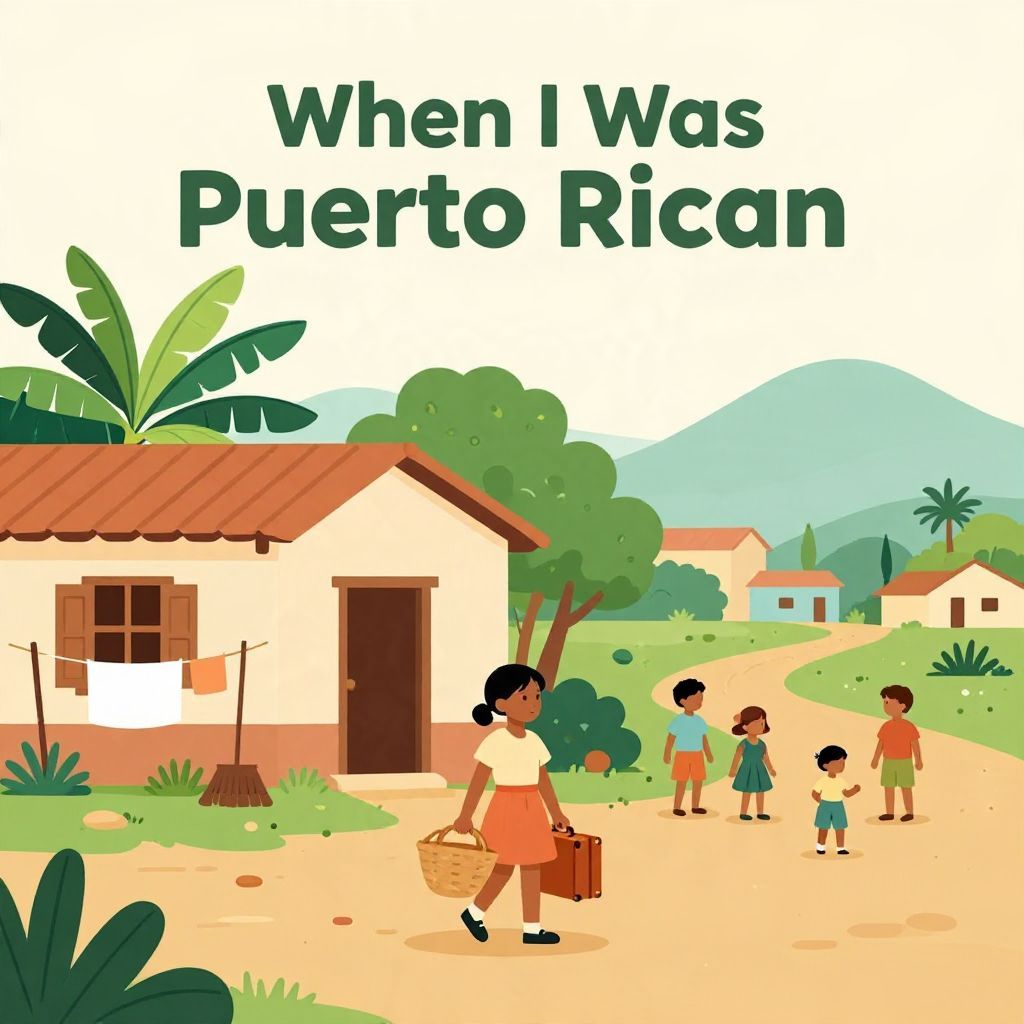
When I Was Puerto Rican is the 1993 memoir by Puerto Rican writer Esmeralda Santiago, not a historical event itself. The book matters because it records a mid-20th-century childhood in Puerto Rico and migration to New York, showing how family life, poverty, language, and identity changed across two places and two cultures.
Its historical significance lies in the way it captures the lived experience of Puerto Ricans during a period of major migration, urban change, and cultural negotiation. As both literature and social history, it helps readers understand what it meant to grow up Puerto Rican in the 1950s and to become part of the Puerto Rican diaspora in the United States.
What is When I Was Puerto Rican?
When I Was Puerto Rican is a memoir first published in 1993 by Esmeralda Santiago. It tells the story of her childhood in rural Puerto Rico, her move to New York City as a teenager, and the challenges of adapting to a new language, school system, and social world. The book is a personal account, but it also reflects broader historical patterns of Puerto Rican migration and cultural change in the 20th century.
Origins of When I Was Puerto Rican
Who wrote it and why?
Esmeralda Santiago wrote the memoir as an adult looking back on her early life. Born in Puerto Rico in 1948, she belonged to a generation shaped by postwar poverty, rapid modernization, and migration to the mainland United States. Her memoir draws on memory, family stories, and lived experience to reconstruct a childhood marked by instability, resilience, and transformation.
Why the title matters
The title, When I Was Puerto Rican, is deliberately striking. It suggests that “Puerto Rican” can be understood not only as a nationality or ethnicity, but also as an identity shaped by place, language, and belonging. The phrase invites readers to think about how migration can alter the way people are seen by others and the way they see themselves.
What historical period does the memoir describe?
The memoir is set mainly in the 1950s and early 1960s, a period when Puerto Rico was undergoing major social and economic change. After World War II, the island experienced industrialization, urban growth, and large-scale migration to the mainland United States, especially New York City. Santiago’s story reflects this wider historical movement from rural life in Puerto Rico to immigrant life in an American metropolis.
Puerto Rico in the mid-20th century
During this era, many Puerto Ricans lived in poverty, especially in rural areas. Agriculture remained important, but economic opportunities were limited. The government and U.S. authorities promoted industrial development and migration as part of broader modernization efforts. For many families, including Santiago’s, these changes did not bring immediate security. Instead, they often meant uncertainty, family separation, and difficult choices about survival.
Migration to New York
By the 1950s and 1960s, New York City had become the center of Puerto Rican migration to the mainland. Families moved for work, education, and opportunity, but they often encountered discrimination, overcrowded housing, and language barriers. Santiago’s memoir captures this transition from the perspective of a child trying to understand a new city and a new social order.
Timeline of the memoir’s historical setting
The book is not a historical timeline in the strict sense, but its events can be placed within a clear historical sequence. That sequence helps explain why the memoir is so valuable as a historical source.
- 1948: Esmeralda Santiago is born in Puerto Rico.
- 1950s: She grows up in a changing Puerto Rican society shaped by poverty, migration, and family instability.
- Early 1960s: She moves with her family to New York City, where she must adapt to English-speaking schools and urban immigrant life.
- 1993: Santiago publishes When I Was Puerto Rican, turning personal memory into a widely read memoir.
Why is the book historically significant?
When I Was Puerto Rican is historically significant because it offers a detailed, human-scale view of Puerto Rican life during a period often discussed only in statistics or policy terms. It shows how migration affected children, mothers, siblings, and extended families. It also reveals how identity was shaped by class, gender, language, and geography.
A record of everyday life
Historians often rely on government reports, census data, and newspaper coverage, but memoirs like Santiago’s provide something different: the texture of daily life. Her account helps readers imagine domestic routines, neighborhood relationships, school discipline, food, work, and the emotional strain of moving between cultures. These details make the broader history of Puerto Rican migration more concrete and personal.
A story of language and power
Language is one of the memoir’s central historical themes. In Puerto Rico, Spanish shaped family life and identity. In New York, English became a gatekeeper to education and mobility. Santiago’s struggle to learn English reflects a common experience among immigrant children, but it also reveals the unequal power relations that often accompany migration. Language in the memoir is not just communication; it is tied to belonging, shame, opportunity, and self-definition.
A portrait of gender and family
The memoir also shows how gender shaped life chances. Women in Santiago’s world carried heavy domestic responsibilities while facing limited economic options. Family structure was often unstable, and children could be moved among relatives or left to adapt to changing household arrangements. These patterns were not unique to Puerto Rico, but the memoir shows how they played out in one specific cultural and historical setting.
How accurate is the memoir as history?
Memoirs are valuable historical sources, but they are not the same as archival records. When I Was Puerto Rican is shaped by memory, retrospective interpretation, and literary craft. That does not make it unreliable; it means readers should treat it as a personal narrative that illuminates larger historical realities rather than as a complete or neutral account of the past.
Memory and interpretation
Like all memoirs, Santiago’s book reflects the author’s perspective. Some details may be sharpened by memory, and some events are presented through the lens of later understanding. Historians often use such works alongside other sources to compare personal experience with broader evidence. The value of the memoir lies in how it reveals what historical change felt like from inside a family and a child’s mind.
Literary form and historical meaning
The memoir is also a crafted narrative. Its scenes, pacing, and imagery are designed to engage readers emotionally as well as intellectually. That literary quality is part of its historical importance: it helped bring Puerto Rican experience to a wider audience and contributed to public understanding of Latino identity in the United States.
Puerto Rican identity in the memoir
The phrase “Puerto Rican” in Santiago’s title is more than a label of origin. In the memoir, identity is shown as something lived, contested, and sometimes fragile. On the island, being Puerto Rican is tied to family, language, and landscape. In New York, it becomes something that can be questioned, misunderstood, or stereotyped by others.
Island identity and diaspora identity
Santiago’s childhood in Puerto Rico and adolescence in New York represent two connected but different worlds. The memoir helps explain how diaspora communities preserve cultural memory while also changing through contact with new institutions and social pressures. This dual identity is a major theme in Puerto Rican history, especially after the mid-20th century migration wave.
Class and social mobility
The book also shows that Puerto Rican identity cannot be separated from class. Santiago’s family struggles with poverty, unstable housing, and limited access to opportunity. Her education becomes a path toward mobility, but it also pulls her away from the world of her childhood. That tension between advancement and cultural loss is one of the memoir’s most enduring historical insights.
How does the memoir connect to broader Puerto Rican history?
When I Was Puerto Rican fits into a larger history of colonial rule, migration, and cultural adaptation. Puerto Rico became a U.S. territory after the Spanish-American War of 1898, and the island’s political status shaped economic policy, migration, and identity throughout the 20th century. The memoir does not focus on constitutional history, but it is inseparable from that background.
Colonial history and migration
Because Puerto Rico remained tied to the United States without becoming a state, Puerto Ricans occupied a complex legal and political position. This relationship helped make mainland migration both possible and fraught. Santiago’s story is therefore part of a larger colonial and postcolonial history, one in which movement between island and mainland became a defining feature of Puerto Rican life.
Education as transformation
Education is another major historical thread. For many migrant families, schools were both opportunities and sites of cultural conflict. Children often adapted faster than adults, becoming translators and cultural intermediaries. Santiago’s memoir shows how schooling could open doors while also exposing children to racism, class prejudice, and pressure to assimilate.
Why do readers still study it today?
The memoir remains widely read because it speaks to several historical questions at once: What was life like in Puerto Rico in the mid-20th century? Why did so many Puerto Ricans move to New York? How did migration reshape family life and identity? The book answers these questions through lived experience rather than abstract analysis.
Its place in Latino literary history
The memoir also helped establish Santiago as an important voice in Latino literature. It contributed to a growing body of writing that documented immigrant and bilingual experience from the inside. For historians, literary scholars, and general readers alike, it remains a key text for understanding how personal narrative can illuminate social history.
Conclusion
When I Was Puerto Rican is best understood as a memoir of childhood, migration, and identity set against the backdrop of mid-20th-century Puerto Rican history. Its lasting significance comes from the way it turns one family’s experience into a vivid record of larger historical change. For related background, see why the region is called Latin America and what acculturation means in history.