
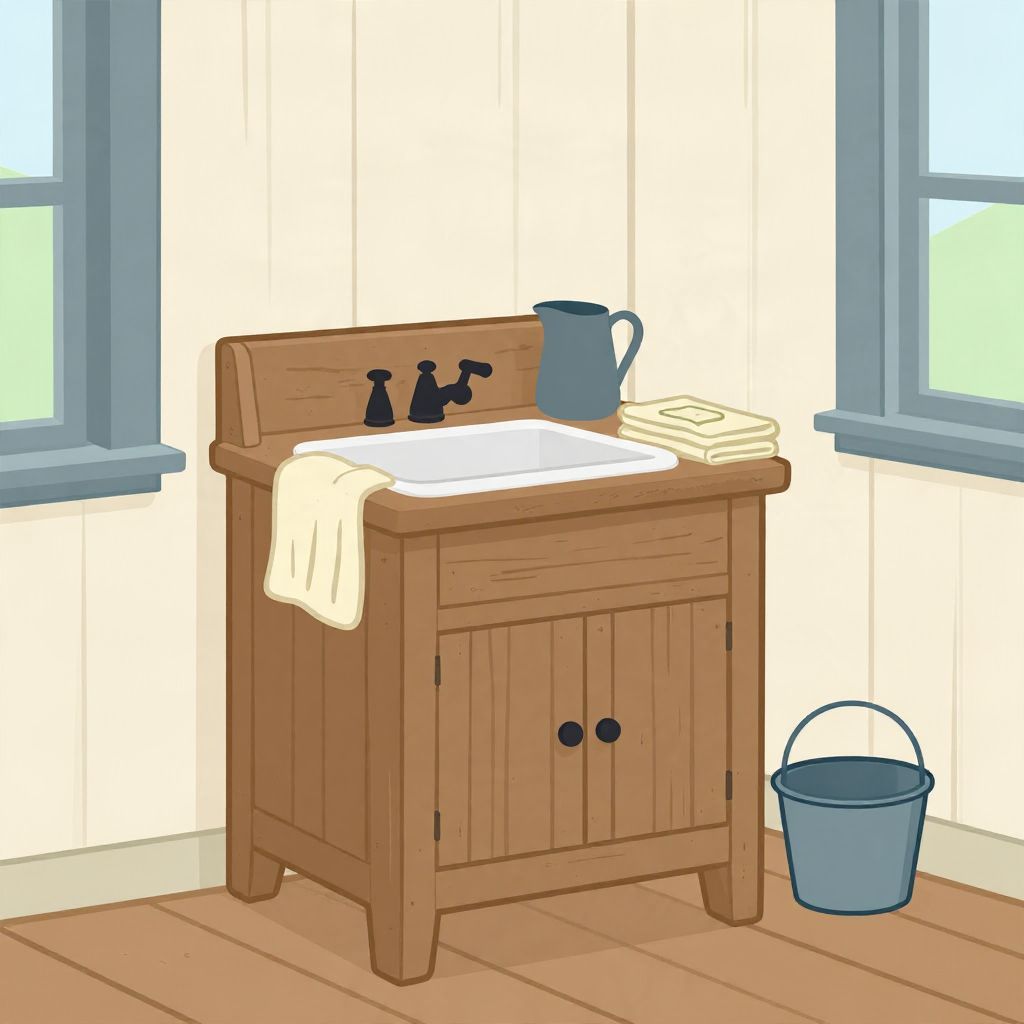
What is a dry sink? In historical terms, it is a piece of furniture designed for washing before indoor plumbing made running water common in homes. A dry sink usually held a basin, pitcher, or wash bowl, and often included storage for towels, soap, and water vessels.
It was a practical household solution in the 18th and 19th centuries, especially in rural homes, boarding houses, and early urban interiors. Its history reflects the long transition from water carried by hand to the piped plumbing systems that eventually made the modern bathroom possible.
What Is a Dry Sink?
A dry sink is a cabinet or stand used for washing tasks in homes without plumbing. Unlike a modern sink, it had no built-in water supply or drain. Instead, people placed a basin or pitcher on top and emptied used water manually, making it a central part of everyday domestic life before indoor plumbing became widespread.
Origins and Early History of the Dry Sink
The dry sink developed gradually as households sought a cleaner, more convenient alternative to washing at a table, washstand, or bucket. Its exact origin is difficult to date because similar furniture appeared in different regions over time, but it became especially common in the 18th and 19th centuries in North America and Europe.
Why households needed it
Before piped water, every step of washing required labor. Water had to be drawn from a well, spring, cistern, or pump, carried indoors, heated, and then discarded after use. A dry sink helped organize that process by providing a dedicated place for washing hands, face, dishes, or small laundry items.
Materials and design
Most dry sinks were made of wood, though some had zinc, tin, marble, or soapstone tops to resist moisture. Many included a raised back, side splash boards, or a recessed area for the basin. Some were built as simple utilitarian cabinets; others were attractive pieces of furniture made to match the room’s style.
Why Was It Called a Dry Sink?
The name comes from the fact that it looked like a sink but had no plumbing. It was “dry” because water did not flow into it or drain away through pipes. Instead, the user supplied the water and removed it afterward. The term highlights the difference between older household washing furniture and the plumbed sink familiar today.
Not a kitchen sink in the modern sense
Although people sometimes used dry sinks for kitchen chores, they were not true sinks in the modern plumbing sense. They were closer to a washing station or cabinet. In many homes, the dry sink stood in a pantry, kitchen, back room, or washroom where messy tasks could be managed away from formal living spaces.
How Dry Sinks Were Used in Daily Life
Dry sinks were part of a larger system of water management inside the home. They were used for handwashing, face washing, dish rinsing, and sometimes food preparation cleanup. In some households, they also served as a place to store soap, towels, scrub brushes, and pitchers, making them both functional and space-saving.
Common household routines
- Fetching water from an outdoor source
- Heating water on a stove or hearth
- Placing a basin in or on the dry sink
- Washing hands, face, or dishes
- Carrying wastewater outside or to a disposal area
Who used them most
Dry sinks were especially common in homes without servants, where family members did their own domestic labor. They also appeared in boarding houses, inns, farmhouses, and workshops. In these settings, the dry sink helped create a more orderly and sanitary routine even without modern plumbing.
The Dry Sink in the Age Before Indoor Plumbing
The dry sink belongs to the broader history of premodern and early modern domestic life, when water access shaped architecture and daily habits. In many places, indoor plumbing expanded only gradually during the 19th century and became common in many homes much later, especially outside major cities.
From washstand to plumbed sink
Before plumbing, people relied on washstands, basins, buckets, and portable furniture. As cities installed water mains and waste systems, the built-in sink gradually replaced movable washing furniture. The dry sink survived for a time because it was affordable, practical, and familiar, especially in areas where plumbing arrived slowly.
Regional differences
The timing of change varied widely. Urban households often adopted plumbing earlier than rural ones, while wealthier homes usually modernized before poorer households. In many rural communities, dry sinks remained useful well into the early 20th century, long after they had become old-fashioned in cities.
Dry Sink vs. Modern Sink
A modern sink is connected to a water supply and a drainage system. A dry sink is not. That difference may seem simple, but historically it marks a major shift in household technology, labor, and hygiene. The modern sink reduced the need to carry water and made washing faster, cleaner, and more convenient.
Key differences
- Water source: dry sink required carried-in water; modern sink uses plumbing
- Drainage: dry sink required manual disposal; modern sink drains automatically
- Placement: dry sink could be moved or repositioned; modern sink is installed in place
- Purpose: both support washing, but the dry sink reflects an earlier domestic system
Historical Significance of the Dry Sink
The dry sink is more than an antique household object. It shows how people adapted to the limits of technology before modern infrastructure transformed private life. Its history reveals the hidden work behind everyday cleanliness: carrying water, heating it, containing it, and disposing of it by hand.
A marker of domestic change
As indoor plumbing spread, the dry sink became a symbol of an earlier era. Its decline did not happen overnight. For many families, it remained useful even after piped water arrived, especially in kitchens, basements, and summer homes. Over time, however, it became a reminder of how much domestic labor plumbing had removed.
Collecting and preservation
Today, dry sinks are often collected as antiques or used decoratively in historic homes. Some survive because they were sturdy, practical pieces of furniture; others were preserved because they represent a vanished way of life. Their survival helps historians and visitors understand how households functioned before modern utilities.
What a Dry Sink Tells Us About Everyday History
Dry sinks may seem modest, but they illuminate a major historical story: the transformation of ordinary life through infrastructure. The move from portable washing furniture to plumbed fixtures changed how homes were built, how chores were organized, and how people thought about cleanliness and convenience.
In that sense, the dry sink is a small object with a large historical meaning. It stands at the crossroads of domestic labor, technology, and daily routine, and it helps explain why indoor plumbing was such a profound change in modern life. For related context, see when indoor plumbing was invented and what a bath house was.