
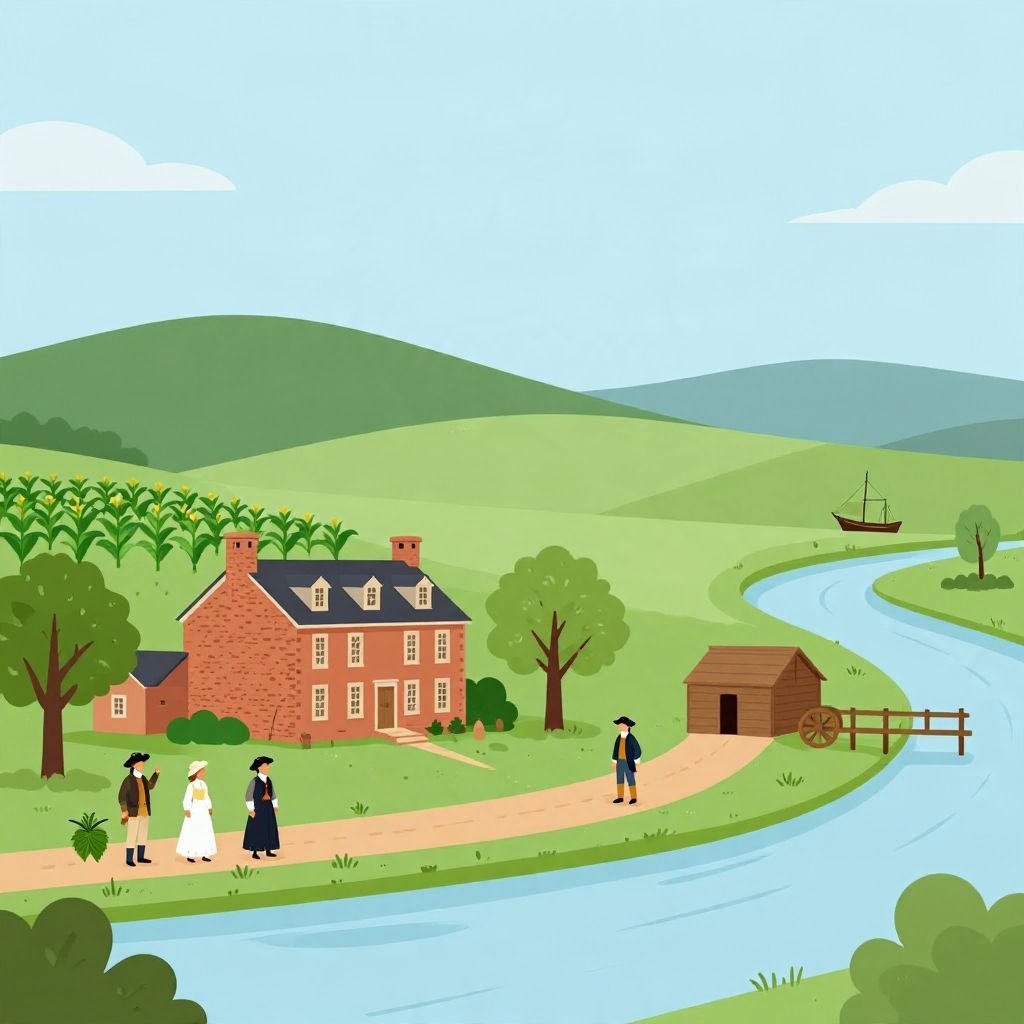
Is Virginia in the South? Yes—Virginia is generally considered part of the American South, both geographically and historically. But the answer depends on what you mean by “South”: modern regional identity, colonial history, Civil War alignment, or cultural traditions all matter.
Virginia’s place in the South has changed over time, and that history helps explain why the state can feel both Southern and distinctly its own. From its role as one of the earliest English colonies to its central place in the Confederacy and later the modern South, Virginia has long been tied to the region’s history.
Is Virginia in the South?
Yes. Virginia is usually classified as a Southern state in U.S. geography, history, and culture. It was one of the original Southern colonies, joined the Confederacy in 1861, and shares many historical traditions associated with the South, though its northern areas are also closely linked to the Mid-Atlantic and Washington, D.C. region.
Why Virginia Is Considered Southern
Colonial origins
Virginia was founded in 1607 at Jamestown, making it the first permanent English settlement in North America. Along with Maryland, the Carolinas, Georgia, and others, it became part of what historians call the Southern colonies. These colonies developed plantation agriculture, relied heavily on enslaved labor, and built social systems that differed from those in New England.
Geography and regional identity
Virginia sits at the boundary between regions. Its northern counties are influenced by the Northeast corridor, while its southern and western areas are culturally closer to the Deep South and Appalachia. Even so, the state as a whole is usually grouped with the South because of its colonial history, political development, and long-standing cultural connections.
Slavery and plantation society
Before the Civil War, Virginia was the largest slaveholding state in the United States. Tobacco cultivation shaped its economy in the 17th and 18th centuries, and enslaved Africans and African Americans were central to that system. This pattern of plantation agriculture and slave labor is one of the clearest historical reasons Virginia is identified with the South.
Virginia in the Colonial South
The Southern colonies compared with the North
The English colonies in North America developed differently by region. New England tended toward smaller farms, town-centered communities, and a more diversified economy. The Southern colonies, including Virginia, leaned toward large plantations, export crops, and a more hierarchical social order. These differences were not absolute, but they became important in shaping regional identity.
The Chesapeake world
Virginia belonged to the Chesapeake region, centered on the Chesapeake Bay and its tributaries. This area developed a distinct colonial culture based on tobacco, river transport, and dispersed settlements. Wealth was concentrated in the hands of planters, and political power often rested with elite landowners. That colonial pattern became a foundation of Southern identity in later centuries.
Virginia and the Civil War Era
Secession and the Confederacy
Virginia’s role in the Civil War strongly reinforced its identity as a Southern state. In 1861, after the outbreak of war, Virginia seceded from the Union and joined the Confederacy. Richmond, the state capital, became the Confederate capital, making Virginia the political and military center of the secessionist South.
Why this mattered historically
Virginia was not just another Confederate state; it was one of the most important. Major battles were fought on its soil, including First and Second Bull Run, Fredericksburg, Chancellorsville, and Appomattox. The surrender at Appomattox Court House in 1865 effectively ended the war in the East. Because of this, Virginia occupies a central place in Civil War memory and Southern historical identity.
Not all Virginians agreed
It is important to note that Virginia was not politically or socially uniform. Western counties were often less committed to secession than eastern plantation regions, and the wartime split eventually contributed to the creation of West Virginia in 1863. This reminds us that “the South” was never a single, perfectly unified block.
Is Virginia Part of the Deep South?
Not exactly
Virginia is Southern, but it is usually not classified as part of the Deep South in the strictest historical sense. The Deep South generally refers to states such as South Carolina, Georgia, Alabama, Mississippi, Louisiana, and often parts of Florida and Texas. Virginia is often grouped instead with the Upper South or the Chesapeake South.
Upper South versus Deep South
The distinction matters because the Upper South had somewhat different economic and cultural patterns. Virginia, Kentucky, Tennessee, and North Carolina are often described as Upper South states. They shared many Southern traits, but their histories included more diverse economies, stronger ties to the Union in some areas, and in Virginia’s case, a more prominent colonial and national political role.
How Virginia’s Culture Reflects the South
Food, speech, and traditions
Virginia’s culture includes many traits commonly associated with the South: regional foodways, accent patterns, church-centered community life in many areas, and a strong sense of local history. At the same time, the state’s northern and coastal regions have been shaped by proximity to Washington, D.C., migration, and suburban growth, making Virginia more varied than a simple regional label suggests.
Historic memory and symbolism
Virginia has long been associated with major figures in American and Southern history, including George Washington, Thomas Jefferson, James Madison, Robert E. Lee, and many others. These associations have helped shape the state’s image as both a cradle of the nation and a core part of the South. That dual identity is one reason Virginia can seem historically complex.
Why Some People Question Whether Virginia Is in the South
Modern demographics and economics
In recent decades, Northern Virginia has become more urban, diverse, and economically tied to the federal government and the broader Northeast. Because of this, some people hesitate to describe the whole state as Southern in the same way they would Alabama or Mississippi. The question is understandable, especially for readers looking at the state today rather than its older history.
Regional change over time
Historical regions are not fixed forever. Virginia’s identity has shifted as transportation, migration, politics, and urbanization changed the state. Yet regional labels often persist because they reflect deep historical patterns. Even with modern change, Virginia remains firmly part of the South in most historical and cultural classifications.
The Historical Evidence in Brief
- 1607: English settlement at Jamestown begins Virginia’s colonial history.
- 17th–18th centuries: Tobacco plantation society and slavery shape the colony.
- Colonial era: Virginia is counted among the Southern colonies.
- 1861: Virginia secedes and joins the Confederacy.
- 1863: West Virginia is formed from counties that broke away during the war.
- Postwar era to present: Virginia remains culturally Southern, though its northern regions become more Mid-Atlantic in character.
So, Is Virginia in the South?
Historically and generally, yes: Virginia is in the South. It belongs to the Southern colonial tradition, played a major role in the Confederacy, and has long shared many of the South’s defining social and economic patterns. At the same time, Virginia’s position at the border of regions gives it a mixed identity that is both Southern and uniquely Virginian.
If you want to explore the topic further, you may also be interested in what the Southern colonies were and how Virginia fits into the broader history of the region, as well as when Alabama became a state and how later Southern states developed.