
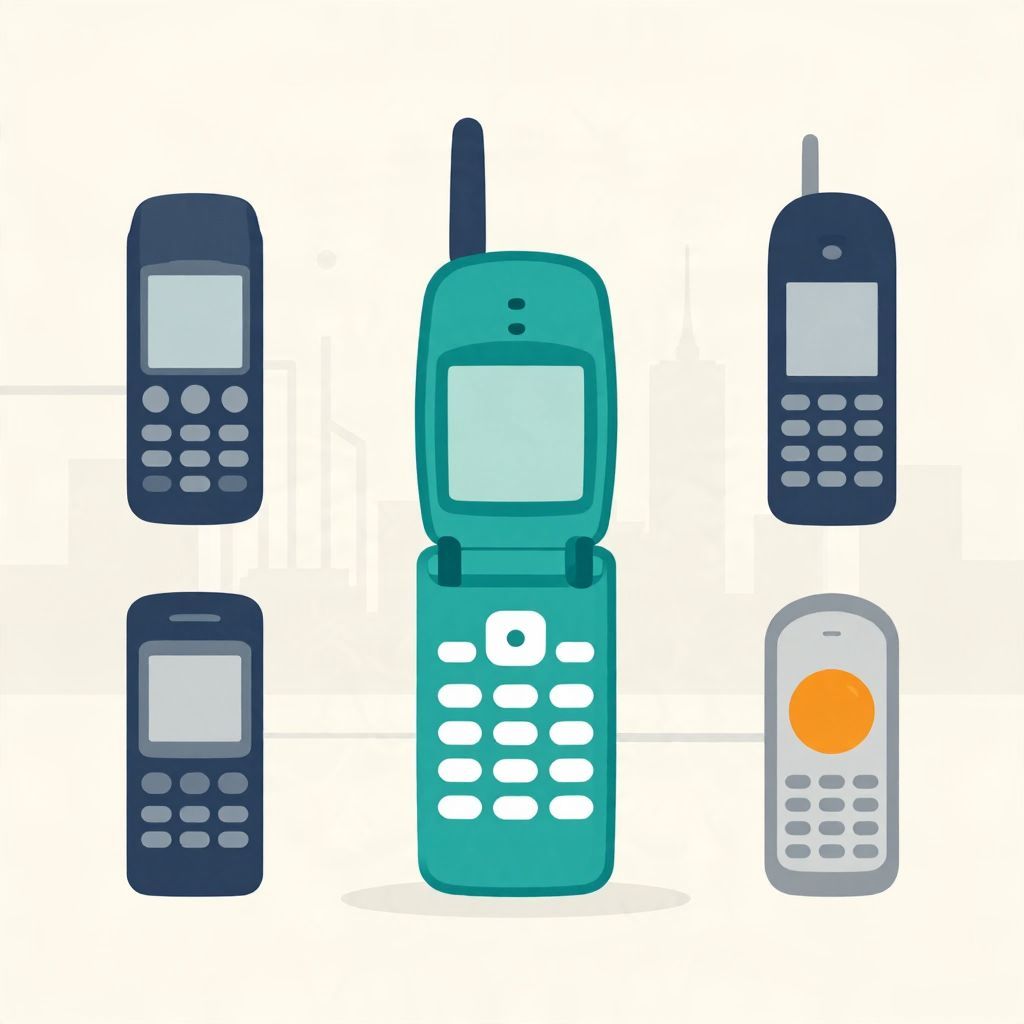
When were flip phones invented? The short answer is that the flip phone emerged in the late 1980s and early 1990s, with Motorola playing the central role in popularizing the design. The clamshell form had earlier design roots, but the mobile flip phone as most people remember it became commercially significant in the 1990s.
Its rise was not just about style. The flip phone solved practical problems of portability, keypad protection, and call privacy, and it became one of the defining consumer technologies of the pre-smartphone era.
When Were Flip Phones Invented?
Flip phones were not invented in a single moment by one person. The basic clamshell concept appeared in the late 1980s, and Motorola’s early 1990s models helped establish the flip phone as a mainstream mobile design. The best-known milestone is the Motorola StarTAC, released in 1996, which made the flip phone iconic worldwide.
The Origins of the Flip Phone Design
The flip phone grew out of two older ideas: compact portable telephones and protective folding covers. Engineers wanted a device that could be smaller, easier to carry, and less likely to have a damaged keypad. Folding the phone in half also let users answer and end calls by opening and closing the device, which made the design intuitive.
From early mobile phones to folding form factors
Before flip phones, mobile phones in the 1980s were usually bulky “brick” devices. They were expensive, heavy, and designed mainly for business users. As consumer demand grew, manufacturers looked for ways to make phones more pocket-friendly. The folding clamshell shape was one answer to that challenge.
It is important to distinguish between the broader clamshell form factor and the modern flip phone as a mass-market product. The former developed gradually in electronics design; the latter became recognizable through mobile phone manufacturing in the 1990s.
Key Milestones in Flip Phone History
Several dates matter when tracing the invention and commercialization of flip phones. No single model “invented” the category in the strictest sense, but a few releases mark the transition from concept to cultural phenomenon.
- Late 1980s – Folding and clamshell design ideas appear in mobile and consumer electronics.
- Early 1990s – Motorola and other companies refine compact mobile phone designs with hinged covers.
- 1996 – The Motorola StarTAC launches and becomes one of the first widely famous flip phones.
- Late 1990s to early 2000s – Flip phones spread rapidly and become a dominant style of mobile handset.
Why the Motorola StarTAC matters
The StarTAC is often treated as the breakthrough flip phone because it combined portability, sleek styling, and broad consumer appeal. It was not the first hinged phone ever made, but it helped define what a mobile flip phone should look and feel like. In historical terms, it was a turning point in consumer expectations.
Who Invented Flip Phones?
There is no single inventor of flip phones. The design was the result of corporate engineering teams, industrial designers, and market competition. Motorola is the company most closely associated with the flip phone’s success, but the idea drew on earlier folding-device concepts and broader trends in miniaturized electronics.
Why invention is hard to assign to one person
Technological inventions often emerge through incremental improvement rather than one dramatic breakthrough. A hinge, a keypad, a screen, and a battery all had to be made small and durable enough to work together. Because of this, historians usually describe flip phones as an evolution in mobile design rather than a single invention with one inventor.
Why Flip Phones Became So Popular
Flip phones succeeded because they matched the needs of their time. They were smaller than earlier mobile phones, easier to carry in a pocket or bag, and more private to use. Closing the phone also protected the keypad and screen better than many candy-bar style phones of the era.
Practical advantages
- Portability: The folding body made the phone more compact.
- Protection: The closed shell helped shield buttons and displays.
- Usability: Opening the phone became a simple, satisfying action associated with answering a call.
- Status: In the 1990s, a sleek flip phone signaled modernity and mobility.
These advantages mattered in an era when mobile phones were still new to many consumers. Before smartphones, the main goal was reliable calling and texting, not app-based computing. Flip phones fit that world very well.
The Flip Phone in the 1990s and 2000s
By the late 1990s, flip phones were among the most desirable consumer electronics on the market. They appeared in films, television, and business culture as symbols of speed, independence, and technological sophistication. In the early 2000s, many models added color screens, cameras, and text messaging features.
From luxury device to everyday tool
At first, mobile phones were expensive and limited to wealthier users or professionals. As networks expanded and manufacturing costs fell, flip phones became common household items. They were especially popular because they balanced style with durability, long battery life, and straightforward controls.
For many people, the flip phone was the first mobile device they owned personally. That made it historically important not only as a product, but as a gateway to everyday mobile communication.
Did Flip Phones Exist Before the 1990s?
In a broad sense, some folding phone concepts and related design experiments existed earlier, but the familiar consumer flip phone did not become a recognizable mass-market product until the 1990s. Claims that flip phones were “invented” in the 1970s or 1980s usually blur together prototypes, industrial ideas, and commercial releases.
Why early prototypes are not the same as popular invention
Many technologies have prototypes long before they become common. A prototype can show that an idea works, but it does not necessarily mean the public has adopted it. For flip phones, the historical significance lies in the moment the design became practical, affordable, and widely marketed.
Historical Significance of the Flip Phone
Flip phones matter because they represent a key stage in the history of mobile communication. They helped move cell phones from oversized business tools into everyday personal objects. They also influenced later device design by emphasizing compactness, ergonomics, and the emotional appeal of opening a phone to use it.
How flip phones shaped later technology
Even after smartphones replaced them as the dominant mobile device, flip phones left a lasting legacy. Engineers continued to study compact folding designs, and consumers retained a fondness for the tactile, reliable experience they offered. In a sense, modern foldable smartphones echo an older idea: that a phone can be both portable and protected when closed.
So, When Were Flip Phones Invented?
If you want the most accurate historical answer, flip phones were invented through a gradual process in the late 1980s and early 1990s, with Motorola’s 1996 StarTAC marking the moment the design became iconic. Rather than a single invention date, flip phones have a development history shaped by engineering innovation, consumer demand, and the rapid growth of mobile communications.
That is why the best historical takeaway is simple: flip phones were not born on one exact day, but they became a defining technology of the 1990s and early 2000s, bridging the gap between bulky early cell phones and the smartphone era. For related technology history, you may also enjoy reading about the history of mobile phones and the evolution of smartphones.