
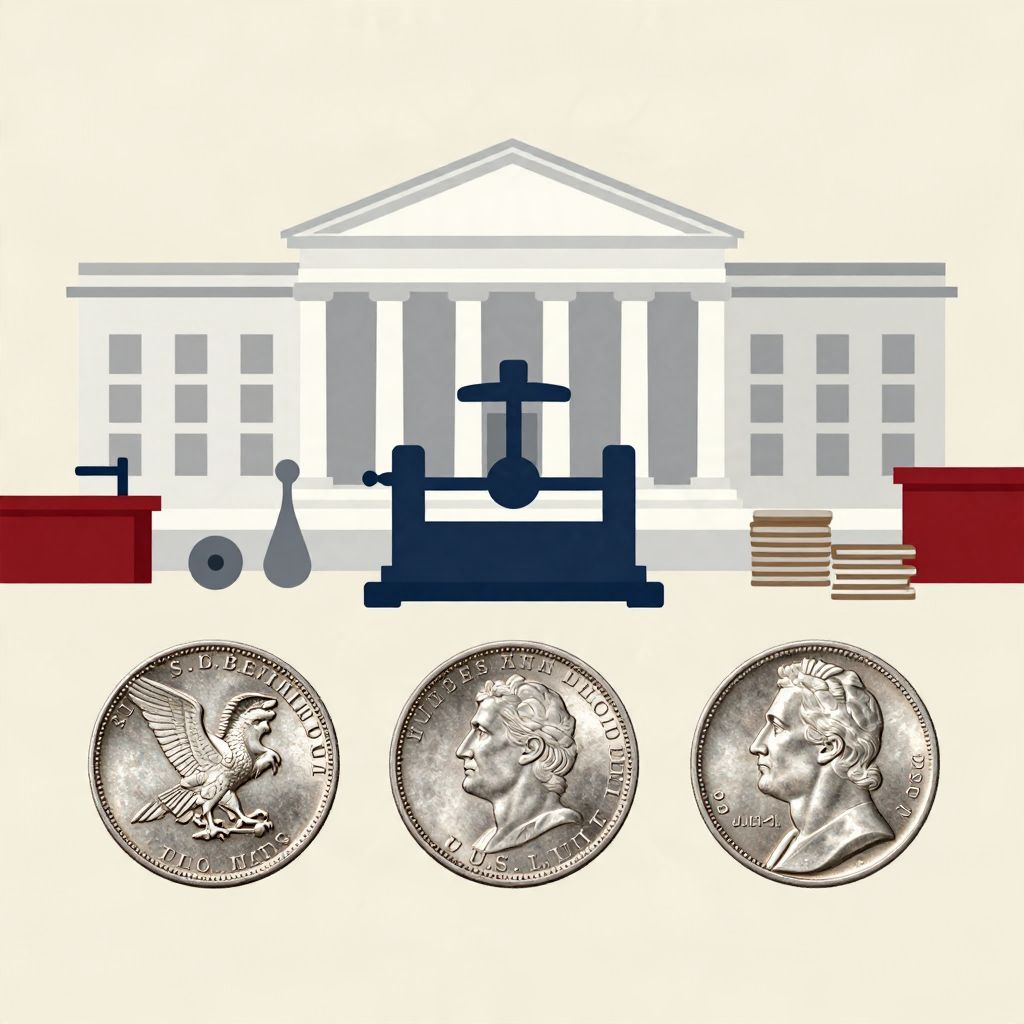
When were quarters silver? In the United States, quarters were made of silver for most of their early history, beginning with the first federal quarter dollar in 1796 and continuing through 1964. After that, the U.S. Mint changed the coin’s metal content, so modern quarters are no longer silver in ordinary circulation.
The answer is simple, but the history behind it is more revealing. The silver quarter reflects changing ideas about money, metal supply, war, inflation, and the practical needs of a growing economy.
When were quarters silver?
U.S. quarters were silver from 1796 to 1964 in regular circulation coinage. The last standard silver quarters were struck in 1964; beginning in 1965, quarters were made from a copper-nickel clad composition instead of silver, because rising silver prices made silver coinage too costly for everyday use.
The origins of the silver quarter
The quarter dollar was created under the Coinage Act of 1792, which established the U.S. monetary system after independence. The first quarter dollars were struck in 1796. Like other early U.S. silver coins, they were designed to contain precious metal value close to their face value, a common practice in the 18th and 19th centuries.
Why silver mattered in early American coinage
In the early republic, silver and gold coins were trusted because their metal content gave them intrinsic value. Paper money existed, but it was less uniform and less trusted than hard money. A silver quarter was not just a token; it was a small piece of valuable metal backed by the federal government.
That made silver coinage especially important in a cash economy where wages, retail purchases, and local trade often depended on coins rather than banknotes. The quarter’s silver content helped it function as a reliable medium of exchange.
What was a silver quarter made of?
For most of the silver-coin era, quarters were not pure silver. Standard U.S. quarters were typically struck in an alloy of 90% silver and 10% copper. This mixture made the coins more durable while preserving much of their precious-metal value. The coin’s weight and fineness were carefully regulated by the Mint.
Common silver-quarter types
- Draped Bust quarters (late 18th and early 19th century)
- Capped Bust quarters (early 19th century)
- Seated Liberty quarters (mid-19th century)
- Barber quarters (1892–1916)
- Standing Liberty quarters (1916–1930)
- Washington quarters (1932–1964, in silver)
These designs changed over time, but the basic silver standard remained in place until the 1960s. For collectors, the design often matters as much as the metal, but historically the silver content is what defined the coin’s monetary character.
Why did silver quarters end in 1964?
Silver quarters ended because the economics of coinage changed. By the mid-20th century, the market price of silver was rising, and the metal value of coins was approaching—or threatening to exceed—their face value. That created pressure on the government to remove silver from circulating quarters, dimes, and half dollars.
The Coinage Act of 1965
The key turning point was the Coinage Act of 1965. This law removed silver from circulating dimes and quarters and reduced silver in half dollars. Quarters issued after 1964 were made of a copper-nickel clad composition: a copper core with outer layers of copper and nickel.
This change was not simply technical. It reflected a broader historical shift away from coins whose metal content closely matched their face value. Once silver became too expensive, the old system no longer worked efficiently for mass circulation.
A short timeline of silver quarters
Here is the basic chronology of silver quarters in U.S. history:
- 1792 — The Coinage Act establishes the quarter dollar as part of the U.S. monetary system.
- 1796 — The first U.S. quarter dollars are struck.
- 1796–1964 — Quarters circulate as silver coins, usually 90% silver and 10% copper.
- 1965 — The U.S. switches quarters to copper-nickel clad coinage for circulation.
- Post-1964 — Modern quarters are generally not silver, though special collector versions may be struck in silver.
This timeline gives the direct answer, but the historical significance lies in why the transition took so long and what it reveals about the changing American economy.
Were all quarters before 1965 silver?
In ordinary circulation, yes: quarters dated 1964 and earlier were silver. But there are a few important nuances. Special collector issues, proof coins, and later commemorative or bullion products can also be made in silver, even though they were not intended for everyday spending.
How to distinguish circulation quarters from collector silver quarters
- Circulation quarters before 1965 were silver and meant for daily use.
- Post-1964 quarters are usually copper-nickel clad.
- Special mint products may be struck in silver for collectors, even in modern times.
So if someone asks, “When were quarters silver?” the most historically accurate answer is: regular U.S. quarters were silver from the beginning of the federal coinage system until 1964, with later exceptions for special issues.
Why the change mattered historically
The end of silver quarters was part of a larger 20th-century transformation in money. For much of U.S. history, coins were expected to carry real metal value. By the 1960s, however, modern banking, paper currency, and large-scale commerce made it more practical for coins to function mainly as token money rather than as bullion in miniature.
Economic pressure and hoarding
As silver prices rose, people had an incentive to hoard or melt older coins rather than spend them. This is a classic problem in monetary history: when the metal in a coin becomes more valuable than the coin’s face value, the coin tends to disappear from circulation. Governments then respond by changing the coinage.
That is one reason the U.S. moved away from silver in quarters. The change helped stabilize everyday transactions and preserved the usefulness of low-denomination coins.
What happened to silver quarters after 1964?
After 1964, silver quarters did not vanish from history; they became collectible and, in some cases, valuable for their melt value. Many people still search pocket change for pre-1965 quarters because they contain silver and are often worth more than 25 cents.
Collector interest and bullion value
Today, silver quarters are prized by coin collectors, investors, and metal buyers. Their worth depends on date, condition, rarity, and silver content. Common worn examples are often valued primarily for their silver, while rare dates or high-grade specimens can command much higher prices.
That collector interest has helped keep the history of silver coinage visible. Even people who know little about numismatics often recognize that “old quarters” can be silver, which is a legacy of the long silver era in U.S. money.
Historical significance of silver quarters
Silver quarters are significant because they show how a nation’s money evolves with its economy. In the 18th and 19th centuries, silver coinage made sense in a world where precious-metal money anchored trust. In the 20th century, industrial growth, inflation, and metal shortages made that system less practical.
The transition from silver to clad coinage also illustrates a broader historical pattern: governments often change money not because the old system was meaningless, but because economic conditions have changed. The quarter’s shift from silver to base metal marks the end of one monetary era and the beginning of another.
The bottom line
Quarters were silver in the United States from the first federal quarter in 1796 through the last standard silver issues in 1964. Starting in 1965, circulating quarters were made from copper-nickel clad metal instead. If you want to explore the transition further, see what year they stopped making silver quarters and when quarters stopped being silver.