
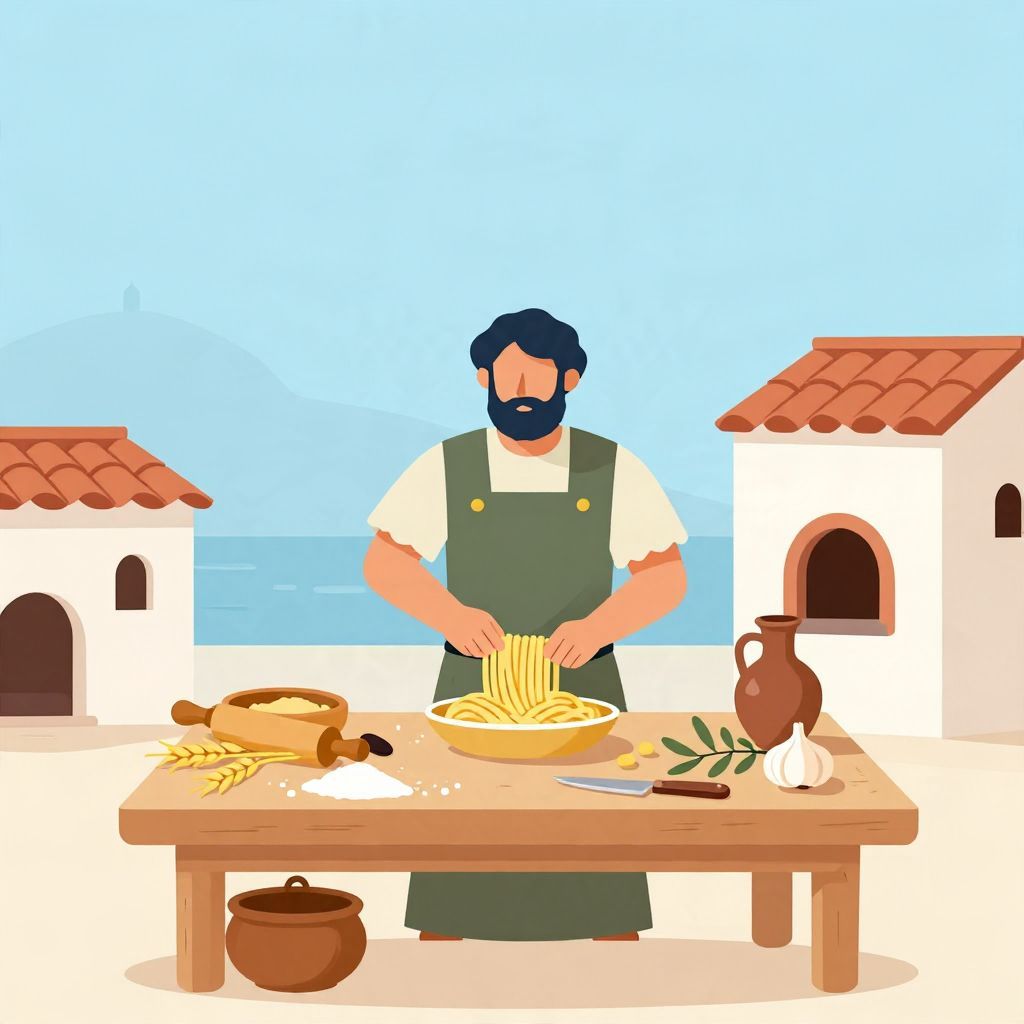
Where did spaghetti originate? The short answer is that spaghetti, as we know it today, developed in Italy, especially in the south, where dried durum-wheat pasta became a practical everyday food. But the story is older and broader than one country alone. Long before modern spaghetti, many cultures made noodle-like foods, and the Italian version evolved over centuries through trade, climate, and changing food habits.
So the origin of spaghetti is best understood as a historical development, not a single invention. Its roots lie in the wider history of pasta in the Mediterranean and in the distinct Italian tradition that eventually gave the world the long, thin noodle called spaghetti.
Where Did Spaghetti Originate?
Spaghetti originated in Italy, where dried pasta made from durum wheat took shape over the medieval and early modern periods. The exact “first” spaghetti is impossible to identify, but the food became especially associated with southern Italy, including Naples and Sicily, before spreading across the world as a defining Italian dish.
The Historical Background of Spaghetti
Ancient and medieval noodle traditions
People often ask whether spaghetti came from China, the Middle East, or Italy. The historical answer is that many societies independently developed noodle-like foods. Ancient and medieval cooks in the Mediterranean made dough-based foods that could be rolled, cut, dried, or boiled. These were not always spaghetti in the modern sense, but they show that the idea of pasta had deep roots.
In the Mediterranean world, grain was central to daily life. Wheat could be ground into flour, mixed with water, and turned into durable food. Drying pasta was especially useful in warm climates because it preserved food for longer periods. That practical advantage helped pasta become important in Italy, where trade and climate favored dried wheat products.
Arab influence and Sicily
One of the most important steps in the history of spaghetti came through medieval Sicily. Under Arab rule beginning in the 9th century, Sicily became a major center of agricultural innovation and food exchange. Scholars often note that Arab culinary traditions influenced the island’s use of dried pasta, though the exact details are debated.
What is clear is that Sicily became a place where pasta production and consumption flourished. The island’s climate was well suited to drying pasta, and its connections to Mediterranean trade helped spread techniques and tastes. This does not mean Arabs “invented” spaghetti, but their presence helped shape the environment in which Italian pasta culture developed.
Southern Italy and dried pasta
By the later Middle Ages, southern Italy had become especially associated with dried pasta. The region’s warm, dry weather made it easier to produce and store pasta in quantity. Wheat from the south, especially durum wheat, was ideal for making firm pasta that held its shape when cooked.
Spaghetti emerged from this broader pasta tradition. The word itself comes from the Italian spaghi, meaning “thin strings” or “cords.” Over time, the term came to describe long, slender pasta strands. The exact date when “spaghetti” became a standard name is not fixed, but the form and name were clearly established in Italy by the early modern era.
Why Italy Became the Home of Spaghetti
Climate, grain, and preservation
Italy’s geography mattered. In the south, hot summers and access to durum wheat made dried pasta practical. Unlike fresh pasta, which spoils quickly, dried pasta could be stored, transported, and sold more easily. This made it valuable not just for households but also for urban markets and, later, for commercial production.
Spaghetti was therefore not just a culinary preference; it was a food shaped by environment and economy. It fit the needs of ordinary people, especially in regions where reliable, inexpensive calories mattered. That practicality helped pasta become a staple rather than a luxury.
Urban food culture and Naples
By the 17th and 18th centuries, Naples had become famous for pasta consumption. Travelers described Neapolitans eating pasta regularly, and pasta sellers became a familiar part of city life. Long strands of pasta were easy to dry, cook, and eat, making them ideal for dense urban populations.
In this period, spaghetti moved from a regional food into a recognizable symbol of Italian eating. It was still not the global dish it is today, but the foundations were in place: dried wheat pasta, tomato-based sauces later added from the Americas, and a strong association with everyday Italian cooking.
Did Spaghetti Come from China?
A common myth with a complicated history
One of the most persistent popular stories claims that Marco Polo brought spaghetti to Italy from China. Historians generally reject this as an oversimplification. Pasta-like foods existed in Italy before Marco Polo returned from Asia in the late 13th century, so he could not have introduced pasta to Italy as a brand-new idea.
That said, the story survives because it reflects a real historical pattern: noodle traditions existed in multiple places across Eurasia, and contact through trade and travel may have encouraged exchange of techniques. But spaghetti itself, as an Italian dried pasta form, developed within Italy rather than being imported wholesale from China.
Independent invention versus cultural exchange
When historians study food origins, they often find that similar ideas arise in different places. Noodles are a good example. Flour, water, and heat are simple ingredients, and many cultures discovered ways to combine them. The more precise question is not whether one civilization “owned” noodles, but how specific regional forms developed.
Spaghetti belongs to the Italian branch of this larger history. Its shape, drying methods, and culinary role were refined in Italy, even if broader noodle traditions existed elsewhere. That distinction matters because it separates myth from evidence.
How Spaghetti Became a Global Food
Tomatoes changed everything
Spaghetti did not become the classic dish many people know until after tomatoes were introduced to Europe from the Americas in the 16th century. At first, tomatoes were viewed with suspicion in many parts of Europe, but over time they became central to southern Italian cooking. Tomato sauces eventually paired naturally with pasta.
This combination helped define modern spaghetti. The pasta itself was older, but the familiar image of spaghetti with tomato sauce is relatively recent in historical terms. It reflects the meeting of Old World pasta traditions and New World ingredients.
Industrial production and migration
In the 19th and early 20th centuries, Italy’s pasta industry expanded, and mass production made spaghetti cheaper and more widely available. At the same time, millions of Italians emigrated to the Americas and elsewhere, bringing pasta traditions with them. In immigrant communities, spaghetti became a powerful marker of identity and comfort food.
As Italian-American cuisine developed, spaghetti gained international popularity. Restaurants, cookbooks, and packaged pasta helped transform it from a regional staple into a global dish. By the 20th century, spaghetti was no longer just Italian food; it was world food.
What We Can Say with Confidence
Established historical points
- Spaghetti originated in Italy, not as a single invention but as part of a long pasta tradition.
- Its strongest historical roots are in southern Italy, especially regions such as Sicily and Naples.
- Dried pasta developed because it was practical in a warm climate and useful for storage and trade.
- The popular claim that Marco Polo brought spaghetti from China is not supported by the historical record.
- Tomatoes, introduced from the Americas, later helped create the modern spaghetti dish.
What remains uncertain
Historians cannot name the exact first person to make spaghetti, nor can they assign a single invention date. Food history rarely works that way. Instead, spaghetti emerged gradually from regional practices, technological needs, and cultural exchange. Its origin is therefore best described as Italian and evolutionary, rather than sudden and singular.
Why the Origin of Spaghetti Matters
Understanding where spaghetti originated helps explain how everyday foods develop. Spaghetti is not just a recipe; it is a product of geography, agriculture, trade, and migration. Its story shows how local needs can create a dish that later becomes globally famous.
In that sense, spaghetti is a reminder that food history is rarely simple. A dish we now associate with one nation may carry traces of many places and many centuries. For readers interested in the history of specific foods, related origin stories such as where sushi originated and where tacos originated show the same pattern: local traditions shaped by long cultural exchange.
Bottom line: spaghetti originated in Italy, especially in the south, where dried durum-wheat pasta developed over centuries into the long noodle we know today. Its history is rooted in Italian food culture, but its rise also reflects wider Mediterranean exchange and the later global spread of Italian cuisine.