
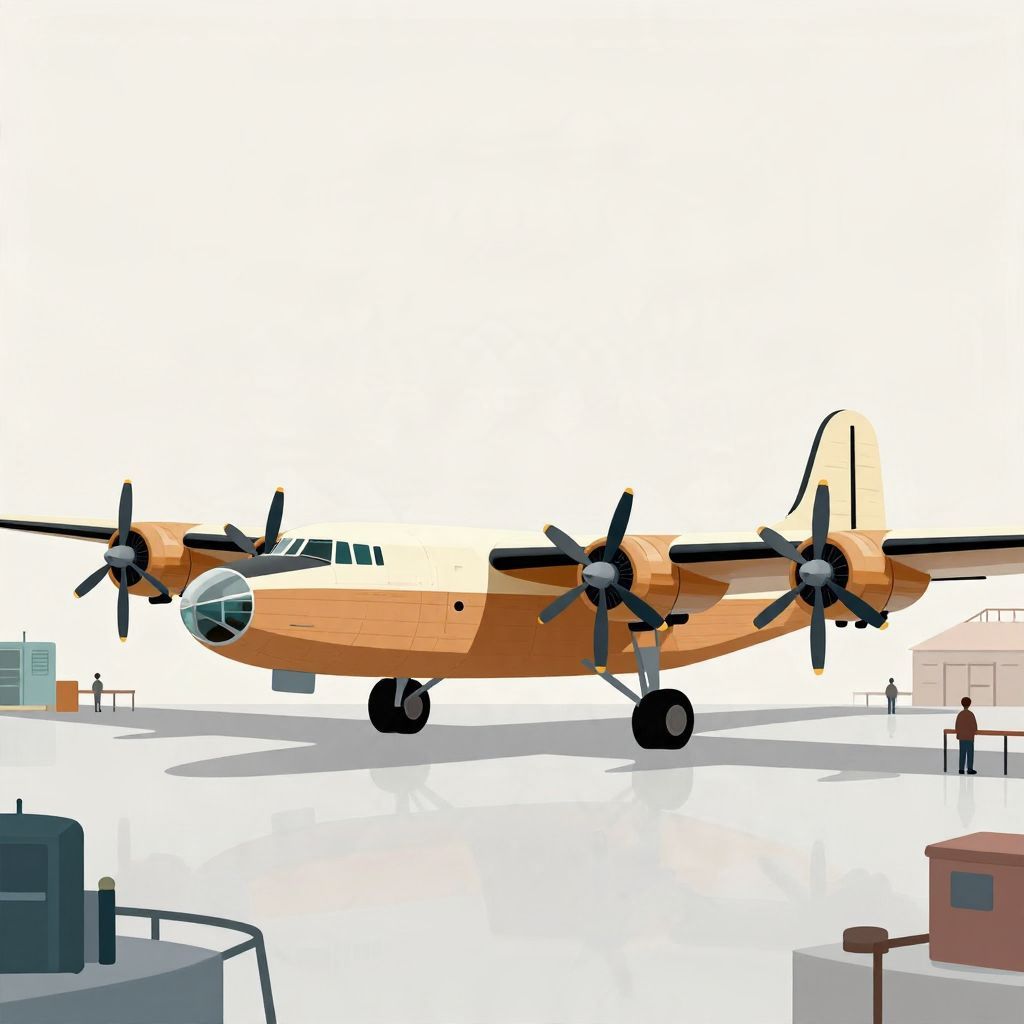
Where is the Spruce Goose? The famous aircraft is preserved in the United States, where it has been on public display for decades. Today, the plane is housed at the Evergreen Aviation & Space Museum in McMinnville, Oregon, after spending many years in Long Beach, California.
Its location matters because the Spruce Goose is more than a curiosity: it is one of the most famous experimental aircraft ever built, and its long journey from wartime ambition to museum exhibit tells a larger story about aviation, industry, and postwar memory.
Where Is The Spruce Goose Today?
The Spruce Goose is at the Evergreen Aviation & Space Museum in McMinnville, Oregon. The aircraft, officially called the Hughes H-4 Hercules, was moved there in 1993 after decades in Long Beach, California. It is displayed in a dedicated hangar and remains one of the museum’s signature attractions.
Why it is no longer in Long Beach
For many years, the aircraft sat near the water in Long Beach, where it had been stored after its only flight. As preservation plans changed, it was transported to Oregon so it could be maintained and exhibited as a major artifact of aviation history. The move was itself a major engineering and logistical project.
What Was The Spruce Goose?
The Spruce Goose was a giant experimental flying boat designed by industrialist and aviator Howard Hughes during World War II. Its formal name, Hughes H-4 Hercules, reflected its intended role as a massive transport aircraft. The nickname “Spruce Goose” stuck even though the plane was not actually made of spruce; it was built largely from laminated wood, including birch.
The aircraft was conceived in a wartime context, when the United States needed new ways to move troops and cargo across the Atlantic. German U-boats made sea transport dangerous, and Hughes’s project was meant to offer a very large, long-range alternative. In practice, the war ended before the aircraft could be fully developed for service.
How The Spruce Goose Became Famous
The plane is famous not because it served in combat or routine transport, but because of its scale, cost, and controversy. It was one of the largest aircraft ever built, and critics doubted it would ever fly. Hughes defended the project fiercely, arguing that the aircraft represented the future of long-distance air transport.
The only flight
The Hughes H-4 Hercules made its only flight on November 2, 1947, in Long Beach Harbor. Howard Hughes himself piloted the aircraft for a short hop that lasted less than a minute and covered only a small distance. Even so, the flight proved that the enormous flying boat could leave the water under its own power.
That brief flight did not turn the Spruce Goose into a practical aircraft. It was too large, too expensive, and too late for wartime use. But the event became a symbol of ambition, engineering daring, and the limits of experimental design.
Why Was It Built At All?
The Spruce Goose emerged from the pressures of World War II. The Allied war effort demanded new transport solutions, especially for moving men and materials across oceans. Hughes and his partner Henry J. Kaiser proposed a huge cargo aircraft that could avoid submarine threats and carry heavy loads over long distances.
Because wartime shortages limited access to aluminum, the aircraft was built from wood composites. That material choice helped fuel the nickname “Spruce Goose,” though the name is misleading. The project also became entangled in politics, wartime procurement, and public skepticism about whether Hughes could deliver on his promises.
Key reasons for the project
- To create a very large transoceanic transport aircraft
- To reduce dependence on vulnerable sea routes
- To respond to wartime material shortages
- To explore the limits of large-scale aviation design
The Aircraft’s Historical Background
The Hughes H-4 Hercules belongs to the broader history of mid-20th-century aviation, when engineers were testing how far aircraft size and range could be pushed. Flying boats were especially important before modern long-runway airports became widespread, because they could take off and land on water.
By the time the H-4 was ready, however, aviation had changed quickly. The war had accelerated aircraft design, but it also made some earlier concepts obsolete. Larger land-based planes, improved airports, and postwar jet development reduced the need for giant seaplanes like the Spruce Goose.
Why the name is misleading
The nickname “Spruce Goose” was popularized as a joke and was not Hughes’s preferred term. The aircraft was never intended to be a goose, and spruce was not the main material. Still, the nickname endured because it captured the public’s mixture of amusement, skepticism, and fascination.
From Wartime Dream To Museum Piece
After its brief flight, the aircraft was never put into regular service. It remained a symbol of unfinished wartime ambition and of Hughes’s determination to prove critics wrong. For decades it was stored and maintained in Long Beach, where it became an object of public curiosity as much as historical preservation.
Its relocation to Oregon in 1993 marked a new phase in its life. Instead of being a dormant engineering experiment, it became a centerpiece of museum interpretation. Visitors can now see the aircraft up close and understand both its technical audacity and its historical context.
Timeline of major events
- Early 1940s: The H-4 Hercules is conceived during World War II.
- 1940s: Construction continues amid delays, criticism, and wartime constraints.
- November 2, 1947: The aircraft makes its only flight in Long Beach Harbor.
- 1993: It is moved to the Evergreen Aviation & Space Museum in McMinnville, Oregon.
- Today: It remains on public display as a major aviation artifact.
Why The Spruce Goose Still Matters
The Spruce Goose remains important because it represents both the promise and the risk of technological ambition. It was built for a real wartime need, but it arrived too late to fulfill that role. Its enormous size and brief flight made it a legend, while its preservation ensures that the public can still study a remarkable chapter in aviation history.
It also illustrates a common historical pattern: not every ambitious project succeeds in its original purpose, yet even “failed” projects can leave a lasting legacy. The Hughes H-4 Hercules influenced how people thought about aircraft engineering, industrial scale, and the line between invention and spectacle.
So, Where Is The Spruce Goose?
The Spruce Goose is in McMinnville, Oregon, at the Evergreen Aviation & Space Museum. Once a controversial wartime experiment and later a Long Beach landmark, it now survives as a preserved artifact of 20th-century aviation. Its location today reflects not just where it is stored, but how history has chosen to remember it.
If you want to explore more historical context from the same era, you may also be interested in what a war bond was and how the Ottoman Empire fell, both of which help illuminate the broader wartime and geopolitical world in which the Spruce Goose was conceived.