
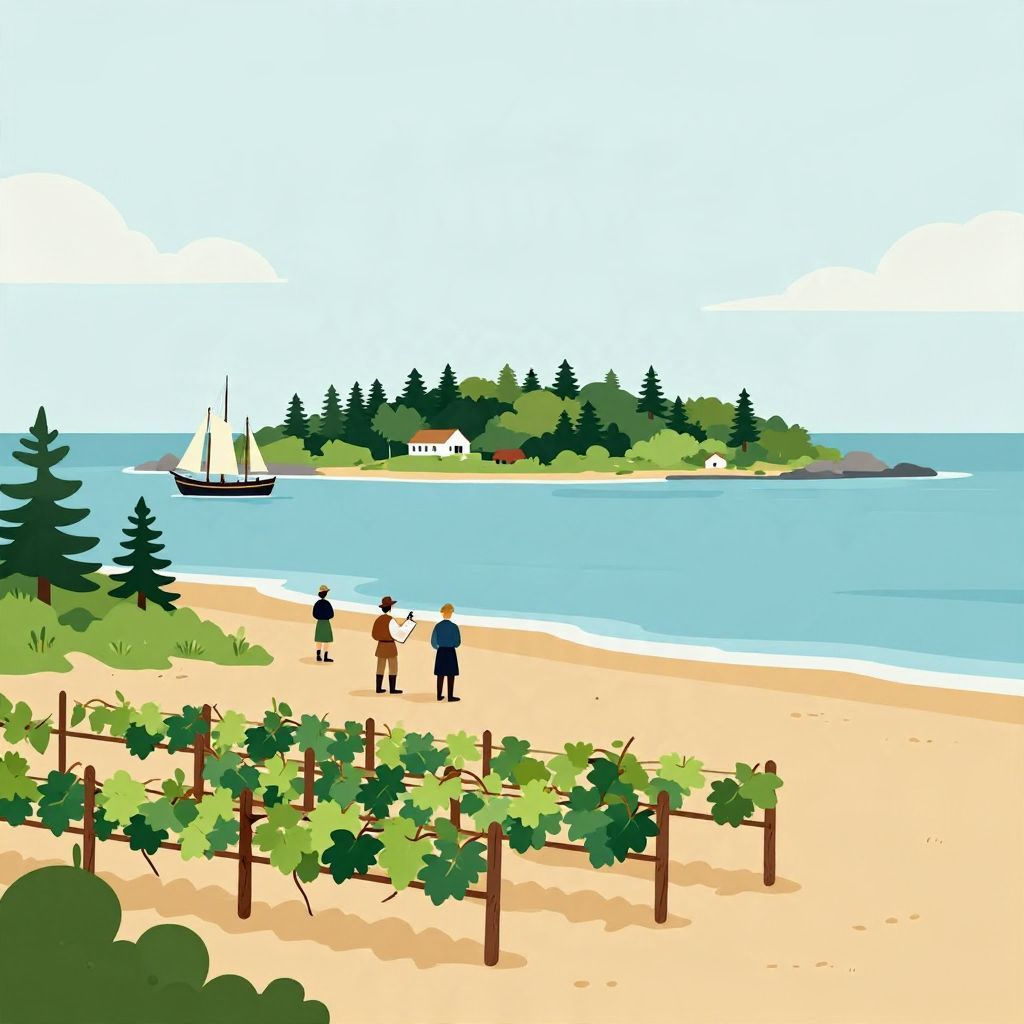
Why is it called Martha’s Vineyard? The short answer is that the island’s name comes from early English exploration in the 1600s, when the area was mapped and named by Europeans. “Martha” likely honored the daughter of explorer Thomas Mayhew or another family connection, while “Vineyard” came from the abundance of wild grapes seen by visitors.
Over time, the name stuck, even though the island had long been home to the Wampanoag people and had no actual wine-producing vineyard in the modern sense. The story blends documented history with a few uncertainties, which is common in colonial place names.
Why Is It Called Martha’s Vineyard?
Martha’s Vineyard was named in the 17th century by English explorers and settlers. The “Vineyard” part most likely refers to wild grapes or grapevines on the island, while “Martha” probably came from a personal name connected to the Mayhew family, though the exact reason is not fully certain. The name reflects English colonial naming habits more than any local indigenous tradition.
The English Naming of the Island
Before English arrival, the island had Indigenous names and was part of the homeland of the Wampanoag people. The English began charting the area in the early colonial period, and by the mid-1600s the island was known by the name that survives today. Like many places in North America, it received a new name through exploration, mapping, and settlement rather than through a formal official ceremony.
Who named it?
The name is commonly linked to English explorer Bartholomew Gosnold, who reached the region in 1602. Gosnold is often credited with naming nearby places as well, and English maps from the early colonial period helped spread the island’s new identity. However, the exact moment when “Martha’s Vineyard” became fixed is not perfectly documented.
Later English settlers, especially the Mayhew family, became central to the island’s colonial history. Thomas Mayhew and his descendants played a major role in governing the island and in relations with the Wampanoag. Because of that family’s importance, historians often connect the “Martha” in the name to a member of the Mayhew household, though the evidence is not definitive.
What does “Vineyard” mean here?
The word “vineyard” does not mean the island was a commercial wine region. Instead, it likely referred to the wild vines and grapes observed by English visitors. Early European explorers often used familiar words to describe unfamiliar landscapes, especially when they saw plants or features that reminded them of home.
That kind of naming was common in the colonial Atlantic world. Explorers frequently labeled places according to what they noticed first: trees, animals, terrain, or people’s names. In this case, the island’s natural vegetation appears to have inspired the second half of the name.
The Historical Background: Wampanoag Land Before the English
Any explanation of Martha’s Vineyard has to begin before the English name existed. The island was inhabited by the Wampanoag, who had their own political and cultural systems long before European contact. Their communities farmed, fished, and managed the island’s resources in ways shaped by local ecology and seasonal change.
When English settlers arrived, they did not discover an empty island waiting for a name. They entered an inhabited homeland with established place names, leadership structures, and relationships to the land. The English name replaced older Indigenous names in official colonial usage, but those earlier names and histories remain essential to understanding the island’s past.
Colonial naming and power
Place names are never neutral. Naming an island after a person or a feature of the land was a way for Europeans to claim familiarity, authority, and ownership. “Martha’s Vineyard” reflects that process. It turned an Indigenous place into a colonial one by attaching an English personal name and a descriptive term drawn from European experience.
This does not mean the name was chosen in a single dramatic moment. More often, colonial names emerged gradually through maps, letters, and repeated usage. Once a name appeared in enough records, it became part of the region’s identity.
Who Was Martha?
The “Martha” in Martha’s Vineyard is the most debated part of the name. The most common historical explanation is that it honored Martha, a family member connected to Thomas Mayhew, one of the island’s early English proprietors. Some accounts say it may have referred to his daughter, while others suggest a different family connection. The evidence is not strong enough to make one version absolutely certain.
What historians can say with confidence is that the name was almost certainly personal rather than geographic. English colonists often named places after relatives, patrons, or influential figures. In that sense, “Martha” fits a wider pattern of colonial naming practices.
Why the uncertainty remains
Records from the early 1600s are incomplete, and place names were often used informally before they were written down consistently. That makes it difficult to trace the exact origin of “Martha.” The name may have been attached to the island by a mapmaker, a settler, or someone in the Mayhew circle, and later repeated until it became standard.
So while the Martha explanation is well established in historical tradition, it is best understood as a carefully reasoned interpretation rather than an unquestionable fact.
How the Name Became Permanent
Once English settlement expanded, the island’s name became embedded in colonial administration, land records, and everyday speech. The Mayhews’ influence on the island’s governance helped stabilize English usage. Over time, “Martha’s Vineyard” became the standard name in maps and documents, even as the island’s Indigenous communities continued to live there and maintain their own identities.
The name survived because it was repeated by officials, settlers, merchants, and later tourists. By the 18th and 19th centuries, it was firmly established in English-language usage. Today it remains one of the most recognizable place names in the northeastern United States.
From local label to famous destination
In modern times, the name has taken on new associations. Martha’s Vineyard is now known for summer tourism, historic villages, and a distinctive island culture. But the name itself is much older than the resort reputation. Its origin lies in the early colonial era, when English explorers and settlers were still trying to describe and claim the Atlantic coast.
Popular Myths and Common Misunderstandings
Because the name sounds unusual, it has inspired myths. Some people assume there must have been a large wine-producing vineyard on the island, or that “Martha” referred to a saint, queen, or famous historical figure. Those ideas are not supported by the historical record.
The most reliable explanation is simpler: the island was named by English colonists using a personal name and a descriptive word based on the landscape. That combination was common in the early modern Atlantic world.
What the name does not mean
- It does not mean the island was a major wine-growing region.
- It does not appear to come from an Indigenous word.
- It is not securely tied to a royal title or famous European noblewoman.
Understanding what the name does not mean is just as important as understanding what it does mean. Historical place names often accumulate folklore, especially when the original records are thin.
Why the Name Matters Historically
Martha’s Vineyard is more than a curious name. It is a reminder of how colonization reshaped the geography of New England. English naming practices often erased earlier Indigenous place identities while preserving fragments of the landscape through European language. The island’s name therefore tells a story about exploration, settlement, and power.
It also shows how local history can survive in a name long after the original context is forgotten. Even today, the phrase “Martha’s Vineyard” carries layers of meaning: Indigenous homeland, colonial settlement, family influence, and modern cultural identity.
Conclusion
Martha’s Vineyard is called Martha’s Vineyard because English explorers and settlers in the 1600s gave the island a new name based on colonial naming habits. “Vineyard” likely referred to the wild grapes they saw, while “Martha” probably honored a person connected to the Mayhew family, though the exact origin is not fully certain. The name is a small but revealing piece of colonial New England history. For more place-name origins, see why New Jersey is called the Garden State and why Boston is called Beantown.