
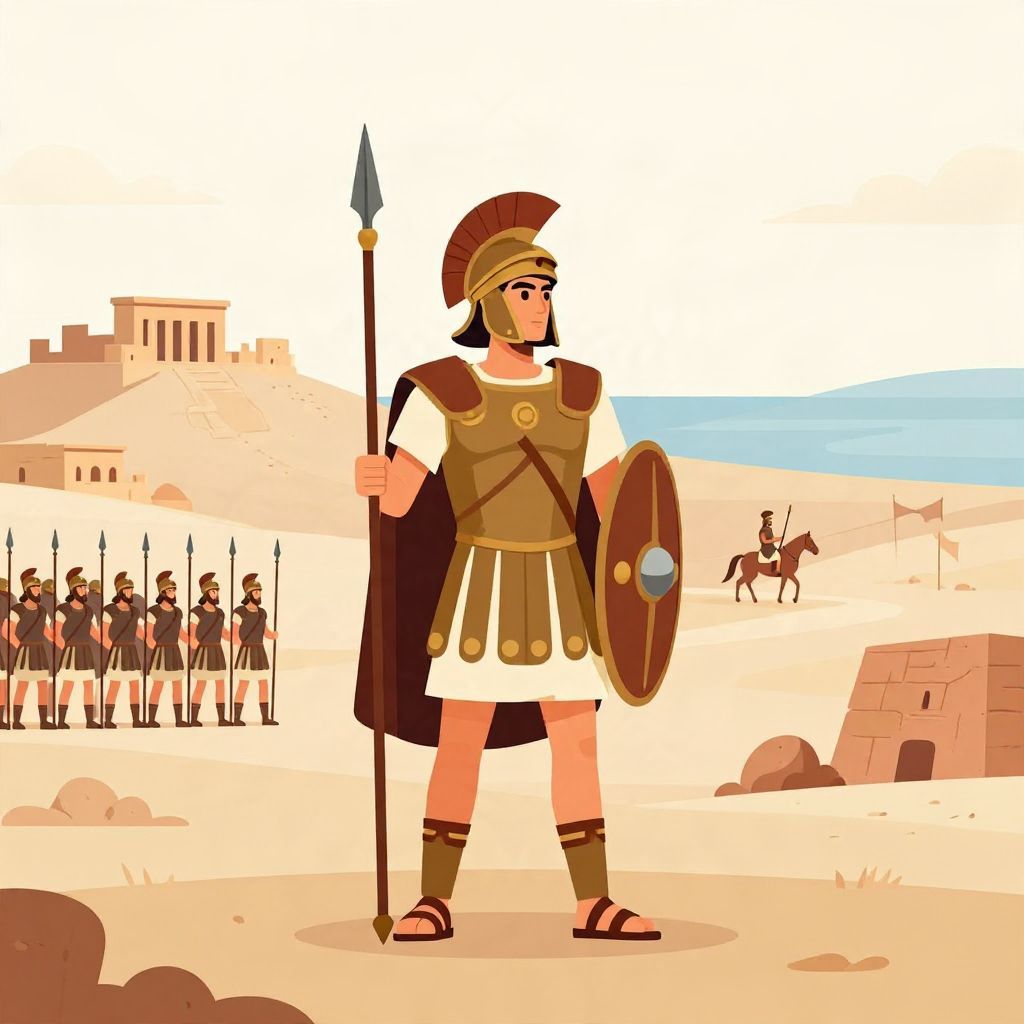
Why was Alexander the Great great? The short answer is that he combined military brilliance, political ambition, and extraordinary timing. In just over a decade, he turned the small kingdom of Macedon into an empire stretching from Greece to Egypt and deep into Asia, reshaping the ancient world in the process.
His achievements were real, but they were also built on inherited power, skilled generals, and the weakness of the Persian Empire he attacked. To understand why historians still call him “the Great,” we need to look at both his victories and the lasting consequences of his conquests.
Why Was Alexander the Great Great?
Alexander was considered “great” because he conquered vast territories, won major battles against larger armies, and spread Greek political and cultural influence across the eastern Mediterranean and Near East. His speed, boldness, and ability to inspire loyalty made him exceptional, even though his rule was also violent, unstable, and deeply dependent on conquest.
What Made Alexander Stand Out in Ancient History?
Alexander III of Macedon was born in 356 BCE and became king in 336 BCE after the assassination of his father, Philip II. He inherited a powerful army and a kingdom that had already risen to dominance in Greece. What made Alexander stand out was not simply that he had resources, but that he used them with remarkable energy and confidence.
At a young age, he was educated by Aristotle, which later fed the tradition that he was both a warrior and a man of learning. That education should not be exaggerated into a simple explanation for his success, but it did help shape a ruler who thought in terms of strategy, culture, and empire. He also cultivated a personal image of heroic destiny, linking himself to figures from Greek myth and epic tradition.
Key qualities behind his reputation
- Military skill: he could adapt quickly on the battlefield.
- Speed and decisiveness: he often acted before enemies could coordinate.
- Charisma: he inspired intense loyalty among many of his troops.
- Ambition: he aimed not just to defend Macedon, but to conquer beyond it.
- Political inheritance: he began with an army and state already strengthened by Philip II.
His Military Genius Was Real, But It Was Not Magic
Alexander’s battlefield reputation rests on a series of major victories, especially against the Persian Empire, which was far larger and richer than Macedon. His most famous early triumph was the Battle of the Granicus in 334 BCE, followed by the Battle of Issus in 333 BCE and the decisive Battle of Gaugamela in 331 BCE. These victories opened Asia Minor, Syria, and Mesopotamia to Macedonian control.
He succeeded because he understood how to use combined arms: cavalry, infantry, missile troops, and tactical flexibility. The Macedonian phalanx held enemies in place while Alexander’s cavalry struck at weak points. He often led charges in person, which increased morale but also created serious risk. His style was aggressive and dramatic, and it worked repeatedly against commanders who could not match his pace.
Why his tactics worked
- He used the disciplined Macedonian army his father had built.
- He exploited the strengths of heavy infantry and elite cavalry together.
- He attacked enemy command structures, not just front lines.
- He moved quickly, forcing opponents to react on his terms.
- He often faced armies that were large but less coordinated.
The Persian Empire Was Powerful, But Vulnerable
Alexander’s greatness cannot be separated from the condition of the Achaemenid Persian Empire. Persia was still formidable, but it was also vast, administratively complex, and politically strained. Local loyalties, regional rivalries, and the difficulty of coordinating resistance across such a huge empire made it vulnerable to a fast-moving invader.
This does not mean Alexander simply walked into an empty empire. Persian forces fought hard, and Persian rulers were not incompetent caricatures. But Alexander benefited from a strategic environment in which a determined, mobile army could defeat larger forces one by one before they could fully unite. In other words, his success was partly personal brilliance and partly historical opportunity.
He Was a Conqueror, Not Just a Battlefield Commander
What makes Alexander historically important is not only that he won battles, but that he kept moving. After defeating Persian armies, he did not stop. He pushed into Egypt, founded cities, crossed into Central Asia, and eventually entered the Punjab region of the Indian subcontinent. This expansion created one of the largest empires the ancient world had yet seen.
His campaigns were also remarkable for their endurance. Ancient armies often struggled with supply, climate, distance, and rebellion. Alexander’s army marched through deserts, mountain regions, and unfamiliar terrain for years. That kind of sustained campaigning required logistics, discipline, and a willingness to endure hardship that few commanders could match.
Major stages of his campaigns
- 334 BCE: invasion of Persian Asia Minor.
- 333 BCE: victory at Issus over Darius III.
- 332 BCE: conquest of Egypt and foundation of Alexandria.
- 331 BCE: victory at Gaugamela, opening the Persian heartland.
- 330–327 BCE: campaigns in Iran and Central Asia.
- 326 BCE: advance into northwestern India.
His Leadership Was Inspiring, But Also Harsh
Alexander’s army followed him partly because he shared danger with them and rewarded success generously. He was known for personal bravery, and ancient writers emphasize that he fought near the front. That image mattered in a culture that valued martial honor. Soldiers were more likely to follow a leader who seemed to accept the same risks they did.
At the same time, Alexander could be ruthless. He punished resistance severely, destroyed cities in some cases, and used terror as a tool of war. His greatness, then, is not a moral judgment in the modern sense. It reflects his extraordinary effectiveness and historical impact, not kindness or justice. He was admired because he conquered, not because he ruled gently.
He Helped Spread Hellenistic Culture
Alexander’s conquests did not simply replace one ruler with another. They helped create the Hellenistic world, in which Greek language, art, education, and political forms spread across a wide region while also blending with local traditions. After his death in 323 BCE, his empire broke apart among his generals, but the cultural changes remained.
New cities, especially Alexandria in Egypt, became centers of trade, scholarship, and administration. Greek became a major language of power and learning across the eastern Mediterranean and Near East. Local elites often adapted to the new order rather than being completely replaced by it. In that sense, Alexander’s importance lies as much in cultural transformation as in military conquest.
Lasting effects of his conquests
- Expansion of Greek language and education.
- Foundation of new cities and trade routes.
- Mixing of Greek and Near Eastern artistic styles.
- Creation of successor kingdoms after his death.
- Long-term influence on later rulers who imitated his model.
Myth, Legend, and Historical Reality
Alexander’s reputation grew quickly after his death, and later generations turned him into a legendary figure. Stories about him traveling to the ends of the earth, meeting strange peoples, or pursuing divine status belong partly to folklore and later literary tradition. Some of these tales reflect genuine ancient beliefs about his exceptional destiny; others are imaginative embellishments.
It is important to separate the historical Alexander from the mythic one. The real man was extraordinary enough without exaggeration. He was a young king who used inherited power, military innovation, and relentless ambition to defeat one of the greatest empires of the ancient world. That alone explains why his name endured.
So, Was He “Great” Because He Was Good?
Not necessarily. In history, “great” often means influential, powerful, and transformative rather than morally admirable. Alexander was great because he changed the political map of his world. He was also destructive, and his empire depended on continual warfare. His greatness lies in scale and consequence, not in ethical example.
That distinction matters. If we only praise him, we miss the violence of conquest. If we only condemn him, we miss why he remains one of the most important figures in ancient history. The most accurate answer is that Alexander was great because he was an unusually successful conqueror whose campaigns reshaped the ancient Mediterranean and Near East for centuries.
In the end, Alexander the Great was “great” because he combined inherited strength with rare military talent, exploited the weaknesses of a vast empire, and left behind a world transformed by Greek influence. If you want to explore more about his life, you may also be interested in how tall Alexander the Great was and where Alexander the Great was born.