
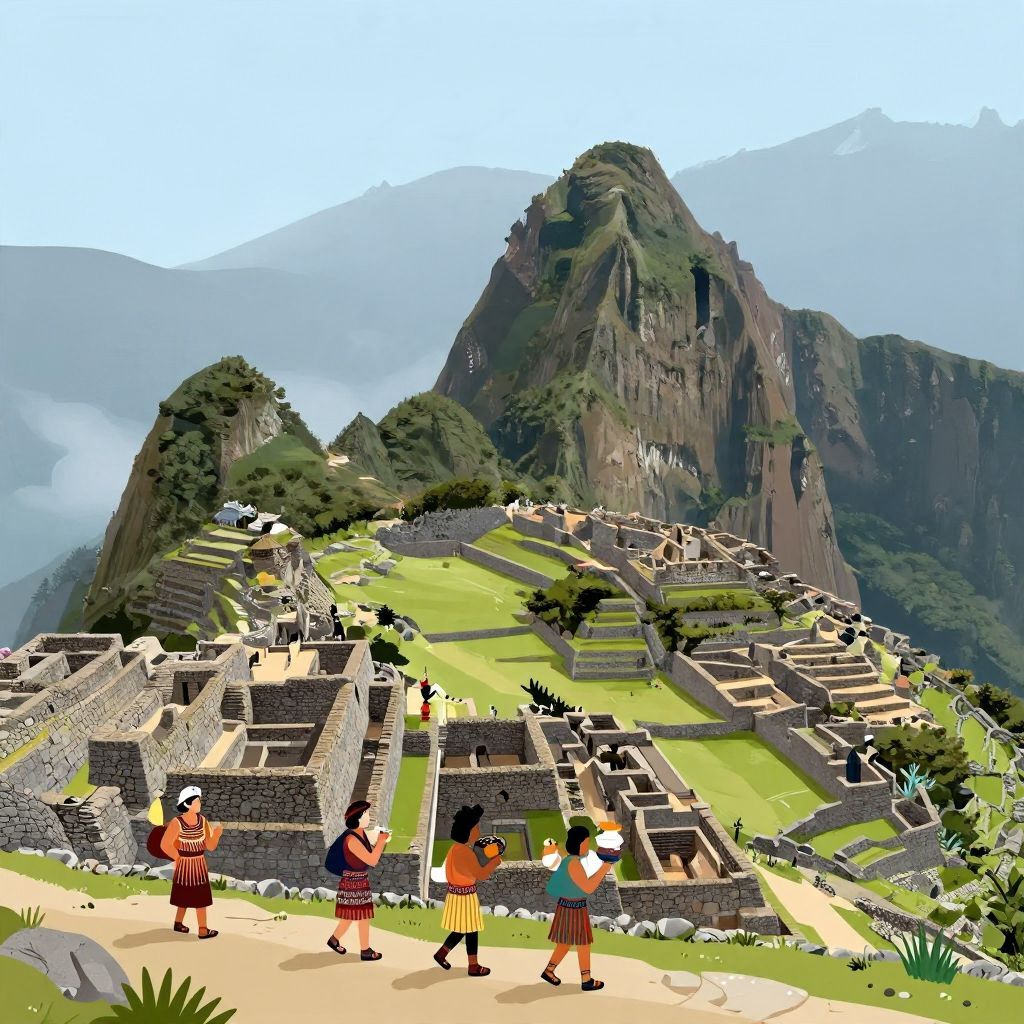
Why was Machu Picchu built? The short answer is that the Inca likely created it as a royal estate and ceremonial center in the mid-15th century, during the reign of Pachacuti. It was not a city in the modern sense, but a carefully planned mountain complex tied to elite power, religion, and control of the surrounding landscape.
Its exact purpose is still debated because the Incas left no written records in the way Europeans did, and much of what we know comes from archaeology, Spanish-era accounts, and later interpretation. What is clear is that Machu Picchu was designed for more than survival: it was a place of status, ritual, and political meaning.
Why Was Machu Picchu Built?
Machu Picchu was built most likely as a royal retreat and sacred estate for the Inca ruler Pachacuti, around the mid-1400s. Archaeological evidence suggests it served multiple functions at once: a residence for the elite, a ceremonial site, and a symbol of Inca authority over land, labor, and the natural world.
A royal estate, not just a fortress
For a long time, some writers described Machu Picchu as a military stronghold or hidden fortress. That idea is now less convincing. The site has defensive features because it sits in a difficult mountain location, but its layout, buildings, and agricultural terraces fit better with a high-status estate than with a permanent army base. It appears to have housed nobles, attendants, priests, and workers rather than a large garrison.
A place for ritual and sacred geography
The Incas saw mountains, rocks, water, and the sky as spiritually powerful. Machu Picchu’s placement between peaks and above the Urubamba River was not accidental. Its temples, carved stones, sightlines, and water systems suggest that the site was meant to work with the landscape in a religious sense. In Inca thought, controlling a place like this meant more than occupying it physically; it meant shaping a sacred environment.
A statement of imperial power
Pachacuti transformed the Inca state from a regional kingdom into a growing empire. Building Machu Picchu would have demonstrated wealth, organization, and the ability to mobilize labor in a remote place. The site showed that the Inca elite could command stone, water, crops, and human labor in one of the most challenging environments in the Andes.
The Historical Context: The Inca Empire and Pachacuti
Machu Picchu belongs to the period when the Inca Empire was expanding rapidly from its base in Cusco, in present-day Peru. Pachacuti, who ruled in the 15th century, is widely credited with major imperial reforms and territorial expansion. He and his successors used monumental construction to express political legitimacy and divine favor.
Why the Inca built in difficult places
The Incas often built on mountain ridges, steep slopes, and dramatic landscapes. This was partly practical: high ground could be easier to defend and could connect to existing routes and resources. But it was also ideological. The Inca linked authority to mastery over nature, and impressive architecture in a remote setting reinforced that message.
Labor and organization
Large Inca projects depended on the mit’a, a system of labor obligation in which communities contributed work to the state. That made it possible to quarry stone, terrace hillsides, build canals, and transport supplies without iron tools or wheeled vehicles. Machu Picchu reflects this state capacity: it was not a spontaneous village, but a planned project requiring coordination over time.
What Archaeology Suggests About Its Purpose
Archaeologists have studied Machu Picchu’s buildings, burials, terraces, and artifacts to understand how it was used. The evidence points to a site with both elite domestic spaces and ceremonial functions. It was probably occupied seasonally or intermittently rather than continuously by a dense population.
Residential and elite spaces
Some structures resemble high-status residences, with finely cut stonework and organized compounds. The presence of storage areas, kitchens, and domestic spaces shows that people lived and worked there. However, the number of ordinary domestic features is limited compared with what one would expect in a large urban center.
Religious architecture
Several features are commonly interpreted as ceremonial. These include the Temple of the Sun, the Intihuatana stone, and carefully aligned windows and stones that may have tracked solar events. Such features support the idea that Machu Picchu was used for ritual observation and elite religious practices, especially those tied to the sun and seasonal cycles.
Agriculture and supply
The extensive terraces were not only decorative. They stabilized the slope, improved drainage, and created arable land for crops. This matters because it shows the site was intended to function as a productive estate, not merely a symbolic monument. The terraces may have supported the people living there and supplied the broader imperial network.
Why This Location?
The location of Machu Picchu is one of the strongest clues to its purpose. It sits in a dramatic setting where mountains, rivers, and clouds create a powerful visual and spiritual landscape. For the Incas, such places were not random backdrops; they were active parts of the sacred order.
Connection to the landscape
The site is positioned among peaks that appear to have had ritual significance. The surrounding geography likely helped define Machu Picchu as a special place separate from ordinary settlement life. Its planners seem to have chosen the location to integrate architecture with sacred topography.
Access and isolation
Machu Picchu is difficult to reach, which may have been part of its appeal. Isolation could protect elite activity, limit access, and create a sense of exclusivity. At the same time, the site was not completely cut off; it was connected to roads and routes that linked it to the wider Inca world.
Was Machu Picchu a City, Fortress, or Sanctuary?
Different labels have been used for Machu Picchu, but none fully captures it on its own. The best historical explanation is that it was a multifunctional royal estate with ceremonial importance. It may also have had strategic value, but that was likely secondary to its political and religious roles.
Why “fortress” is too simple
The fortress idea became popular because of the site’s dramatic walls and position on a ridge. Yet the evidence does not show a strong military purpose as the main function. There are no signs of a large standing army or the kind of fortification system one would expect from a purely defensive site.
Why “sanctuary” is also incomplete
It certainly had ritual importance, but calling it only a sanctuary ignores the domestic and agricultural evidence. The Inca elite did not separate politics, religion, and daily life in the modern way. Machu Picchu worked because those functions were intertwined.
The most balanced interpretation
Most historians and archaeologists today treat Machu Picchu as a site that combined residence, ritual, and imperial display. That interpretation fits the evidence better than any single-purpose explanation. It was built to serve the Inca state and the ruler who stood at its center.
What Happened to Machu Picchu After It Was Built?
Machu Picchu appears to have been used for a relatively short period before the Spanish conquest disrupted the Inca world in the 16th century. It was not destroyed in the same way as some other Inca centers, but it was eventually abandoned. The reasons are not fully certain, though political collapse and changing regional conditions likely played major roles.
Spanish conquest and abandonment
After the arrival of the Spanish, the Inca state was destabilized by war, disease, and the loss of political control. Sites like Machu Picchu, which depended on imperial organization and labor, could no longer function as they had before. Over time, the site fell out of regular use and was reclaimed by vegetation.
Why it survived physically
One reason Machu Picchu remains so well preserved is that it was hidden from major colonial development. Its remote location helped protect it from the kind of rebuilding or quarrying that damaged many other ancient sites. That isolation later made it one of the most famous archaeological discoveries in the Andes.
Common Myths and Misunderstandings
Machu Picchu is often surrounded by dramatic claims, but history is usually more complex. The site was not “lost” in an absolute sense, since local people knew of it long before outside attention made it famous. It was also not necessarily a secret refuge for the last Inca ruler, though popular stories have sometimes suggested that.
Not a mystery built by aliens or outsiders
There is no credible evidence that Machu Picchu was built by any civilization other than the Inca. Its construction techniques, layout, and cultural context are consistent with Inca engineering and planning. The achievement is remarkable precisely because it was human, not mysterious in a supernatural sense.
Not just a tourist icon
Today Machu Picchu is known worldwide as a heritage site, but its original meaning was political and sacred. Modern tourism can obscure that fact. To understand why it was built, it helps to see it as part of an imperial system rather than as an isolated wonder.
Why Machu Picchu Still Matters
Machu Picchu matters because it reveals how the Inca combined power, religion, and landscape into a single built environment. It shows that architecture in the Andes was not only about shelter or defense, but also about legitimacy, sacred order, and state control. The site is one of the clearest examples of how the Inca expressed authority through construction.
The best answer to why Machu Picchu was built is that it served the needs of the Inca elite: a royal estate for Pachacuti, a ceremonial center, and a powerful statement of empire. Its terraces, temples, and mountain setting were all part of that design. For readers interested in how states use monumental building to project power, related history topics such as the purpose of the Great Wall of China can offer a useful comparison.