
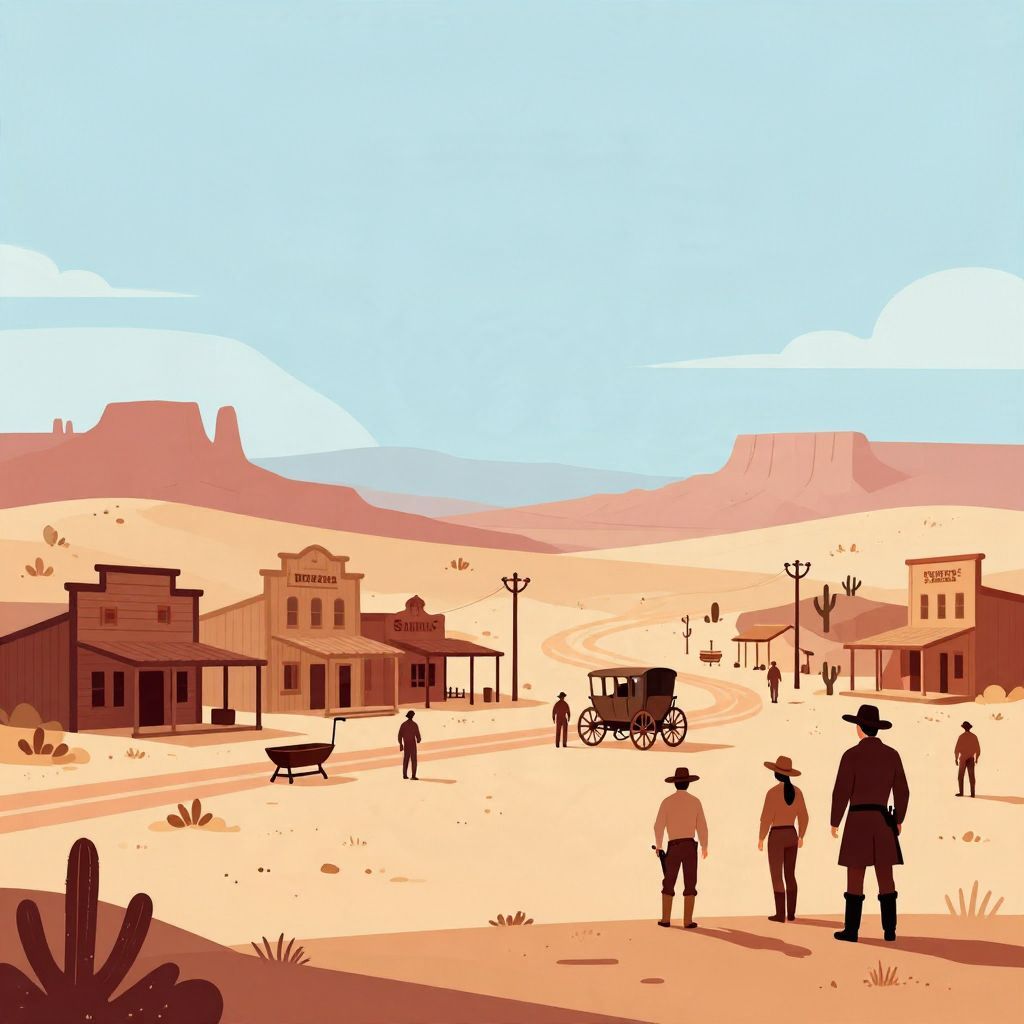
Where was the Wild West? The short answer is that it was not a single town or a fixed border, but a broad region of the western United States during the 19th century, especially the lands beyond the Mississippi River as Americans moved toward the Pacific. It included places such as Texas, Kansas, Nebraska, Colorado, the Dakotas, Montana, Wyoming, Arizona, New Mexico, Nevada, Utah, and parts of California.
The phrase “Wild West” describes a historical frontier zone shaped by migration, war, mining, ranching, railroads, and conflict over land and power. Its exact boundaries changed over time, but it is most closely associated with the decades after the Civil War, when settlement expanded rapidly across the interior West.
Where Was the Wild West?
The Wild West was the western frontier of the United States in the 1800s, especially the Great Plains, Rocky Mountain region, Southwest, and Pacific coast territories. It was not one place with a fixed border. Instead, it was a moving frontier where U.S. expansion, Native resistance, and new settlements overlapped from roughly the 1840s to the early 1900s.
A region, not a single location
People often imagine the Wild West as one dusty town with cowboys and saloons, but historically it covered a huge and changing area. At different times, the “West” meant lands just beyond the Mississippi, then the Plains, then the mountain West, and finally the Pacific slope. What counted as “wild” depended on how far eastward settlement had advanced.
Commonly included places
- Texas and the southern Plains
- Kansas, Nebraska, and the central Plains
- Colorado, Wyoming, Montana, and the Rocky Mountain region
- Arizona and New Mexico in the Southwest
- Nevada, Utah, and parts of California
- Later, parts of the Dakotas and the northern plains
Why the Wild West Moved Westward
The “Wild West” shifted because American settlement kept moving. As farms, railroads, mining camps, and new towns spread west, areas that once seemed remote became organized states and territories. In this sense, the Wild West was a frontier process, not a permanent map feature. One region’s frontier often became another region’s settled center.
Expansion after the Louisiana Purchase
The United States acquired a vast interior in the Louisiana Purchase of 1803, but large parts of it remained sparsely settled by Euro-American Americans for decades. Exploration, trade routes, and military expeditions gradually opened the interior. By the mid-1800s, migration trails and federal policy were pushing settlement farther west.
Manifest Destiny and migration
Many Americans in the 19th century believed the nation was meant to expand across the continent. That idea, often called Manifest Destiny, helped justify migration and territorial acquisition. Wagon trains, land claims, and new towns followed, bringing farmers, merchants, soldiers, and speculators into places that had long been home to Native nations and other communities.
The Historical Background of the Wild West
The Wild West emerged from a combination of U.S. expansion, Native dispossession, the Civil War era, and economic opportunity. Its history is tied to the displacement of Indigenous peoples, the growth of cattle ranching, the discovery of minerals, and the arrival of the railroad. These forces created both opportunity and violence across the frontier.
Native nations were there first
Before the frontier era, the region was already inhabited by many Indigenous peoples, including the Lakota, Cheyenne, Comanche, Apache, Navajo, Kiowa, Crow, Ute, Paiute, and many others. For them, the “Wild West” was not empty land. It was homeland, hunting ground, trade network, and political territory. U.S. expansion brought treaties, broken promises, forced removals, and warfare.
Mexican and Spanish borderlands
Large parts of the Southwest had been under Spanish and then Mexican control before becoming part of the United States. This means the Wild West was also a borderlands history. Spanish missions, ranching traditions, and Mexican communities shaped the region long before popular Western stories focused on Anglo-American settlers and cowboys.
What Areas Are Most Associated with the Wild West?
When historians and popular culture talk about the Wild West, they usually mean the western territories and states where frontier conditions were most visible in the late 1800s. Some places became especially famous because of gold rushes, cattle drives, railroad expansion, or conflict between settlers, Native nations, and federal forces.
Texas and the cattle frontier
Texas is one of the best-known Wild West settings because of its ranching culture, long cattle drives, and border conflicts. After the Civil War, cowboys moved herds north to railheads in Kansas and Nebraska, linking Texas with the wider western economy. Towns along these routes became symbols of frontier life.
Kansas and the railroad towns
Kansas became famous for cattle towns such as Abilene and Dodge City. These places sat at the meeting point of ranching, rail transport, and law enforcement challenges. They were not lawless in a simple sense, but they were fast-growing, commercial, and often unstable during boom years.
The mining West
Colorado, Nevada, Montana, and California became central to the Wild West image because of mining rushes. Gold and silver strikes drew thousands of fortune seekers, creating boomtowns that could grow overnight. Mining camps often had little infrastructure at first, which fed the image of rough justice and sudden wealth.
The Southwest borderlands
Arizona and New Mexico were shaped by military campaigns, ranching, Indigenous resistance, and railroads. Their frontier history included long conflicts over land, water, and political control. In these areas, the “Wild West” was as much about empire and borderlands as it was about cowboys and sheriffs.
When Did the Wild West Exist?
There is no single start or end date, but the Wild West is usually associated with the mid-1800s through the early 1900s. Its most famous period came after the Civil War, roughly from the 1860s to the 1890s. By then, railroads, telegraphs, and new state governments were transforming the frontier into a more settled society.
A rough timeline
- 1803–1840s: Expansion into the interior begins after the Louisiana Purchase.
- 1840s–1850s: Migration trails, the Mexican-American War, and the California Gold Rush accelerate western settlement.
- 1860s–1880s: The classic “Wild West” era of cattle drives, mining camps, and frontier conflicts peaks.
- 1890s–early 1900s: The frontier closes in many areas as settlement and statehood spread.
The “closing” of the frontier
By the 1890s, the U.S. Census Bureau declared that a distinct frontier line no longer clearly existed. That did not mean the West became peaceful overnight. It meant that large stretches of land had been settled, surveyed, and integrated into the national economy. The mythic Wild West lived on in books, dime novels, films, and later television.
Why the Wild West Became a Mythic Idea
The historical West and the popular Wild West are not exactly the same thing. Real frontier life included farming, family life, trade, and local institutions, not just gunfights. But sensational stories about outlaws, marshals, and showdowns spread widely in newspapers, dime novels, and later Hollywood films. Those stories helped turn a regional history into a national myth.
Reality versus legend
Popular culture often exaggerates how lawless the West was. Many communities had courts, sheriffs, churches, schools, and civic organizations. Violence certainly existed, but it was uneven and tied to specific conflicts: land disputes, cattle theft, labor struggles, racial tension, and political power. The “Wild West” label simplifies a much more complex history.
Whose West?
Different groups experienced the frontier differently. For settlers, it could mean opportunity. For Native nations, it often meant invasion and survival. For Mexican Americans, African Americans, Chinese immigrants, and others, it could mean new work and new danger, along with discrimination and exclusion. The West was never one story.
How Geography Shaped the Wild West
The landscape itself helped define the frontier. Long distances, dry climates, mountains, grasslands, and limited transportation made settlement difficult. Rivers, passes, and railroad lines became crucial routes. The physical scale of the West made local control weak in some places and encouraged fast-moving towns, mobile labor, and conflict over scarce resources.
Transportation changed everything
Before railroads, travel across the West was slow and risky. Wagon trails, stagecoaches, and river crossings connected isolated settlements. Once railroads expanded, they brought migrants, goods, and federal power more quickly. Rail lines also helped create boomtowns and made cattle shipping profitable on a large scale.
Water, land, and survival
In many western regions, water was the most valuable resource. Control of rivers, springs, and irrigation systems shaped settlement patterns. Farming in dry regions required adaptation, while ranching depended on open range and grazing land. These practical realities influenced where towns formed and why conflicts erupted.
The Lasting Legacy of the Wild West
The Wild West left behind more than legends. It shaped the modern American West, including its cities, rail lines, state borders, and land use patterns. It also left a difficult legacy of displacement, environmental change, and unequal power. Understanding where the Wild West was means understanding both the geography and the human cost of expansion.
So, where was the Wild West? It was the broad western frontier of the United States, especially the Great Plains, Rocky Mountains, Southwest, and parts of the Pacific West during the 19th century. It was a moving historical zone, not a single place, and its story is inseparable from expansion, conflict, and settlement. For related reading, see when the Wild West ended and what the Homestead Act was.