
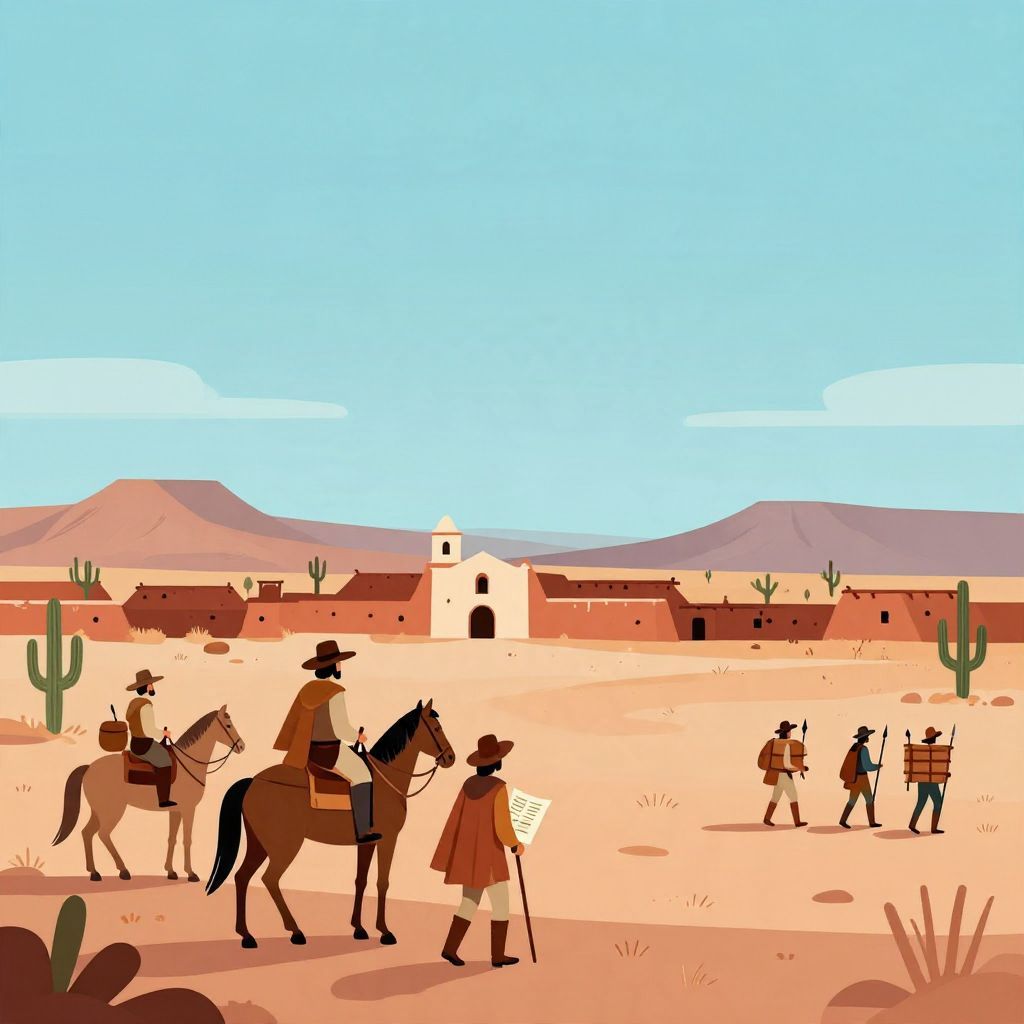
Why is New Mexico called New Mexico? The short answer is that Spanish explorers and colonists gave the region a name that meant “New Spain” or “the new Mexico,” using “Mexico” as a familiar place-name for a hoped-for northern extension of Spanish power. The name long predates U.S. statehood and reflects colonial geography, not a modern political claim about the nation of Mexico.
Understanding the name means tracing Spanish exploration in North America, the creation of the colony of New Mexico, and the way names traveled across empires. It also helps explain why the state’s name can seem confusing today, even though it made sense in the world of the 1500s and 1600s.
Why Is New Mexico Called New Mexico?
New Mexico was named by Spanish explorers in the late 16th century, before the modern country of Mexico existed. They used the phrase Nuevo México for lands north of central New Spain, hoping or believing they might contain wealth and peoples comparable to the rich territory they already knew. The “new” in the name signaled a frontier region within the Spanish imperial world.
The Spanish Origins of the Name
What “Mexico” meant to the Spanish
When the Spanish began naming places in North America, “Mexico” already referred to the central region around the Aztec capital of Tenochtitlan, which the Spanish conquered in 1521. In Spanish usage, Mexico became a powerful geographic and political label for the heart of New Spain. Calling a northern frontier “New Mexico” fit a common imperial habit: attaching “new” to a known place-name to mark a related but newly encountered territory.
This was not unusual. European powers often reused familiar names for lands they hoped to claim, govern, or settle. “New” England, “New” France, and “New” Spain all followed the same logic. The name did not mean the territory was a copy of central Mexico; it meant Spanish officials and explorers were extending their mental map northward.
When the name first appeared
The name Nuevo México emerged in Spanish exploration during the late 1500s, especially after expeditions moved north from central New Spain into the upper Rio Grande region. One important figure was Francisco Sánchez, known as El Chamuscado, whose expedition in 1581–1582 helped open the area to Spanish attention. By the 1590s, the label New Mexico was being used more clearly in Spanish colonial planning and reporting.
The most famous early expedition was led by Juan de Oñate, who entered the region in 1598 and established a Spanish colony along the Rio Grande. Oñate’s settlement helped turn a geographic idea into a colonial province. From that point on, New Mexico became an official Spanish frontier province, though its boundaries and control remained unstable for decades.
What Spanish Colonization Was Trying to Do
A frontier of empire, not a future U.S. state
To Spanish officials, New Mexico was part of a much larger imperial project. Spain wanted to expand Catholic mission work, secure territory, and search for wealth. Reports of wealthy indigenous societies and rumors of northern riches encouraged the belief that the region might be another “Mexico” in the sense of a major and valuable land.
In reality, New Mexico was far from the densely populated, highly organized center of New Spain. The Spanish found Pueblo communities with long-established agriculture, trade networks, and religious traditions, but not the kind of wealth they had associated with the conquest of central Mexico. Even so, the name remained, because colonial names often outlasted the expectations that created them.
Mission, settlement, and resistance
Spanish rule in New Mexico was never simple or secure. Franciscan missionaries sought to convert Pueblo peoples, while settlers and officials tried to build a colonial society around the Rio Grande. This brought conflict, especially as Spanish demands for labor, tribute, and religious change intensified.
The most dramatic break came with the Pueblo Revolt of 1680, when Pueblo peoples drove the Spanish out of the region for more than a decade. When the Spanish returned in 1692–1693, they came back to a changed political landscape. The province still kept the name New Mexico, showing that the colonial label had become deeply embedded even after Spanish authority had been interrupted.
Why the Name Still Makes Sense Historically
“New” was a colonial naming pattern
Modern readers sometimes assume New Mexico must be named after the country of Mexico, but historically the order is the reverse. The Spanish named the region long before Mexico became an independent nation in 1821. So the state’s name does not mean “a newer version of Mexico” in the modern national sense. It means “the northern New Mexico” imagined by Spanish colonizers within the Spanish Empire.
That distinction matters. The Spanish used “Mexico” as a place-name for a region they already knew and ruled. Later, when the independent nation of Mexico emerged, the older colonial name remained attached to the northern province and later the U.S. territory and state. The result is a name that sounds modern but is actually rooted in early colonial history.
Geography reinforced the label
The Rio Grande valley and surrounding lands were part of a broad cultural and political zone that connected indigenous communities, Spanish settlements, and later Mexican and American administrations. The name New Mexico became a durable shorthand for that frontier world. It survived because it was already established in maps, government records, and everyday speech long before borders hardened into their present form.
In other words, the name persisted not because it was the most accurate description of the region, but because it had become the official and familiar one. Historical names often survive long after the circumstances that created them have changed.
From Spanish Province to U.S. State
How the name passed through different governments
New Mexico’s name survived several political transitions. After Mexico won independence from Spain in 1821, the province became part of the Mexican republic. Following the U.S.-Mexican War, the United States acquired the region in 1848 through the Treaty of Guadalupe Hidalgo. The area then became the U.S. Territory of New Mexico in 1850 and the state of New Mexico in 1912.
Each government inherited the old colonial name rather than replacing it. That continuity is one reason the name can seem surprising today: it belongs to a much older era than the modern nation-state system most people assume when they hear it.
Why the name was not changed
There was no strong reason to rename the region once the Spanish label had become established. By the time the United States acquired the territory, “New Mexico” was already widely recognized in law, maps, and local identity. Renaming it would have created confusion and would have erased a long colonial and regional history.
Names can be powerful carriers of memory. Even when political sovereignty changes, older names often remain because they are tied to settlement patterns, institutions, and local identity. New Mexico is a clear example of that historical continuity.
Common Misunderstandings About the Name
It is not named after the modern country alone
A common misconception is that New Mexico was named after the independent nation of Mexico. That is not correct. The Spanish name predates Mexican independence by more than two centuries. The region was named within the Spanish colonial world, not in response to a neighboring nation-state.
It does not mean the state is “new” in a modern sense
Another misunderstanding is that “New Mexico” suggests a newer version of the country or a place populated mainly by Mexicans. Historically, the name was a colonial label chosen by Spaniards, and the region has always had a complex mix of indigenous, Hispanic, Mexican, and later Anglo-American influences. The word “new” reflected imperial imagination, not modern demographics.
It is part of a broader naming tradition
New Mexico belongs to a family of place-names created by European expansion. Colonizers often used “new” to connect unfamiliar lands to familiar ones, making distant territories easier to imagine and claim. This helps explain why the name feels both ordinary and odd: it is a relic of an older world of empire, exploration, and settlement.
Why the Name Matters Today
The name New Mexico is more than a label on a map. It preserves the memory of Spanish exploration, Pueblo resistance, colonial settlement, and the long transformation of a frontier province into a U.S. state. It also reminds us that place-names often tell stories about power, expectation, and historical continuity.
So, why is New Mexico called New Mexico? Because Spanish explorers and colonists named it in the late 1500s as part of their expanding empire, using a familiar imperial place-name for a northern frontier they hoped would be another rich and important land. The name survived every later political change, which is why it still stands today. If you enjoy the history behind state names, you may also like why New Jersey is called the Garden State and why Tennessee is called the Volunteer State.