
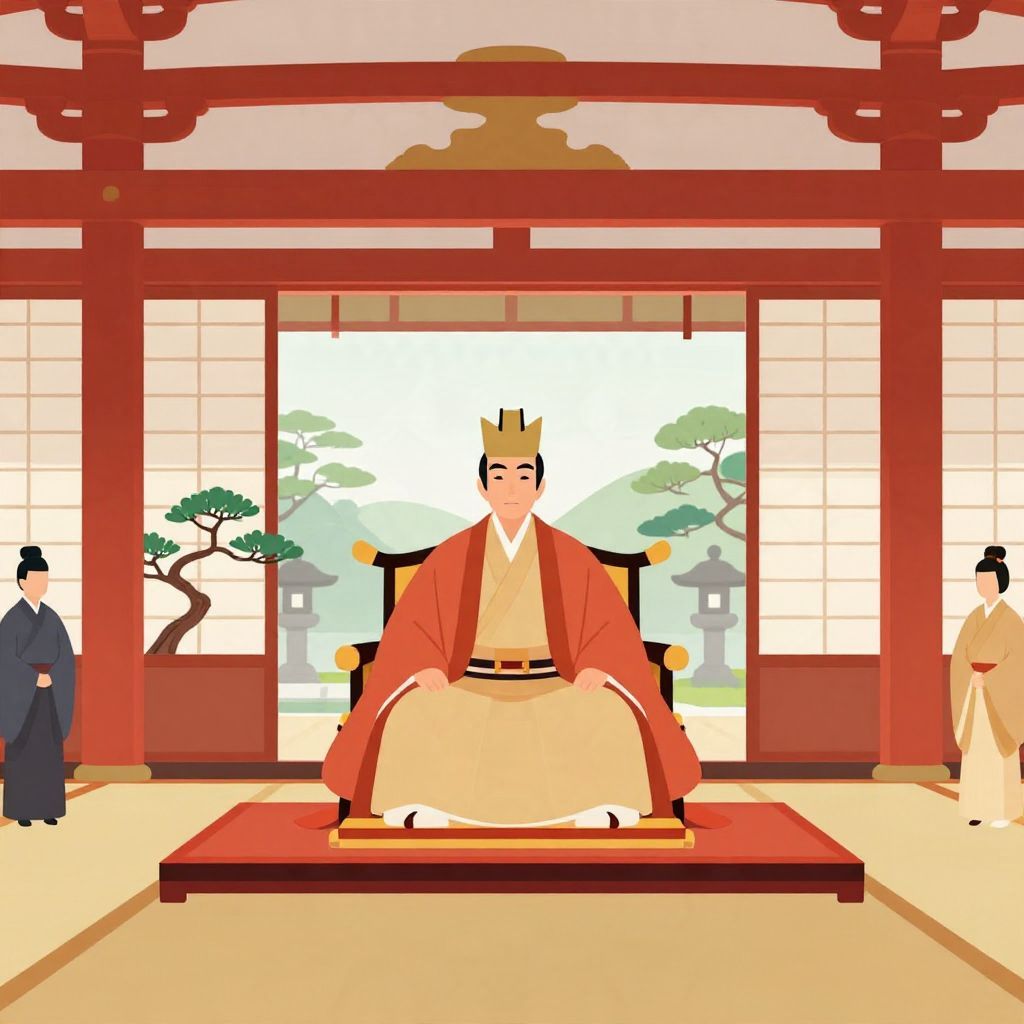
Yes—Japan still has an emperor today. The modern Japanese emperor is a constitutional monarch, not a ruling emperor in the old imperial sense, and the office continues as part of Japan’s postwar political system.
That makes the answer both simple and historically interesting. Japan’s imperial line is one of the world’s oldest continuous monarchies, but the emperor’s role changed dramatically over time, especially after World War II.
Does Japan still have an emperor?
Yes. Japan still has an emperor, and the office remains central to the nation’s ceremonial life. Today the emperor serves as a symbolic head of state under Japan’s constitution, while elected politicians hold real governing power. The current emperor is Emperor Naruhito, who acceded to the throne in 2019.
What the Japanese emperor does today
Modern Japan is a constitutional monarchy. That means the emperor is a symbol of the state and of the unity of the people, but does not rule the country or make policy. The prime minister and the National Diet, Japan’s parliament, handle government decisions.
Ceremonial and constitutional role
The emperor’s duties are largely formal. He appoints the prime minister and the chief justice of the Supreme Court, but only in ways required by the constitution and based on political decisions already made by elected institutions. He also opens the Diet, receives foreign ambassadors, and performs important state and cultural ceremonies.
Why the emperor still matters
Even without political power, the emperor remains historically and culturally significant. The imperial household is tied to Japan’s identity, court rituals, seasonal ceremonies, and public memory. For many Japanese people, the emperor represents continuity across centuries of change, from feudal rule to modernization and defeat in war.
How Japan’s emperors gained and lost power
Japan’s emperors have not always had the same authority. Their political influence shifted repeatedly over more than a millennium. At some points emperors ruled directly; at others they were overshadowed by regents, military leaders, or shoguns. The modern symbolic monarchy is the result of this long evolution.
Early imperial Japan
Traditional Japanese history traces the imperial line back to ancient times, but the earliest emperors belong partly to legend and partly to history. By the 6th and 7th centuries, the Yamato court had become a recognizable political center. Over time, the emperor’s authority grew as a courtly and ritual institution, even when practical power was limited.
The rise of warrior government
From the late 12th century, military rule transformed Japan. Shoguns—military commanders who governed in the emperor’s name—became the real political power. The emperor remained important as a source of legitimacy, but the shogunate handled administration, warfare, and foreign relations. This pattern lasted for centuries, especially under the Kamakura, Ashikaga, and Tokugawa shogunates.
Restoration and modernization
In 1868, the Meiji Restoration ended the Tokugawa shogunate and restored direct imperial rule in name. In practice, the emperor became the center of a modernizing state led by oligarchic reformers. The Meiji government used the emperor as a powerful national symbol while building a centralized, industrial, and military state.
The emperor in World War II and after
The emperor’s role became especially controversial during Japan’s expansion in the early 20th century and the Second World War. The imperial institution was closely associated with state nationalism, military mobilization, and wartime sacrifice. After Japan’s defeat in 1945, the emperor system was preserved, but fundamentally redefined.
Emperor Hirohito and the postwar settlement
Emperor Hirohito, who reigned from 1926 to 1989, remained emperor after the war, but his status changed under the Allied occupation. In 1946, he issued a public renunciation of the idea that he was divine in the traditional sense. The new constitution, effective in 1947, made the emperor “the symbol of the State and of the unity of the people,” removing sovereign political power from the throne.
Why the monarchy was kept
Japanese leaders and occupation authorities saw value in preserving the imperial institution as a stabilizing symbol during a period of upheaval. Abolishing the monarchy might have created political uncertainty. Instead, Japan redefined the emperor’s role within a democratic framework, separating the throne from military and governmental authority.
Who is the current emperor of Japan?
Japan’s current emperor is Naruhito. He became emperor on 1 May 2019, after the abdication of his father, Akihito. Naruhito’s accession marked the beginning of the Reiwa era, the era name used in Japan’s calendar system for official and cultural purposes.
Akihito’s abdication
Akihito reigned from 1989 to 2019 and was known for emphasizing public service, disaster remembrance, and reconciliation. His abdication was unusual in modern Japanese history and required special legislation, since abdication had not been common in the postwar era. Naruhito’s succession continued the imperial line without interruption.
Era names and imperial continuity
Japan uses era names alongside the Western calendar. The reign of each emperor gives its name to an era, such as Meiji, Taishō, Shōwa, Heisei, and Reiwa. This system reinforces the emperor’s symbolic presence in everyday life, even though Japan is a modern democracy.
Is the Japanese emperor the same as a king?
No, the title is different, and the office has its own historical tradition. Japan has an emperor rather than a king because the imperial institution developed independently from European monarchy. In Japanese, the title is tennō, usually translated as “emperor.”
Title and tradition
An emperor is generally considered a ruler of higher rank than a king in historical terminology, though the exact hierarchy varies by culture and era. In Japan, the emperor’s title reflects a distinctive political and cultural history rather than a simple equivalent to European royalty.
Why the distinction matters
The Japanese throne is not just a matter of rank. It is bound up with mythic origin stories, court ritual, and state symbolism. For centuries, the emperor’s legitimacy was linked to descent from the sun goddess Amaterasu in traditional belief. Historians treat this as a foundational cultural myth rather than a verifiable genealogical fact.
How old is Japan’s imperial line?
Japanese tradition says the imperial line began with Emperor Jimmu in 660 BCE, but historians do not treat that date as securely documented. The earliest emperors are part of Japan’s origin mythology, and reliable historical evidence becomes clearer only much later. What can be said with confidence is that the imperial institution is very old and has survived major political transformations.
Legend, tradition, and evidence
The early chronology of Japanese emperors mixes legend, court tradition, and later record-keeping. As with many ancient monarchies, the earliest claims cannot be verified in the same way as modern history. Still, the continuity of the imperial house as a political and cultural institution is historically significant, even if the earliest dates are uncertain.
Continuity without unchanged power
One reason the Japanese monarchy attracts interest is that it endured while its powers changed dramatically. The institution survived the rise of samurai rule, the Meiji state, wartime militarism, occupation reform, and postwar democracy. That continuity is real, but it should not be mistaken for unbroken political authority.
Why people still ask this question
Many people ask whether Japan still has an emperor because the office seems unusual in the modern world. Unlike many monarchies, Japan’s imperial institution is less visible in day-to-day politics, so it can be easy to assume it no longer exists. In fact, it remains active, but in a carefully limited constitutional form.
Common misunderstandings
- Some people assume the emperor was abolished after World War II. He was not.
- Some think the emperor rules Japan. He does not; elected officials govern.
- Some confuse the emperor with the shogun. The shogun was a military ruler, not the emperor.
Why the confusion persists
Japan’s imperial system combines ancient tradition with modern constitutional law. That combination can be hard to classify using familiar Western political categories. The emperor is neither a ceremonial figure with no history nor a sovereign ruler with executive power. He is a symbolic monarch with deep historical roots.
The emperor’s place in modern Japan
Today, the emperor’s role is carefully defined and politically neutral. Public expectations emphasize dignity, continuity, and restraint. The imperial household also remains subject to public debate, especially regarding succession rules, gender, and the size of the imperial family.
Succession and future questions
Japan’s succession system traditionally favors male heirs in the paternal line, which has raised concern because the imperial family is small. This has led to discussion about how the monarchy might adapt in the future. These debates are ongoing and reflect the tension between tradition and modern demographic realities.
A living institution, not a relic
Although the emperor no longer governs, the office is not merely symbolic in a trivial sense. It is an active institution with constitutional duties, public rituals, and national significance. Its survival shows how an ancient monarchy can be reshaped rather than erased by modern political change.
So, does Japan still have an emperor? Yes—Japan’s emperor remains an important constitutional and cultural figure, even though real political power belongs to elected institutions. If you want to place the emperor in the wider history of Japanese rule, it also helps to understand what a shogun was and how titles like emperor differ from other forms of monarchy in royal and imperial titles.