
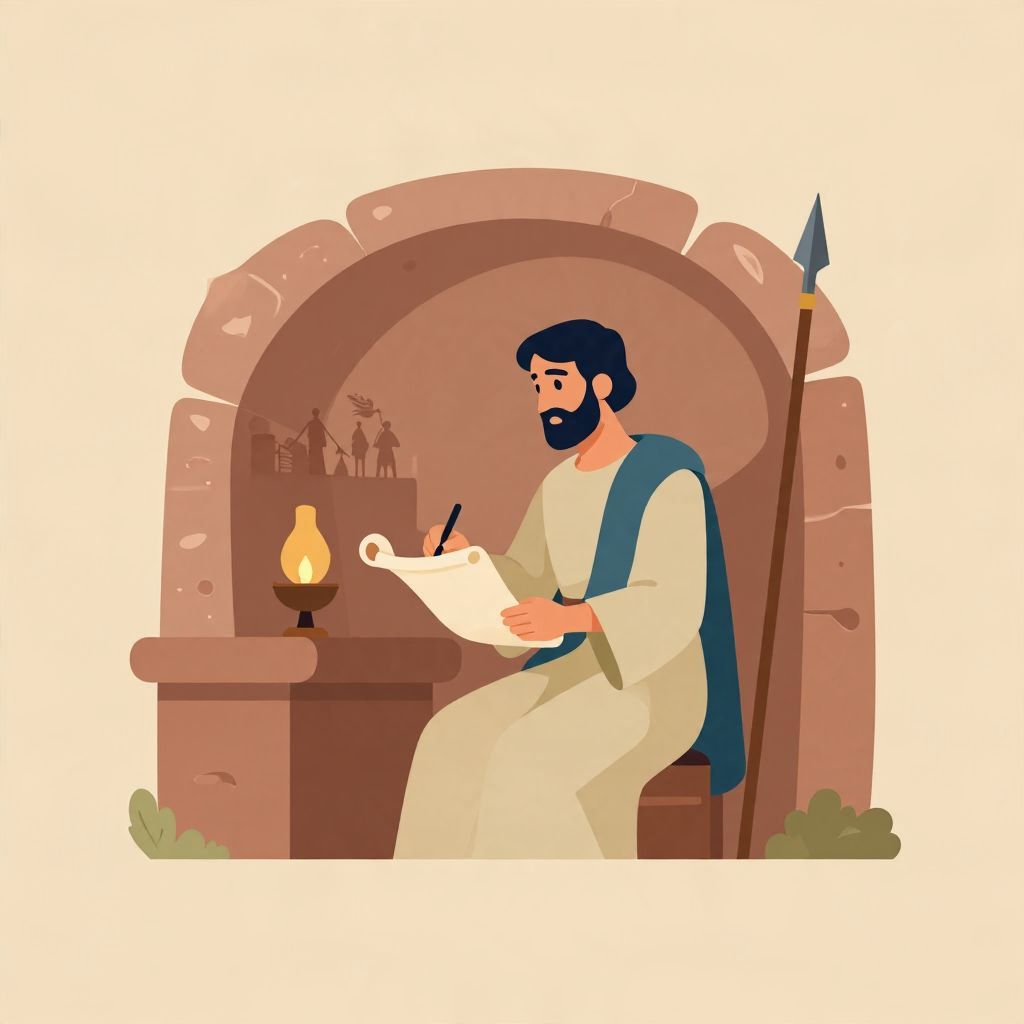
Matthew the Apostle is traditionally said to have died as a martyr, but the exact details of his death are not historically certain. Early Christian traditions place his final years in missionary work after Jesus’ ministry, yet the manner, location, and date of his death vary across sources.
What historians can say with confidence is that Matthew became one of the most important apostolic figures in Christian memory. The story of how he died belongs to the world of early church tradition, where fact, devotion, and legend often overlap.
How did Matthew the Apostle die?
According to the most common Christian traditions, Matthew the Apostle died as a martyr, likely in a foreign mission field, but the precise circumstances are unclear. Some later traditions say he was killed with a sword, spear, or axe; others describe a peaceful death after preaching. Because early evidence is limited, historians treat these accounts cautiously.
What is historically known about Matthew’s death?
There is no surviving contemporary record that gives a reliable eyewitness account of Matthew’s death. The New Testament does not describe his final years, and the earliest references come from later Christian writers. As a result, Matthew’s death is known mainly through church tradition rather than firm documentary proof.
Why the evidence is uncertain
The apostles lived in the first century CE, when Christian communities were small, scattered, and often persecuted. Many traditions about their deaths were written down generations later, after memory had already been shaped by preaching and local devotion. That does not make the traditions meaningless, but it does mean they are not equally reliable as historical evidence.
In Matthew’s case, the uncertainty is especially strong because different churches preserved different stories about where he preached and how he died. Some traditions connect him with Ethiopia, others with Persia, Parthia, or Macedonia. These locations reflect the spread of Christianity and the desire to claim apostolic authority for local churches.
The main traditions about Matthew’s death
The most widespread tradition holds that Matthew died as a martyr after evangelizing in a distant region outside Judea. However, the exact place and method of execution differ from one source to another. The tradition of martyrdom itself is ancient and important, but the details are not settled history.
Martyrdom traditions
- Execution by sword or spear: Some later accounts say Matthew was killed violently after preaching.
- Death by axe: Other traditions, especially in medieval Christian art, portray him as being slain with an axe or halberd.
- Peaceful death after ministry: A few traditions suggest he died naturally after years of missionary work.
Among these, martyrdom became the dominant memory in Christian tradition. This fits the broader pattern of the apostles being remembered as witnesses who suffered for their faith. Still, historians cannot verify the exact instrument of death or the precise sequence of events.
Where did Matthew die?
Traditions differ widely on Matthew’s burial place and death location. Ethiopia is one of the best-known settings in later Christian memory, but it is not the only one. Some ancient and medieval sources place his mission in regions around the eastern Mediterranean or farther east.
This variety matters because it shows how early Christianity spread through storytelling as well as preaching. Communities often linked an apostle to their own region to strengthen religious legitimacy. Matthew’s death story, therefore, is also a story about how Christian identity developed across the ancient world.
Who was Matthew the Apostle?
Matthew is identified in the New Testament as one of Jesus’ twelve apostles. He is also traditionally associated with the Gospel of Matthew, though modern scholars debate whether the apostle himself wrote the text in its final form. In the Gospel narratives, Matthew is called from his tax booth, symbolizing a dramatic change of life and allegiance.
Matthew in the New Testament
The Bible provides only limited direct information about him. He appears in lists of the Twelve, but after the Resurrection and Ascension, he disappears from the New Testament narrative. That silence is one reason later Christians filled the gap with traditions about his preaching, travels, and death.
For early believers, the apostles were not only companions of Jesus but also foundations of the Church. Their deaths, especially martyrdoms, were seen as proof of faithfulness and as a model for later Christians facing persecution.
Why martyrdom mattered in early Christianity
Matthew’s supposed martyrdom should be understood in the context of the first centuries of Christianity, when suffering for the faith became a powerful religious ideal. Martyr stories were not just biographical details; they were spiritual testimonies. They showed that apostolic authority came with sacrifice, endurance, and witness.
The meaning of martyr stories
In early Christian thought, a martyr was someone who bore witness to Christ even at the cost of life. The Greek word martys means “witness.” That meaning helps explain why the death stories of apostles were so important: they were not merely tales of violence, but narratives of conviction and truth.
Matthew’s death, whether historical in exact detail or not, became part of this wider tradition. It reinforced the idea that the apostles had carried the message of Jesus into dangerous places and remained faithful to the end.
What do the earliest sources say?
The earliest Christian writings do not give a detailed account of Matthew’s death. Later church historians and hagiographers—writers of saints’ lives—preserved traditions about his mission and martyrdom, but these sources were written well after the apostolic age. That distance makes them valuable for understanding belief, but less secure for reconstructing exact events.
How historians evaluate the sources
Historians usually distinguish between three levels of evidence:
- New Testament evidence: Matthew is named among the apostles, but his death is not described.
- Early church tradition: Later writers preserve claims that he preached widely and died a martyr.
- Medieval legend: Expanded stories add dramatic details, specific enemies, and exact methods of execution.
This layered tradition means that the broad claim of martyrdom is plausible within Christian memory, but the precise story cannot be confirmed with certainty.
Did Matthew really write the Gospel of Matthew?
This question is related because the apostle’s identity shaped later traditions about his life and death. Church tradition long connected Matthew with the Gospel that bears his name. Many modern scholars, however, think the Gospel was written by an anonymous Christian author who used earlier sources and traditions associated with Matthew.
That scholarly debate does not determine how Matthew died, but it does show how apostolic names were used in the early Church to anchor teaching and memory. The stronger the link to an apostle, the more authority a community believed a text or tradition carried.
How Matthew’s death was remembered in art and devotion
Because the historical record is thin, Matthew’s death became especially important in Christian art, liturgy, and popular devotion. Artists often depicted him with a book, a pen, or a martyr’s weapon, depending on the tradition they followed. These images helped believers remember both his role as evangelist and his suffering.
Symbols associated with Matthew
- Book or scroll: linked to the Gospel tradition.
- Angel or winged man: one of the traditional symbols of the four evangelists.
- Martyr’s weapon: often shown in later art to emphasize his death.
Such symbols are not historical proof, but they reveal how Christians understood Matthew’s life: as a call, a mission, and a witness sealed by death.
What likely happened in historical terms?
The most careful historical answer is that Matthew probably died sometime in the first century or early second century, after participating in the earliest spread of Christianity. He may have been remembered as a missionary who died violently, but the exact cause of death cannot be established from surviving evidence. The martyr tradition is ancient enough to deserve respect, yet not detailed enough to treat as certain fact.
In other words, the broad outline is credible: Matthew was remembered as an apostle who gave his life in service to the Christian mission. The specific story—where he went, who killed him, and with what weapon—belongs to the realm of tradition.
Why the question still matters
Asking how Matthew the Apostle died is not only about one man’s end. It opens a window onto the early history of Christianity, the formation of apostolic memory, and the way communities preserve sacred history when documentary evidence is sparse. Matthew’s death story reflects both faith and historical uncertainty.
For readers interested in biblical history more broadly, the deaths of other major figures were also remembered through a mix of scripture, tradition, and later interpretation. You may also want to read about how Moses died or how King David died.
Bottom line: Matthew the Apostle is traditionally believed to have died as a martyr, but the exact details are uncertain and come from later Christian tradition rather than firm contemporary evidence. The most historically responsible answer is that he was remembered as a faithful apostle whose death symbolized witness, sacrifice, and the spread of early Christianity.