
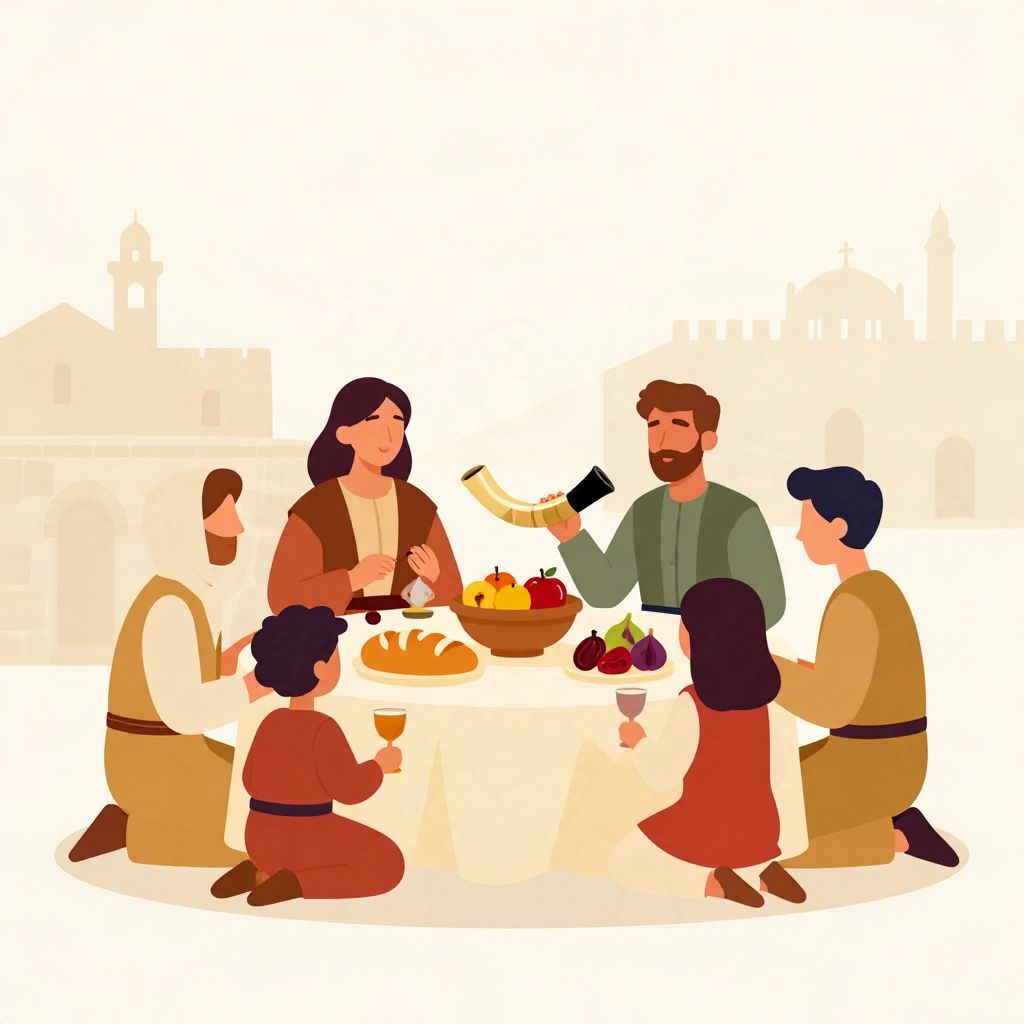
How do people celebrate Rosh Hashanah, and where did the holiday come from? The answer lies in a long religious history that combines biblical tradition, rabbinic interpretation, and family customs that developed over centuries. Rosh Hashanah is both a sacred new year and a time of reflection, prayer, and symbolic foods.
To understand how to celebrate it today, it helps to know how the holiday took shape in Jewish history and why its practices emphasize memory, judgment, and hope for renewal.
How To Celebrate Rosh Hashanah
Rosh Hashanah is traditionally celebrated by attending synagogue services, hearing the shofar blast, reciting special prayers, sharing festive meals, and greeting others with wishes for a sweet new year. Many families also eat symbolic foods such as apples dipped in honey, round challah, and pomegranates, while spending time in reflection and repentance.
What Rosh Hashanah Means in History
Rosh Hashanah is the Jewish New Year, but it is not simply a party or a calendar marker. In Jewish tradition, it marks the beginning of the High Holy Days, a ten-day period of introspection that leads to Yom Kippur. The holiday’s religious meaning developed over time from biblical ideas about sacred assemblies and trumpet blasts into a distinct annual observance centered on judgment, renewal, and communal worship.
Biblical roots
The Hebrew Bible refers to a “day of sounding” or “memorial of trumpet blasts” in the seventh month, associated with sacred assembly and rest. The exact relationship between that biblical day and later Rosh Hashanah is a matter of historical development, not a simple one-to-one continuity. By the time of rabbinic Judaism, this day had become identified as the start of the year in a religious sense.
Rabbinic development
After the destruction of the Second Temple in 70 CE, Jewish life increasingly centered on prayer, study, and synagogue practice. Rabbinic tradition gave Rosh Hashanah its familiar shape: liturgy, shofar blowing, and themes of divine judgment and remembrance. This was not invented overnight; it emerged through centuries of interpretation and communal practice.
How To Celebrate Rosh Hashanah Today
Modern celebration usually combines synagogue worship, home rituals, and acts of self-examination. The holiday is observed for one day in Israel and by many Reform Jews, and for two days in many other Jewish communities, reflecting historical differences in calendar practice and diaspora custom.
1. Attend synagogue services
Prayer is the center of the holiday. Services include special liturgy, extended prayers, and the central sounding of the shofar. Many communities also recite the Unetanneh Tokef prayer, which powerfully frames the day as a time of judgment and moral accounting.
2. Hear the shofar
The shofar, usually made from a ram’s horn, is one of the most recognizable symbols of Rosh Hashanah. Its blasts are not decorative; they are meant to awaken the conscience, call people to repentance, and mark the sacredness of the day. Traditionally, the shofar is blown in a pattern of distinct notes, though exact customs vary by community.
3. Share festive meals
Families gather for holiday meals that begin with blessings over wine and challah. A common custom is to use round challah, which symbolizes the cycle of the year. Many households also serve sweet foods to express the hope for a sweet year ahead.
4. Eat symbolic foods
Food customs differ by region and ancestry, but some are widely known:
- Apples dipped in honey for sweetness
- Round challah to symbolize continuity and cycles
- Pomegranates, often associated with abundance
- Fish head or other head-shaped foods in some communities, reflecting the wish to “be a head and not a tail”
5. Reflect, apologize, and begin anew
Rosh Hashanah is also a moral and spiritual turning point. Many Jews use the holiday to review the past year, seek forgiveness from others, and prepare for the Days of Awe. This emphasis on personal responsibility is one reason the holiday has remained meaningful across changing historical eras.
A Brief Timeline of Rosh Hashanah
The holiday’s form developed gradually. There is no single founding moment, but several historical stages are especially important.
- Biblical period — Sacred trumpet blasts and holy assemblies are associated with the seventh month.
- Second Temple era — Jewish festival practice becomes more organized, with growing liturgical significance.
- Early rabbinic period, after 70 CE — Rosh Hashanah becomes firmly defined as the Jewish New Year in rabbinic tradition.
- Medieval period — Prayer books, local customs, and symbolic foods expand across Jewish communities in Europe, North Africa, and the Middle East.
- Modern era — The holiday remains central in synagogue life and family observance worldwide, even as customs vary widely.
Why the Holiday Matters Historically
Rosh Hashanah is historically significant because it shows how Jewish tradition preserved ancient biblical themes while adapting them to new circumstances. After the loss of the Temple, prayer replaced sacrifice as the main religious expression. That shift helped shape Judaism into a portable, text-centered, and community-based tradition that could survive in diaspora.
Judgment and mercy
One of the holiday’s enduring ideas is that people are judged, yet also given the opportunity to change. This balance between accountability and mercy helped give Rosh Hashanah its emotional power. It is not only a celebration of a new year, but a solemn invitation to begin again.
Community and continuity
The holiday also reinforced communal identity. Shared prayers, familiar foods, and repeated rituals linked families to ancestors and to each other. In times of migration, persecution, or dispersion, these customs helped Jewish communities preserve continuity across borders and languages.
Common Customs and Their Historical Meaning
Many Rosh Hashanah customs are symbolic rather than legally required, and their meanings often reflect layers of history.
Apples and honey
This is one of the most widespread customs today, especially in Ashkenazi communities. It is a relatively later folk practice compared with biblical or rabbinic rites, but it has become one of the holiday’s best-known expressions of hope for sweetness in the year ahead.
Round challah
The round shape of the bread is often explained as representing the cycle of the year, the crown of kingship, or the continuity of life. Like many holiday foods, its symbolism deepened over time through community tradition.
Tashlich
In some communities, people gather near flowing water and symbolically cast away crumbs or recite prayers of repentance. This custom is medieval rather than biblical in origin, but it reflects the same larger theme: letting go of wrongdoing and starting fresh.
How Different Communities Celebrate
Rosh Hashanah is shared across Jewish communities, but observance is not identical everywhere. Sephardi, Ashkenazi, Mizrahi, and other traditions preserve distinct melodies, foods, and liturgical customs. Some communities emphasize elaborate holiday meals, while others place greater weight on extended prayer and study.
In Israel and the diaspora
In Israel, the holiday is widely observed in public and private life, and it is generally kept for one day. In many diaspora communities, especially those following traditional rabbinic practice, it is observed for two days. This difference reflects historical uncertainty in ancient calendar communication and the way Jewish law adapted to life outside the land of Israel.
Modern adaptations
Today, many families blend tradition with contemporary life. Some attend long synagogue services, while others focus on home meals and family gatherings. Even among less observant Jews, Rosh Hashanah often remains one of the most widely recognized and emotionally resonant holidays of the year.
What To Remember About Celebrating Rosh Hashanah
To celebrate Rosh Hashanah is to take part in a tradition shaped by ancient scripture, rabbinic interpretation, and centuries of Jewish life. The holiday combines joy and seriousness: it welcomes a new year while calling people to self-examination, prayer, and renewal. Its lasting significance lies in that balance between memory and hope.
If you want to explore related traditions, you may also enjoy reading about how to celebrate Hanukkah and what a yarmulke is.