
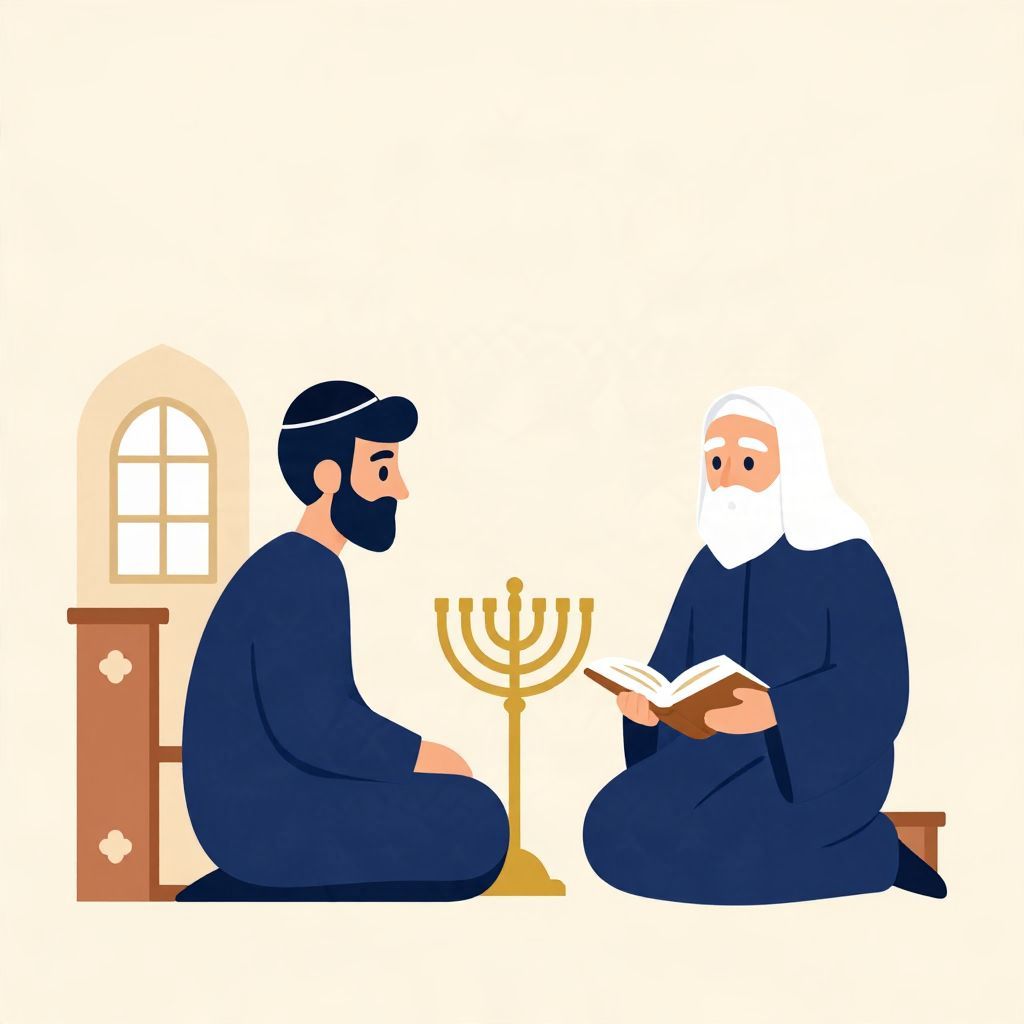
What is a yamaka? In common English usage, it usually refers to the small skullcap worn by Jewish men, and in many communities by women as well. More precisely, the item is usually called a yarmulke in Yiddish or a kippah in Hebrew.
Its history is not a single origin story but a long development of Jewish custom, religious symbolism, and changing communal practice. Over time, the yamaka became one of the most recognizable signs of Jewish identity, piety, and belonging.
What Is a Yamaka?
A yamaka is a small cap worn on the head, most often associated with Jewish religious observance. The terms yarmulke and kippah are more common and more precise; “yamaka” is a widespread English spelling and pronunciation variant. Historically, it has functioned as a sign of reverence, communal identity, and, in many settings, everyday religious habit.
Origins of the Yamaka: Where Did the Practice Come From?
The practice of covering the head did not begin with a single biblical commandment. Instead, it developed gradually in Jewish life. In ancient and late antique Jewish sources, head covering appears in different forms and contexts, especially as a sign of respect before God. By the medieval period, the custom had become more established in many Jewish communities, though not universally required in the same way everywhere.
Ancient and Rabbinic Background
The Hebrew Bible does not command a permanent skullcap. However, Jewish tradition placed strong emphasis on humility before God, and later rabbinic literature encouraged head covering in prayer and study. In the Talmudic and post-Talmudic world, covering the head could signal reverence, modesty, and awareness of divine presence.
From Custom to Common Practice
By the Middle Ages, Jewish communities in Europe and the Islamic world had developed varied customs around head covering. Some Jews covered their heads at all times, while others did so mainly during prayer, blessings, or Torah study. The small cap we now associate with the yamaka emerged within this broader tradition, rather than as an isolated invention.
Why Do Jews Wear a Yamaka?
The yamaka is worn for several overlapping reasons: reverence toward God, identification with the Jewish people, and continuity with inherited tradition. In Orthodox communities it is often treated as a strong norm or obligation, while in Conservative, Reform, and secular settings it may be worn selectively, symbolically, or not at all. Meaning therefore depends on community and context.
Reverence and Humility
One of the oldest explanations is that covering the head reminds a person that God is above them. The gesture is outward and simple, but its meaning is inward: humility, discipline, and religious consciousness. This symbolic role helped the custom survive across centuries and changing societies.
Identity and Communal Belonging
In modern history, the yamaka also became a visible marker of Jewish identity. In places where Jews were a minority, wearing one could express pride and continuity. In more hostile environments, it could also expose a person to discrimination. That dual role—affirmation and vulnerability—became especially important in the modern era.
The History of the Word “Yamaka”
The word “yamaka” is not the standard historical term. English speakers often use it loosely to mean a Jewish skullcap, but the more established words are yarmulke and kippah. “Yarmulke” is commonly linked to Yiddish, while “kippah” comes from Hebrew and means “dome” or “covering.” The spelling “yamaka” likely reflects pronunciation shifts in English rather than a distinct historical term.
Yarmulke and Kippah
Kippah is the term most often used in Hebrew and in modern Jewish contexts. Yarmulke became common in English through Yiddish-speaking Jewish communities. Both refer to the same basic item, though usage can signal cultural background, religious style, or regional habit.
How the Yamaka Changed Over Time
The yamaka’s appearance and social meaning changed significantly over the centuries. It moved from being one among several forms of head covering to a recognizable religious accessory with many styles. Its evolution reflects broader changes in Jewish life: migration, modernization, emancipation, and the rise of distinct denominational identities.
Medieval and Early Modern Styles
Earlier Jewish head coverings were not standardized. Some were caps, some were hats, and some were wrapped cloth coverings. The small round skullcap familiar today became more common in later periods, especially in Europe. Community custom often mattered more than formal uniformity.
Modern Diversity of Style
Today, yamakas come in many forms: knitted, velvet, suede, crocheted, colorful, plain, large, or small. Different communities may prefer different styles. For example, some Orthodox Jews wear a black velvet or fabric kippah, while many Modern Orthodox, Conservative, and other Jews choose knitted styles. The variety shows that the yamaka is both a religious object and a cultural one.
When Did Wearing a Yamaka Become a Religious Expectation?
The answer depends on which Jewish community and which historical period you mean. In traditional Jewish law, head covering became increasingly associated with piety and proper conduct, but its status varied. For some authorities it was a custom of devotion; for others it became a stronger norm. By the modern period, many Orthodox communities treated it as an expected practice, especially for men.
Law, Custom, and Community Pressure
Jewish practice often develops through a blend of legal interpretation and communal custom. The yamaka illustrates this well. It was not simply imposed from above. Rather, repeated use in prayer, study, and daily life made it a norm. Over time, what began as a sign of reverence could become a marker of belonging and observance.
The Yamaka in Modern Jewish History
In the 19th and 20th centuries, the yamaka took on new significance as Jews encountered emancipation, assimilation, nationalism, and antisemitism. In some settings, Jews removed traditional head coverings to blend into broader society. In others, they wore the kippah more consciously as an assertion of identity. The same object could thus represent either adaptation or resistance, depending on the historical moment.
Emancipation and Assimilation
As Jews gained civil rights in parts of Europe, many entered public life in societies where religious dress drew attention. Some chose to wear the yamaka only in synagogue or at home. Others retained it as a daily custom. These choices reflected the pressures of modern citizenship, social mobility, and religious change.
Zionism and Hebrew Revival
The revival of Hebrew in the modern era helped popularize the term kippah. In Jewish national and religious life, the head covering could symbolize continuity with Jewish tradition and a renewed connection to Hebrew language and culture. At the same time, different Jewish movements interpreted its importance differently.
Who Wears a Yamaka?
Traditionally, the yamaka has been most closely associated with Jewish men, especially in Orthodox communities. However, practice varies widely. Some Jewish women wear one in certain communities or settings, especially in more egalitarian congregations. Others may wear a head covering for prayer, study, or personal religious expression. The custom is therefore not uniform across Judaism.
Differences Across Jewish Movements
- Orthodox Judaism: Wearing a kippah is commonly expected for men and boys, often throughout the day.
- Conservative Judaism: Many men wear one in synagogue and often in daily life; practice varies.
- Reform and Liberal Judaism: Use is often optional and based on personal choice or congregational custom.
The Yamaka as a Symbol in Public Life
Because the yamaka is visible, it has long carried meaning beyond the synagogue. In some places it has been a proud sign of Jewish presence in public space. In others, it has made wearers targets of prejudice. For that reason, the history of the yamaka is also part of the history of Jewish visibility in society.
Visibility, Safety, and Choice
Modern Jews have sometimes faced the difficult question of whether to wear a kippah openly. That decision can involve faith, politics, family tradition, and personal safety. The yamaka’s public visibility has made it a powerful symbol of continuity, but also a reminder of the challenges Jews have faced in different eras.
What the Yamaka Means Today
Today, the yamaka remains one of the most familiar symbols of Jewish life. For some, it is primarily a religious obligation. For others, it is a cultural marker, a family tradition, or a statement of identity. Its meaning is rooted in history, but it continues to evolve as Jewish communities change.
So, what is a yamaka? It is a Jewish skullcap, more properly called a yarmulke or kippah, whose history reflects centuries of religious custom, communal identity, and adaptation. If you want to explore more Jewish history and tradition, you may also be interested in how Hanukkah is celebrated and the history of the Western Wall.