
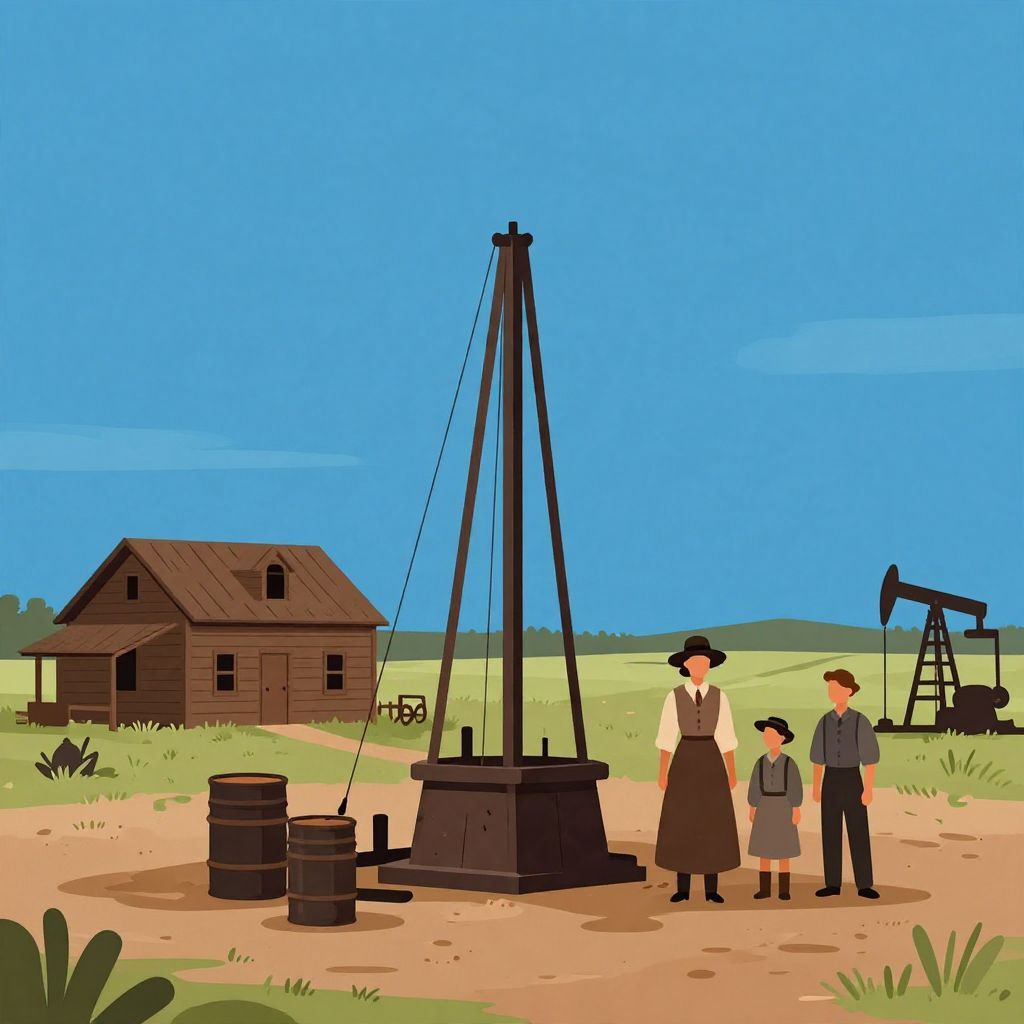
Is Sarah’s Oil a true story? The short answer is that it depends on which “Sarah” and which version of the story you mean. Titles like this are often used for films, books, or local legends that blend documented history with dramatization, family memory, and regional folklore.
To answer responsibly, we need to separate what can be verified from what may be embellished. In historical writing, that means checking the setting, the people involved, the timeline, and whether the central events are supported by records or mainly by later retellings.
Is Sarah’s Oil a true story?
Probably partly, but not necessarily in a fully literal sense. Stories about oil discoveries, inheritance, and family fortunes are often based on real historical patterns, especially in the American oil boom era, but the exact details may be dramatized. Without a clearly identified historical Sarah and source material, the safest answer is that Sarah’s Oil should be treated as a story rooted in real history rather than automatically accepted as a fully documented fact.
What kind of story is “Sarah’s Oil” likely based on?
Oil stories usually draw on a familiar historical backdrop: the rise of the petroleum industry in the late 19th and early 20th centuries, when drilling transformed local economies and created sudden wealth. In that period, many people—especially landowners, widows, heirs, and small communities—found themselves caught up in disputes over mineral rights, leases, and ownership.
If Sarah’s Oil refers to a specific person or family, the story may reflect one of these real historical themes: a woman asserting property rights, a family discovering value beneath inherited land, or a community confronting outsiders who wanted access to oil-rich territory. Those situations were common enough that they form a believable historical framework even when the individual plot details are uncertain.
Common historical elements in oil-era stories
- Land ownership and the legal value of mineral rights
- Sudden wealth after drilling success
- Family conflict over inheritance or control of property
- Speculation by investors, drillers, and land agents
- Racial, class, or gender barriers that shaped who benefited from oil
The historical context behind oil boom stories
To understand whether a story like this is true, it helps to know the era that produced it. The modern oil industry began in earnest in the mid-19th century and expanded rapidly after the famous Drake well in Pennsylvania in 1859. By the early 1900s, oil had become central to transportation, industry, and warfare.
In the United States, major oil development spread through Pennsylvania, Texas, Oklahoma, Louisiana, California, and elsewhere. These booms changed local societies quickly. Towns grew overnight, land values surged, and legal battles multiplied. Stories about ordinary people becoming unexpectedly tied to oil wealth were not unusual; they were part of the broader history of industrial capitalism.
Why oil stories became so common
Oil was not just a commodity. It was a source of power, mobility, and political influence. That made it a natural subject for dramatic storytelling. A single well could alter a family’s future, while a failed claim could ruin it. Because of that, many oil narratives mix real economic history with the emotional elements of legend: betrayal, perseverance, and fortune gained or lost.
How historians judge whether a story is true
When historians ask whether a story is true, they do not mean only “Did something similar happen?” They ask whether the main events can be supported by evidence. That evidence may include land deeds, census records, court cases, newspaper reports, company records, letters, and oral histories. The more specific the claim, the stronger the evidence must be.
A story may be historically grounded even if it is not fully exact. For example, a film might compress dates, combine several real people into one character, or heighten conflict for dramatic effect. Those changes do not make the story worthless, but they do mean viewers should not assume every scene is documentary fact.
Signs a story is historically grounded
- It fits the known timeline of oil development.
- It reflects real legal and social conditions of the period.
- It includes institutions that actually existed, such as lease agreements or probate courts.
- It can be connected to records, newspapers, or family documentation.
- It avoids anachronisms, such as modern attitudes or technologies placed too early.
Why the word “true” can be complicated
Some historical stories are “true” in the sense that they are inspired by real events, but not true in every detail. This is especially common in popular history, biographical drama, and family-centered narratives. A title like Sarah’s Oil may signal a real inspiration, a composite character, or a dramatized retelling of a documented case.
That distinction matters. A story can preserve the broad truth of an era—how oil money shaped lives, how women navigated property law, how communities were transformed—without being a line-by-line factual record. In other words, it may be historically meaningful even if it is not a perfect archive of events.
Three levels of historical truth
- Documentary truth: events directly supported by records.
- Interpretive truth: a plausible reconstruction based on evidence.
- Legendary truth: a story that expresses cultural memory but may not be fully verifiable.
Women, property, and oil: a real historical pattern
If Sarah is presented as a woman whose land or inheritance becomes valuable because of oil, that is historically plausible. Women in the late 19th and early 20th centuries often faced legal and social limits, but they could still own property, inherit land, and engage in lawsuits. In some regions, especially where land passed through families, women became important figures in mineral-rights disputes.
At the same time, women were often vulnerable to pressure from speculators, relatives, and corporate interests. That tension has made women-centered oil stories especially compelling. They reflect a real historical struggle over who controlled wealth created by natural resources.
Historical realities that may appear in Sarah’s story
- Inheritance through wills or probate proceedings
- Negotiations over leases and drilling contracts
- Disputes involving guardians, trustees, or relatives
- Local resistance to outside investors
- Rapid changes in social status after an oil strike
What cannot be assumed without evidence
Even if the setting is historically accurate, several things should not be assumed. We should not assume that every named character is real, that every dramatic reversal happened exactly as shown, or that the story was preserved unchanged over time. Oral history can be valuable, but it can also evolve as families retell events across generations.
Nor should we assume that a successful oil story means easy wealth. In real history, oil fortunes were often unstable. Legal fees, bad contracts, speculation, and market changes could erase gains quickly. Many families who appeared to “strike it rich” did not keep the money for long.
So what is the best historical answer?
The best answer is cautious: Sarah’s Oil may be based on a real historical pattern or a real person, but without a clearly identified source, it should not be treated as fully verified history. It is most likely a dramatized or inspired-by-true-events story rooted in the real world of oil booms, property law, and family conflict.
That is not a weakness. Some of the most powerful historical stories are those that capture the shape of an era even when they simplify or compress the details. The key is to know where the evidence ends and the storytelling begins.
Why this question matters
Asking whether Sarah’s Oil is a true story is really a larger historical question about how we remember the past. Popular stories often preserve genuine experiences—especially those of people left out of official records—but they can also blur fact and interpretation. Good history does both things at once: it respects the story and tests it against evidence.
So, if you are researching Sarah’s Oil, look for the specific Sarah, the date, the place, and the historical records behind the narrative. That is the surest way to tell whether you are reading a documented case, a family legend, or a dramatized retelling of a real oil-era experience. For related historical accuracy questions, you may also want to read is Fury a true story? and how imperialism led to World War I.