
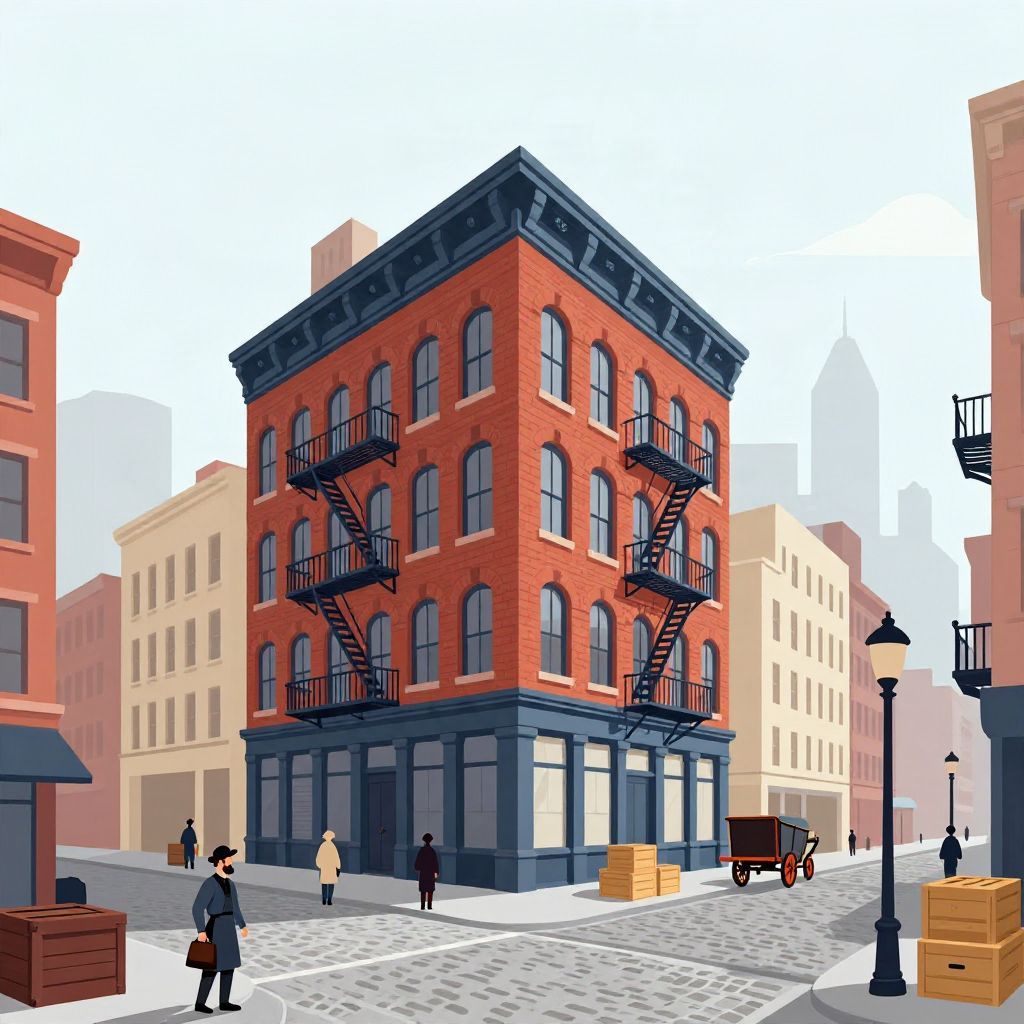
What does Soho stand for in NYC? The short answer is that SoHo means “South of Houston Street.” It is a neighborhood name, not an acronym with a deeper official meaning, and it emerged in the mid-20th century as New York City residents, planners, and developers began using directional neighborhood labels to describe changing urban districts.
SoHo’s name is now famous around the world, but its origin is rooted in the geography and redevelopment history of lower Manhattan. Understanding what the name stands for also means understanding how the area changed from a manufacturing district into one of the city’s best-known cultural and commercial neighborhoods.
What does SoHo stand for in NYC?
SoHo stands for “South of Houston Street.” The name refers to the part of lower Manhattan below Houston Street, and it became widely used in the 1960s. Unlike older New York neighborhood names, SoHo was coined as a modern place-name to brand a specific area, first associated with artists, loft living, and later upscale retail and tourism.
The meaning behind the name
Houston Street is pronounced “HOW-ston” in New York, not like the Texas city. SoHo simply identifies the district south of that street. The name follows a pattern later used in other New York neighborhoods, such as TriBeCa (“Triangle Below Canal Street”) and NoHo (“North of Houston Street”). These labels are practical, geographic, and distinctly urban.
How SoHo got its name: origins and timeline
SoHo as a neighborhood name did not exist in the early history of Manhattan. The land was long known by its street grid and by larger districts such as Greenwich Village, the Lower West Side, or the commercial loft area. The modern name appeared in the 1960s, when the area’s identity began shifting from industry to art and real estate redevelopment.
1. Before SoHo: a manufacturing district
In the 19th and early 20th centuries, the area below Houston Street was heavily commercial and industrial. Warehouses, textile firms, printing businesses, and cast-iron buildings dominated the streetscape. The architecture that later made SoHo famous was originally practical: large windows, iron facades, and open floors suited to commerce and manufacturing.
2. Mid-20th century decline and vacancy
After World War II, manufacturing in lower Manhattan declined. Many loft buildings became underused or empty, especially as industry moved elsewhere. This created unusually cheap and spacious floor plans, which attracted artists looking for live-work space. At the time, however, residential use in these buildings was often not officially permitted.
3. The 1960s and the naming of SoHo
The name SoHo is generally traced to the 1960s, when urban planners, activists, journalists, and real estate interests needed a clear label for the district south of Houston Street. The term helped define the area as a distinct neighborhood rather than just an industrial leftover. Once the name caught on, it became part of the city’s identity.
4. Artist lofts and neighborhood identity
Artists were central to SoHo’s transformation. They moved into large, inexpensive lofts and helped turn the neighborhood into a creative enclave. Their presence gave the area a cultural reputation that went beyond its industrial past. Over time, “SoHo” came to mean not just a location, but a style of urban life associated with galleries, conversions, and design.
Why the name SoHo mattered historically
The naming of SoHo was more than a matter of convenience. It marked a turning point in how New York neighborhoods were defined, marketed, and transformed. A simple directional label helped give the area a new public identity just as it was changing from a manufacturing zone into a residential and cultural district.
A tool for urban reinvention
By the mid-20th century, New York was experiencing deindustrialization in parts of Manhattan. Naming the district “SoHo” helped reframe it as a place with a future, not just a remnant of the past. The label made the area legible to city officials, residents, and investors. In that sense, the name was part of the neighborhood’s reinvention.
From industrial lofts to landmark district
As artists and preservation advocates gained influence, SoHo became associated with cast-iron architecture and historic preservation. The neighborhood’s buildings were later recognized for their architectural importance, and preservation helped protect the area’s distinctive character. The name SoHo became inseparable from that preserved urban landscape.
SoHo and the rise of New York neighborhood branding
SoHo helped popularize a naming style that has become common in New York City and beyond: short, catchy neighborhood names built from geography. These names are memorable and marketable, but they also reflect real social change. They often emerge when a district’s old function has faded and a new identity is taking shape.
Examples of the pattern
- SoHo = South of Houston Street
- NoHo = North of Houston Street
- TriBeCa = Triangle Below Canal Street
These names are not ancient place-names. They are modern urban labels that compress geography into a brand-like identity. SoHo was one of the earliest and most successful examples.
The historical significance of SoHo beyond the name
SoHo’s importance lies in how it reflects broader changes in New York City during the second half of the 20th century. It shows how abandoned industrial space could be repurposed, how artists influenced urban development, and how preservation and real estate could reshape a neighborhood’s future.
Artists as urban pioneers
Artists did not simply decorate SoHo’s history; they helped create it. By occupying large lofts and advocating for legal recognition of live-work spaces, they changed public perceptions of the neighborhood. Their presence made SoHo a symbol of creative urban reuse, though later rising rents pushed many artists out.
Preservation and commercialization
SoHo also illustrates a familiar pattern in city history: a district becomes desirable because of its authenticity and architecture, then becomes more expensive and commercialized. Galleries, boutiques, and tourism followed the artists. The neighborhood’s name, once a practical description, became a global brand.
Architecture as part of the story
The cast-iron buildings of SoHo are among its best-known features. Many were built in the late 19th century and are now closely associated with the neighborhood’s identity. The name and the architecture reinforce each other: SoHo evokes both place and style, making the district one of the most recognizable in New York.
Common misconceptions about SoHo
Because the name is so famous, it is easy to assume it has a deeper or older meaning. In fact, the historical record is fairly straightforward. SoHo is not named after a person, a colonial event, or an imported European district. It is a modern directional label tied to Manhattan geography.
What SoHo is not
- It is not an abbreviation of a family name.
- It is not an ancient Native American place-name.
- It is not a formal government district from the city’s earliest history.
The name’s simplicity is part of its power. It sounds modern because it is modern.
Why people still ask what SoHo stands for
SoHo’s name invites curiosity because it looks like an acronym, and because it has become so detached from its literal meaning in everyday speech. Many people know SoHo as a shopping and cultural district first, and only later learn that it is a directional phrase. The question persists because the neighborhood has become more famous than its original label.
A name that outgrew its origin
Today, SoHo can suggest fashion, architecture, galleries, and upscale urban life. Yet the name still points back to a specific historical geography. That connection to Houston Street keeps the neighborhood grounded in Manhattan’s street grid, even as the district’s image has become global.
Conclusion: the real meaning of SoHo in NYC
SoHo stands for “South of Houston Street,” and that simple phrase captures a much larger history. The name emerged in the 1960s as lower Manhattan shifted from industry to art, preservation, and redevelopment. What began as a practical geographic label became one of New York City’s most famous neighborhood names, reflecting the city’s ability to reinvent its own places. For more on New York place-names, see why New York is called the Big Apple and why it is called Hell’s Kitchen.