
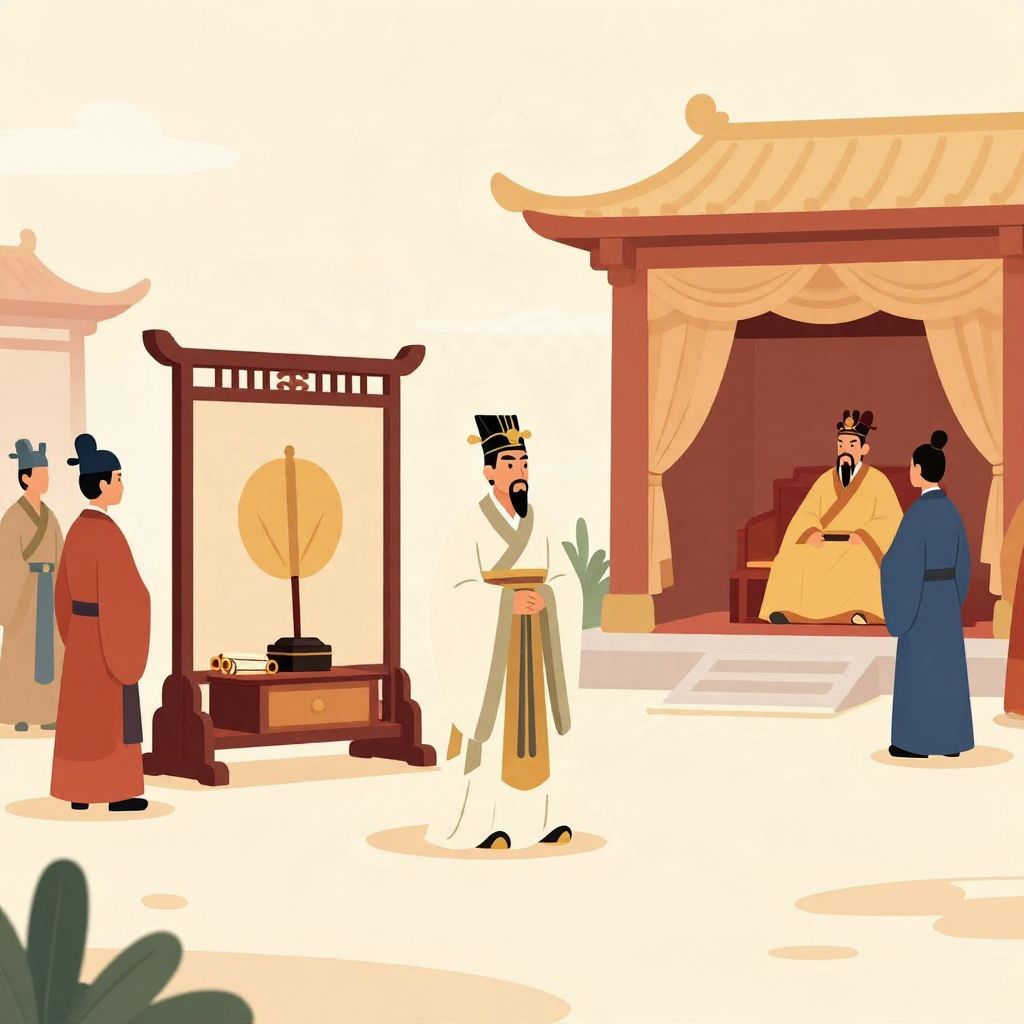
What is a eunuch? Historically, the word refers to a man who had been castrated, often before puberty, and who was commonly employed in royal courts, palaces, and elite households. In many societies, eunuchs were valued because they could serve in intimate spaces without creating dynastic rivals of their own.
The term carries a long and complicated history. It appears in the ancient Mediterranean, the Near East, South Asia, China, and later in the Byzantine and Ottoman worlds. Over time, “eunuch” could describe not only a physical condition but also a court office, a social status, or even a legal category.
What Is a Eunuch?
A eunuch was usually a castrated male, though in some historical settings the word also referred more broadly to men assigned to palace service or to people whose sexual status was socially redefined. Eunuchs were especially common in courts where rulers wanted trusted attendants who would not found rival dynasties. Their roles ranged from servants and guards to administrators, diplomats, and chamberlains.
The Origins and Meaning of the Word
The English word “eunuch” comes from the Greek eunoukhos, a term used in antiquity for palace attendants and castrated men. The Greek word likely became associated with court service because such men were often placed in charge of royal households. Over time, the term spread into Latin and then into many modern languages.
Why the term became linked to courts
In monarchies, rulers often feared that male attendants with access to the inner household might become political threats. Castration was seen in some societies as a way to reduce that danger. Whether or not that belief was always justified, it helped create a strong historical association between eunuchs and palace life.
How Eunuchs Appeared in Ancient History
Eunuchs are documented in several ancient civilizations, especially in the Near East and East Asia. They are mentioned in Assyrian, Persian, Greek, Roman, and later Byzantine sources, though their exact status varied widely. In some places they were enslaved and forcibly castrated; in others, they were deliberately recruited or purchased for court service.
Mesopotamia and Persia
In the ancient Near East, eunuchs appear in royal administration and palace records. By the Achaemenid Persian Empire, eunuchs were known as important court officials. They could supervise royal women’s quarters, guard the king’s person, manage estates, and carry messages. Their access to the ruler made them influential, but also vulnerable to suspicion and court intrigue.
Greece and Rome
Greek and Roman writers knew about eunuchs, often treating them as foreign or exotic figures. In the Roman Empire, eunuchs became more visible in late antiquity, especially in imperial households and the eastern provinces. Roman attitudes were mixed: some authors mocked eunuchs, while imperial administrations sometimes relied on them because they were seen as dependable servants of the palace.
Eunuchs in the Byzantine and Islamic Worlds
In the Byzantine Empire, eunuchs became highly significant palace officials. They could hold senior administrative and ceremonial roles, and some rose to major influence at court. Because they were excluded from ordinary family succession, emperors sometimes trusted them with sensitive responsibilities. Their power, however, depended entirely on imperial favor.
Administrative power and court trust
Byzantine eunuchs could act as chamberlains, military commanders, diplomats, and advisors. Their careers show that eunuchs were not merely passive servants; in many periods they were active political actors. At the same time, their status remained exceptional and often precarious, shaped by court politics and changing religious or legal views.
In the Islamic empires
Across the Islamic world, eunuchs also served in palaces, harems, and administrative posts. Their presence is documented in the Abbasid, Fatimid, Mamluk, Ottoman, and other courts. As in other societies, they were often chosen for roles that required close access to rulers, elite women, or guarded spaces. Their importance varied by region and era.
Eunuchs in Imperial China
China offers one of the longest and best-documented histories of eunuch service. Eunuchs were present in imperial courts for many centuries, from early dynasties through the Qing. They worked in palace management, ritual service, communication, and sometimes high administration. In certain periods, they accumulated enormous influence.
Why Chinese emperors relied on eunuchs
Chinese emperors often distrusted aristocratic families and scholar-officials who might build independent power bases. Eunuchs, by contrast, were dependent on the palace and usually lacked a separate family line of legitimate heirs. That made them useful as servants, messengers, and intermediaries, though it also created tension with civil officials.
Political power and backlash
At several points in Chinese history, eunuchs became deeply involved in politics, sometimes dominating access to the emperor. This could provoke backlash from Confucian officials who viewed them as corrupt or dangerous. The recurring struggle between eunuch power and bureaucratic authority is one of the major themes in Chinese imperial history.
How and Why Men Became Eunuchs
Historically, becoming a eunuch could happen in different ways. Some were castrated as children, others later in life. In many cases the practice was coercive, linked to slavery, war captivity, punishment, or poverty. In some societies, families also offered boys for palace service, hoping for advancement or security, though this was still shaped by unequal power.
Common historical pathways
- Enslavement: Captives were sometimes castrated and sold into service.
- Palace recruitment: Some boys were trained for court roles from a young age.
- Punishment: In certain legal systems, castration could be used as a penalty.
- Voluntary or family-driven service: In a few contexts, families sought court careers for sons, though the risks were severe.
It is important not to romanticize this history. Eunuch-making was often violent, traumatic, and tied to slavery or coercion. Even when service brought status or wealth, it usually came at great personal cost.
Social Status, Power, and Stereotypes
Eunuchs occupied an unusual place in society. They were often outsiders in gender terms, yet insiders in political life. Some were mocked as incomplete or unnatural; others were respected as loyal and capable officials. Their status depended on the culture, the era, and the specific court in which they served.
Not just servants
Popular imagination sometimes reduces eunuchs to anonymous guardians of women’s quarters. In reality, many were highly educated, politically skilled, and financially powerful. They could control access to rulers, manage estates, negotiate with foreign envoys, and influence appointments. Their careers show how courts created opportunities for people outside ordinary aristocratic lines.
Gender and identity in historical context
Modern readers may be tempted to map contemporary ideas of gender identity onto eunuchs, but the historical record is more complex. In many societies, eunuchs were understood primarily through bodily status, legal role, and court function rather than through modern categories. Historians therefore treat them as a distinct historical institution, not as a simple equivalent of any single modern identity.
Eunuchs in Religion and Scripture
Eunuchs appear in Jewish, Christian, and other religious texts, often with symbolic meanings that go beyond court service. In the Bible, for example, eunuchs can represent foreign officials, trusted servants, or people on the margins of the covenant community. Later religious interpretations varied widely, sometimes emphasizing inclusion and sometimes exclusion.
Religious significance
In some traditions, eunuchs were associated with devotion, celibacy, or special service. In others, they were viewed through laws concerning bodily wholeness and ritual purity. Because of this, the term has carried both literal and metaphorical meanings in religious history. The biblical and theological dimensions of the subject deserve separate study from the broader political history.
The Decline of Eunuch Institutions
Eunuch service declined in many places during the modern era, though not all at once. Changing court structures, new legal systems, colonial interventions, and shifting ideas about bodily integrity all contributed. In some empires, eunuchs remained important into the nineteenth and early twentieth centuries, but their institutional role gradually disappeared.
Why the institution faded
Several forces weakened eunuch systems:
- Centralized modern bureaucracies reduced the need for palace intermediaries.
- Reform movements criticized slavery and bodily mutilation.
- New legal norms increasingly opposed castration for service.
- Monarchies themselves lost power or were transformed.
By the modern period, eunuchs survived more as historical memory than as a widespread institution, though traces remained in ceremonial traditions and cultural memory.
Why Eunuchs Matter in History
The history of eunuchs reveals how power worked in premodern courts. They show that rulers often relied on people who stood outside normal kinship structures, and that bodily difference could be turned into political function. Their story also exposes the violence behind many elite institutions, where trust, control, and coercion were closely linked.
Studying eunuchs helps explain palace politics, slavery, gender norms, and the administration of empires. It also reminds us that historical terms can be misleading if we treat them as simple labels. A eunuch was not just a body; in many societies, he was a court role, a political actor, and a symbol of the tensions inside imperial power.
For readers interested in related topics, see what a eunuch means in the Bible and the history of a lady in waiting to the queen. Together, these roles show how royal households shaped status, access, and influence across history.