
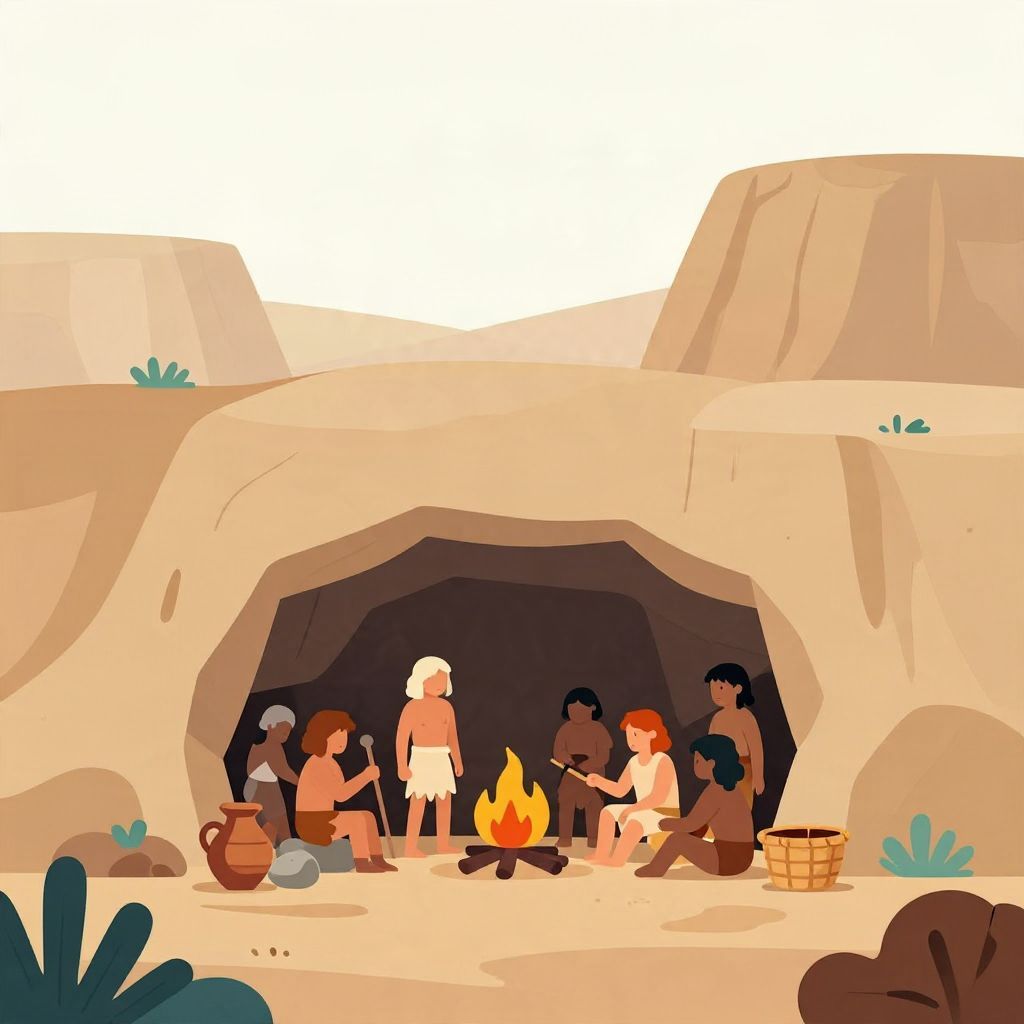
What is a troglodyte? The word has a long history, and its meaning has shifted over time. Today it can mean a cave dweller, a person imagined as primitive or backward, or, in casual insult, someone seen as rough and uncivilized.
To understand it properly, though, we need to separate ancient geography, later literary usage, and modern slang. The term has roots in classical antiquity, where writers used it for peoples associated with caves or rocky places, and it has remained in the language ever since.
What Is a Troglodyte?
A troglodyte is literally a “cave dweller,” from Greek words meaning “hole” and “to enter.” In ancient texts, it could describe real groups living in caves or rugged regions, but later it became a broader label for people thought to live primitively. In modern English, it is often used figuratively, sometimes jokingly and sometimes insultingly.
Where Did the Word “Troglodyte” Come From?
The word comes from ancient Greek: trōglē meant “hole” or “cave,” and dyein meant “to go in” or “to enter.” Greek and Roman writers used troglodytai to describe people associated with caves, cliffs, or remote desert edges. The term was descriptive, but it also carried outsider assumptions about difference and primitiveness.
Classical origins in geography and ethnography
Greek geographers and historians often described distant peoples in broad, sometimes vague terms. “Troglodytes” could refer to groups living along the Red Sea coast, in northeastern Africa, or in other hard-to-map borderlands. Because ancient authors relied on travel reports, hearsay, and inherited stories, the label was not always precise. It often mixed observation with imagination.
Not one single people
It is important to note that “the Troglodytes” were not necessarily one unified ethnic group. In classical writing, the word could function as a general category for cave-dwellers or isolated peoples rather than a strict name for a single nation. That is why modern historians treat the term cautiously: it tells us as much about ancient Greek and Roman perceptions as it does about the people described.
How Was the Term Used in Antiquity?
In antiquity, “troglodyte” appeared in geography, ethnography, and natural history. Writers such as Herodotus, Strabo, and Pliny the Elder used similar language to describe remote communities. These accounts often emphasized unusual customs, difficult terrain, and unfamiliar ways of life, reinforcing the idea that the troglodyte was someone living at the edge of the known world.
Ancient writers and the “edge of civilization”
For Greek and Roman authors, caves and deserts were often symbolic as well as literal. They represented distance from cities, agriculture, and political order. So when a writer called a people troglodytes, the term could imply more than housing. It could suggest marginality, scarcity, and a life outside the norms of urban civilization.
Real habitats, exaggerated descriptions
Some communities did in fact live in caves, rock shelters, or cliff dwellings, especially in arid or mountainous regions where such shelters offered protection and cooler temperatures. Ancient descriptions may preserve a kernel of truth. But they can also exaggerate, turning a practical adaptation into a sign of backwardness. That tension is central to the history of the word.
Did Troglodytes Really Live in Caves?
Sometimes, yes. Across history, people have used caves as homes, shelters, storage spaces, or seasonal refuges. But “troglodyte” was never a universal label for all cave dwellers. It was a word shaped by ancient observers, and its meaning depended on context. In many cases, it described a lifestyle, not a permanent identity.
Cave living as adaptation, not primitivism
Modern archaeology shows that cave habitation can be a practical response to environment, climate, defense, or available materials. Living in a cave does not automatically mean a society is less advanced. Ancient and medieval cave use could coexist with trade, farming, religion, and complex social organization. The old stereotype of the “primitive cave man” is too simplistic.
Archaeology versus stereotype
The popular image of a troglodyte as a brutish cave person comes from later cultural shorthand, not from a careful historical definition. Archaeologists and historians distinguish between actual cave use and the pejorative idea of a person who is uncultured or regressive. That distinction matters because it prevents us from reading modern prejudice back into the past.
How Did “Troglodyte” Change Over Time?
The word gradually moved from a specific ancient descriptor to a more figurative English term. By the early modern period, it could mean a reclusive person, a cave inhabitant, or someone imagined as socially backward. Over time, the word’s strongest surviving sense became metaphorical, often used in humor or insult rather than geography.
From classical geography to literary metaphor
Writers in later centuries borrowed “troglodyte” for effect. It could evoke wilderness, isolation, or a lack of refinement. In literature and satire, the word became a convenient way to signal someone outside polite society. This literary use helped detach the term from its original ancient setting.
A word with a pejorative edge
In modern English, calling someone a troglodyte usually means they are stubbornly old-fashioned, crude, or out of touch. The insult depends on the old association between caves and primitiveness. Yet that usage says more about cultural attitudes than about actual history. It reflects how language can turn a neutral description into a judgment.
Troglodytes in Myth, Legend, and Popular Culture
Because the word sounds ancient and vivid, it has often been used loosely in fiction and popular culture. Troglodytes may appear as monstrous cave people, hidden tribes, or prehistoric throwbacks. These portrayals are imaginative, but they usually blur the line between myth and history.
Folklore and fantasy
In stories, troglodytes often symbolize what is hidden beneath civilization: danger, instinct, or the unknown. That symbolic role has little to do with the historical people described by ancient writers. It is a literary inheritance built from fear of remote landscapes and unfamiliar societies.
Why the stereotype lasted
The cave-dweller stereotype endured because it is easy to visualize. Caves suggest darkness, isolation, and survival at a basic level. As a result, “troglodyte” became a powerful shorthand for primitiveness. But historians prefer to ask what people actually did, rather than relying on the symbolic weight of the word.
What Should We Understand by the Word Today?
Today, “troglodyte” has three main senses: a literal cave dweller, a historical term from classical writing, and a figurative insult for someone seen as uncivilized or behind the times. The first is descriptive, the second is historical, and the third is rhetorical. Knowing the difference helps avoid confusion.
How historians use the term carefully
When historians encounter “troglodyte” in ancient texts, they do not assume it means a single ethnic group or a scientifically precise category. Instead, they examine who used the term, in what setting, and with what assumptions. That approach reveals both the realities of ancient life and the biases of ancient observers.
Why the word still matters
The history of “troglodyte” shows how language can preserve old ideas long after the world that produced them has changed. A word that once described people in remote regions now often serves as a metaphor for backwardness. Its survival reminds us that historical language can outlive the societies that first used it.
So, What Is a Troglodyte in Historical Terms?
Historically, a troglodyte was a person or people associated with caves or rocky, remote places, especially in ancient Greek and Roman writing. The term was never fully neutral, and over time it became a broader cultural label for supposed primitiveness. In reality, cave dwelling was often a practical adaptation, not a sign of inferiority.
In the end, the word tells a double story: one about ancient geography and another about how later societies judged the past. If you want to explore related topics, you may also find what Neanderthals looked like and a related historical term and its meaning useful for comparison.