
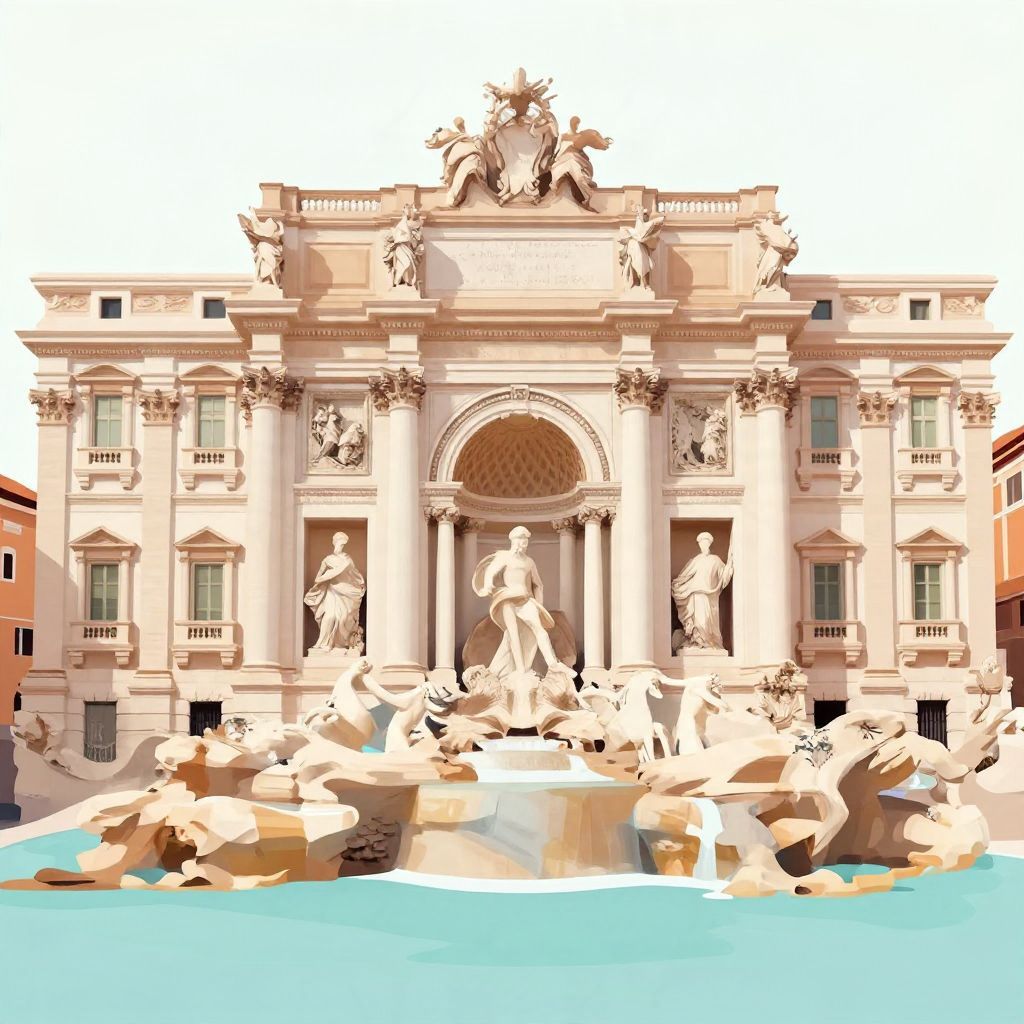
When was the Trevi Fountain built? The short answer is that the fountain we see today was built in the 18th century, with construction beginning in 1732 and the main work completed in 1762. Its history, however, reaches back much further, to an ancient Roman aqueduct and earlier fountain projects at the same site.
That longer timeline matters because the Trevi Fountain is not a single-event monument. It is the result of Roman engineering, papal patronage, and decades of Baroque-era design and construction in the heart of Rome.
When Was the Trevi Fountain Built?
The Trevi Fountain was built between 1732 and 1762. Pope Clement XII ordered the project in 1732, and the fountain was officially completed in 1762 under the direction of architect Nicolò Salvi and later finished by Giuseppe Pannini. The site itself, though, had been associated with water and fountains since antiquity.
The Trevi Fountain Timeline
The fountain’s story spans nearly two thousand years. What began as a Roman water source became, over time, one of the most famous civic fountains in the world.
- 19 BCE — The Roman aqueduct Aqua Virgo was completed under Augustus.
- Middle Ages — The aqueduct remained important, though the area changed over time.
- 1629 — Pope Urban VIII commissioned Gian Lorenzo Bernini to redesign the fountain area.
- 1732 — Pope Clement XII launched the new Trevi Fountain project.
- 1732–1751 — Nicolò Salvi oversaw the main construction.
- 1751 — Salvi died before the fountain was fully finished.
- 1762 — Giuseppe Pannini completed the fountain.
Why the Trevi Fountain Was Built There
The fountain stands at the end of the Aqua Virgo, one of ancient Rome’s aqueducts. This was not accidental. Roman fountains often marked the terminus of an aqueduct, turning practical water supply infrastructure into public display. The Trevi site was chosen because it connected Rome’s ancient water system with a highly visible urban space.
The name “Trevi” is commonly linked to the Latin trivium, meaning a place where three roads meet, though the exact origin is debated. What is certain is that the location had long been tied to water and movement through the city.
The Ancient Roman Foundation
The original aqueduct, Aqua Virgo, was built in the late Roman Republic. It brought clean water into the city and remained one of the most enduring elements of Rome’s water network. The Trevi Fountain is therefore rooted in ancient Roman engineering, even though the monument itself is Baroque.
The 18th-Century Fountain: Who Built It?
The main designer associated with the Trevi Fountain is Nicolò Salvi, an Italian architect who won the competition for the new fountain design in 1732. His plan transformed the site into a dramatic theatrical composition typical of the Baroque style, with a grand central figure of Oceanus, cascading water, and sculptural detail integrated with the palace façade behind it.
After Salvi’s death in 1751, the project continued under Giuseppe Pannini, who completed the fountain in 1762. Several sculptors also contributed to the decorative program, including Pietro Bracci, who created the central Oceanus figure.
Baroque Style and Royal-Papal Ambition
The Trevi Fountain reflects the ambitions of 18th-century Rome. It was not simply meant to provide water; it was designed as a statement of papal authority, artistic taste, and civic grandeur. Baroque fountains often used movement, scale, and symbolism to create emotional impact, and the Trevi Fountain is one of the clearest examples of that tradition.
What Happened Before the Current Fountain?
The present fountain replaced earlier structures at the same site. Over the centuries, the end of the aqueduct had been marked by simpler fountains and water outlets. By the 17th and 18th centuries, popes wanted a monument that better matched Rome’s status as a major cultural and religious capital.
In 1629, Pope Urban VIII asked Bernini to prepare redesign ideas, but that earlier project was not completed. The eventual 18th-century fountain drew on those earlier plans while creating a more elaborate and fully realized monument.
How Long Did Construction Take?
Construction of the Trevi Fountain took about 30 years from the start of work in 1732 to completion in 1762. That long span reflects the complexity of the design, the scale of the sculpture, the engineering required to manage water flow, and the interruptions caused by changes in leadership and the death of the original architect.
Large public monuments in early modern Europe often took decades to finish. Funding, politics, and artistic revisions could all slow progress, especially in a city like Rome where architecture was closely tied to papal patronage.
Historical Facts About the Trevi Fountain
A few key facts help place the fountain in its proper historical context:
- It is not ancient in its current form; the existing fountain is 18th-century.
- It sits on an ancient foundation connected to the Aqua Virgo aqueduct.
- It was built in stages, not all at once.
- It reflects Baroque Rome, with drama, symbolism, and architectural spectacle.
- It became iconic later, especially through tourism and popular culture in the 19th and 20th centuries.
Legends and Popular Beliefs
Modern visitors often associate the Trevi Fountain with coin-tossing traditions and romantic wishes. Those customs are part of the fountain’s later cultural life, not its original 18th-century purpose. The historical monument was built first as a civic and artistic work, and only later became a global symbol of wish-making and travel romance.
Why the Trevi Fountain Still Matters
The Trevi Fountain matters because it brings together several layers of Roman history in one place: ancient engineering, papal politics, Baroque art, and modern tourism. Few monuments show so clearly how a city can reuse and reinterpret its own past. The fountain is both a work of 18th-century design and a continuation of a much older Roman water tradition.
In that sense, asking when the Trevi Fountain was built leads to a richer answer than a single date. The visible monument dates from 1732 to 1762, but its historical roots go back to the age of Augustus.
If you are interested in how other famous monuments were created over time, you may also enjoy reading about when the Colosseum in Rome was built and when the Capitol Building was built.