
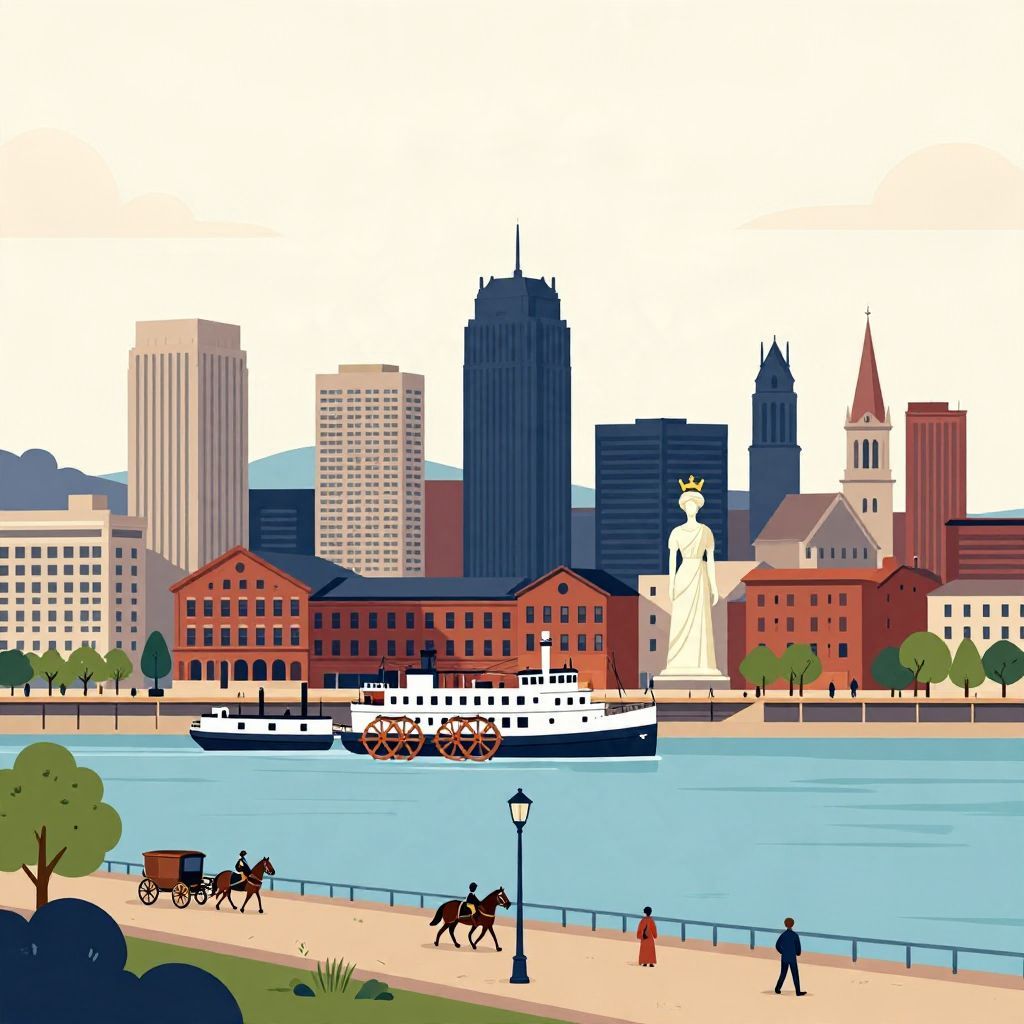
Why is Cincinnati called the Queen City? The short answer is that the nickname grew in the early 19th century as the city expanded rapidly and impressed visitors with its size, ambition, and commercial importance on the Ohio River. In an era when “queen” suggested prominence and elegance, the name fit a city that many saw as the leading urban center of the West.
The nickname did not come from a formal proclamation. It emerged gradually through newspapers, travelers, and local pride, and it stuck because Cincinnati was one of the fastest-growing and most influential cities in the American interior.
Why Is Cincinnati Called the Queen City?
Cincinnati is called the Queen City because, by the early-to-mid 1800s, it was widely viewed as the leading city of the Ohio Valley and a major commercial hub of the expanding American West. The nickname reflected admiration for its growth, wealth, and cultural importance rather than any royal connection. It was a flattering civic label that captured Cincinnati’s status as a regional leader.
The Origin of the Nickname
The phrase “Queen City” was a common 19th-century way to praise a city considered first among its peers. In Cincinnati’s case, the nickname appears to have been in circulation by the 1820s and 1830s, when the city was booming. It was not invented by one single person or event. Instead, it developed as a popular expression of civic pride and outside admiration.
A city on the rise
Founded in 1788 and incorporated in 1819, Cincinnati grew from a frontier settlement into a major river city with remarkable speed. Its location on the Ohio River made it a natural transfer point for goods, people, and trade moving between the East Coast and the interior. By the early 19th century, steamboats, river commerce, and migration had turned it into one of the most dynamic cities in the United States.
That rapid rise mattered. In a period when cities competed for attention, investment, and prestige, Cincinnati stood out. The “Queen City” label praised not just its size, but its perceived leadership in business, manufacturing, and culture.
Why the Word “Queen” Fit Cincinnati
In the 1800s, “queen” was often used as a metaphor for superiority, grace, or prominence. Calling a city a queen did not mean it was ruled by royalty. It meant the city was seen as the most distinguished or important in a region. Cincinnati earned that description because it was widely regarded as the dominant city in the Ohio Valley for much of the 19th century.
Regional leadership in the Ohio Valley
Cincinnati’s nickname made sense in relation to nearby cities. It was larger and more established than many rivals in Kentucky, Indiana, and Ohio during its early growth years. Its riverfront location gave it a commercial advantage, and its economy diversified early into meatpacking, milling, publishing, and manufacturing. Those strengths helped create the impression that Cincinnati was the “queen” of western cities.
Culture and civic pride
The nickname also reflected the city’s self-image. Cincinnati’s residents and boosters wanted the nation to see it as refined, prosperous, and modern. The city developed theaters, newspapers, educational institutions, and philanthropic organizations that reinforced that image. The label “Queen City” was therefore both descriptive and promotional: it described a real center of power while also advertising Cincinnati’s ambitions.
How Cincinnati’s Growth Made the Nickname Stick
Cincinnati’s rise was not accidental. Several historical forces made it one of the most important cities in the early Midwest. These developments explain why the nickname lasted rather than fading away.
1. River commerce
The Ohio River was the city’s lifeline. Before railroads dominated transportation, rivers were the fastest and cheapest way to move goods. Cincinnati sat at a strategic point for trade flowing between the interior and the Mississippi system. Farmers, merchants, and manufacturers all benefited from that access.
2. Industrial expansion
By the mid-19th century, Cincinnati had become a major manufacturing center. Meatpacking, soap and candle production, machine shops, and flour milling all contributed to its wealth. The city’s industrial growth gave substance to its glamorous nickname. It was not just a pretty title; it was tied to real economic power.
3. Population growth
Cincinnati’s population increased quickly as immigrants and migrants arrived for work and opportunity. German immigrants, in particular, played a major role in the city’s development, shaping its neighborhoods, businesses, and cultural life. A growing population made the city feel more urban, sophisticated, and influential—exactly the qualities that supported the Queen City image.
4. A reputation beyond Ohio
For a time, Cincinnati was one of the most prominent cities west of the Appalachian Mountains. Before Chicago’s explosive rise later in the century, Cincinnati was often viewed as a gateway between the East and the expanding West. That reputation helped the nickname spread beyond local use.
Was Cincinnati the Only “Queen City”?
No. Cincinnati is one of several American cities that have been called the Queen City. The term was popular in the 19th century and was applied to places that seemed especially important in their region. This is one reason the nickname can be confusing today. It was not unique to Cincinnati, but Cincinnati became one of the best-known examples.
Other cities have claimed the title for similar reasons: growth, regional dominance, or civic pride. In each case, “queen” served as a flattering shorthand for prominence. Cincinnati’s version endured because the city’s early importance was real and widely recognized.
Popular Legends and What the Evidence Suggests
There are a few popular stories about the nickname, but the safest historical explanation is the simplest one: Cincinnati earned the name because it was admired as a leading city. There is no strong evidence that a single official naming event created the title. Instead, the term appears to have spread organically through everyday speech, journalism, and boosterism.
Not a royal city, but a symbolic one
Some people assume the nickname must be connected to Queen Victoria or some royal visit, but that is not the historical basis of the name. Cincinnati’s nickname came from metaphor, not monarchy. The “queen” in Queen City symbolized rank and prestige, not political rule.
Why legends grow around nicknames
City nicknames often attract folklore because people want a neat origin story. But many such names emerge gradually. That is especially true in the 19th century, when newspapers, travel writing, and local boosters helped popularize phrases long before modern branding existed. Cincinnati’s nickname fits that pattern.
The Queen City in Cincinnati’s Historical Identity
The nickname became part of how Cincinnati understood itself. Even as the city changed through industrialization, immigration, and later suburban growth, “Queen City” remained a symbol of its historic importance. It evokes a period when Cincinnati was among the most influential urban centers in the United States interior.
A lasting civic brand
Today, the nickname is more than a decorative phrase. It connects modern Cincinnati to its 19th-century past, when river trade, manufacturing, and migration made it a powerhouse. The title reminds residents and visitors that the city once stood at the center of western growth in the United States.
What the nickname tells us about 19th-century America
“Queen City” also reveals how Americans of the era thought about cities. Urban status was measured not only by population, but by commerce, culture, and regional influence. Nicknames like Cincinnati’s were part of a broader language of boosterism, where cities competed to define themselves as dynamic, civilized, and indispensable.
So, Why Is Cincinnati Called the Queen City?
Cincinnati is called the Queen City because, in the 19th century, it was widely seen as the leading city of the Ohio Valley and one of the most important urban centers in the American West. The nickname reflected its rapid growth, economic power, and cultural prestige. It was a compliment born from history: Cincinnati really did look like the region’s queen.
If you enjoy the history behind city nicknames, you may also like reading about why New Jersey is called the Garden State and why Milwaukee is called Cream City.