
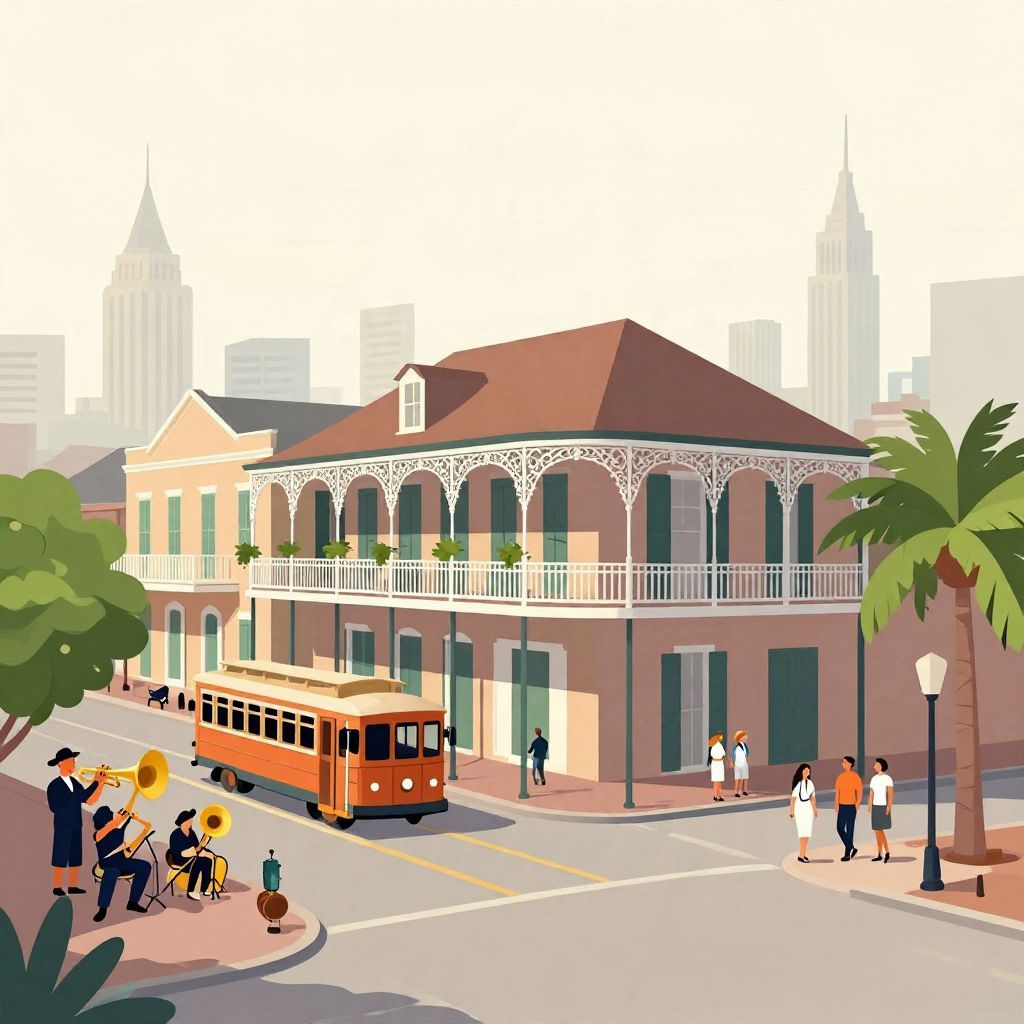
Why is New Orleans called The Big Easy? The short answer is that the nickname grew out of the city’s reputation for a relaxed pace of life, lively music, and a social culture that seemed less rigid than many other American cities. But the phrase did not appear all at once, and its exact origin is still debated.
What is clear is that by the 20th century, New Orleans had become famous for a combination of easygoing atmosphere, nightlife, and musical creativity that made the nickname stick. The story of The Big Easy is therefore both a linguistic puzzle and a window into how outsiders came to imagine the city.
Why is New Orleans called The Big Easy?
New Orleans is called The Big Easy because the city came to symbolize a laid-back way of life, especially compared with faster, more business-driven American cities. The nickname became widely popular in the 1970s, though its roots likely lie in earlier local usage, jazz culture, and the city’s long-standing image as a place where life moved to its own rhythm.
Where did the nickname come from?
The precise origin of The Big Easy is not fully settled. Historians and local commentators generally agree that the phrase was in circulation before it became nationally famous, but there is no single universally accepted inventor. The nickname seems to have emerged from a mix of local speech, entertainment culture, and outside perceptions of New Orleans as an easygoing city.
An older local expression may be part of the story
One common explanation links the nickname to the idea that life in New Orleans was “easy” in the sense of being less hurried and more socially fluid than in many other places. This does not mean life was actually easy for everyone. In fact, the city’s history includes slavery, racial segregation, poverty, hurricanes, and labor struggles. The nickname reflects an image of the city, not the full reality of life there.
Jazz culture helped spread the idea
New Orleans has long been associated with jazz, brass bands, dance halls, and nightlife. These traditions shaped the city’s public image in the early 20th century. Musicians, writers, and visitors often described New Orleans as a place where people could relax, enjoy music, and live with more freedom than in more formal urban centers. That atmosphere helped make “easy” a natural adjective for the city.
How the nickname became nationally famous
The phrase The Big Easy became especially well known in the 1970s. During that decade, New Orleans was increasingly marketed as a tourist destination with a distinctive cultural identity: jazz, Creole food, Mardi Gras, French Quarter nightlife, and a slower pace than the industrial North. The nickname fit that image perfectly and was soon used widely in newspapers, travel writing, and popular culture.
Pop culture gave the phrase staying power
Once the nickname entered national media, it became part of the city’s brand. Films, books, and television references reinforced the idea that New Orleans was a place of music, pleasure, and informal charm. Over time, the nickname became so familiar that many people assumed it had always been the city’s official or traditional label, even though it was really a relatively modern popular expression.
What “easy” meant in historical context
In this nickname, “easy” does not simply mean effortless. It suggests a relaxed social atmosphere, a less rigid pace, and a city known for pleasure, entertainment, and improvisation. That meaning makes sense in New Orleans, where the rhythms of street life, parades, music, and neighborhood traditions often seemed to differ from the more regimented culture of many American cities.
A city shaped by cultural mixing
New Orleans developed under French, Spanish, African, Caribbean, and American influences. Founded by the French in 1718, it later passed to Spain and then to the United States in the Louisiana Purchase of 1803. This layered history produced a distinctive urban culture, including Creole traditions, multilingual communities, Catholic festivals, and a rich musical heritage. Such diversity helped create the city’s reputation for being unconventional and open-ended.
Climate and geography also mattered
The city’s subtropical climate, river location, and port economy shaped daily life. New Orleans was a commercial hub, but it was also a place where heat, humidity, seasonal rhythms, and water shaped habits and routines. The environment encouraged a style of life that outsiders often interpreted as relaxed, even if residents themselves were managing difficult and demanding conditions.
Was the nickname always positive?
Not entirely. Like many city nicknames, The Big Easy can be affectionate, but it can also flatten complex history into a single stereotype. To some observers, it suggested charm and hospitality; to others, it implied a city of leisure rather than hard work. That image sometimes obscured the reality of labor, inequality, and political conflict in New Orleans.
The nickname can hide as much as it reveals
New Orleans was never simply “easy.” Its history includes enslaved labor in the colonial era, a large free Black population before the Civil War, segregation under Jim Crow, and repeated struggles over housing, policing, and economic opportunity. The nickname survives because it captures one real aspect of the city’s public culture, but it should not be mistaken for a complete historical description.
Why the nickname fit New Orleans so well
Several features of the city made the phrase especially durable:
- Music: New Orleans is one of the most important birthplaces of jazz and a center of live performance.
- Celebration: Mardi Gras and neighborhood festivals gave the city a reputation for public festivity.
- Hospitality: Visitors often described the city as welcoming and socially open.
- Distinctive identity: New Orleans has long stood apart from many other American cities in language, cuisine, religion, and customs.
- Tourism: By the 20th century, the city’s image as a place of pleasure was actively promoted.
How historians should understand the nickname
From a historical perspective, The Big Easy is best understood as a cultural nickname rather than a formal title. It emerged from a combination of local identity and outside imagination. The phrase became popular because it captured something recognizable about New Orleans: a city where music, celebration, and social life often seemed to take precedence over strict formality.
Popular legend versus evidence
There are many stories about who first said it and exactly when. Some are repeated often, but not all are well documented. The safest historical conclusion is that the nickname developed gradually and became widely established in the 20th century, especially in the 1970s. That is more reliable than any single dramatic origin tale.
The lasting meaning of The Big Easy
Today, The Big Easy remains one of the best-known city nicknames in the United States. It continues to evoke New Orleans as a place of music, food, festivals, and a distinctive pace of life. At the same time, the city’s modern history reminds us that nicknames simplify. Behind the easy image lies a complex urban past shaped by empire, slavery, migration, race, commerce, disaster, and resilience.
So, New Orleans is called The Big Easy because the city came to represent a relaxed, music-filled, culturally rich way of life, and that image spread widely in the 20th century. The nickname is historically real, but it is also selective: it captures the city’s atmosphere while leaving out much of its harder history. If you enjoy city-nickname history, you may also like why New York is called the Big Apple and why Boston is called Beantown.