
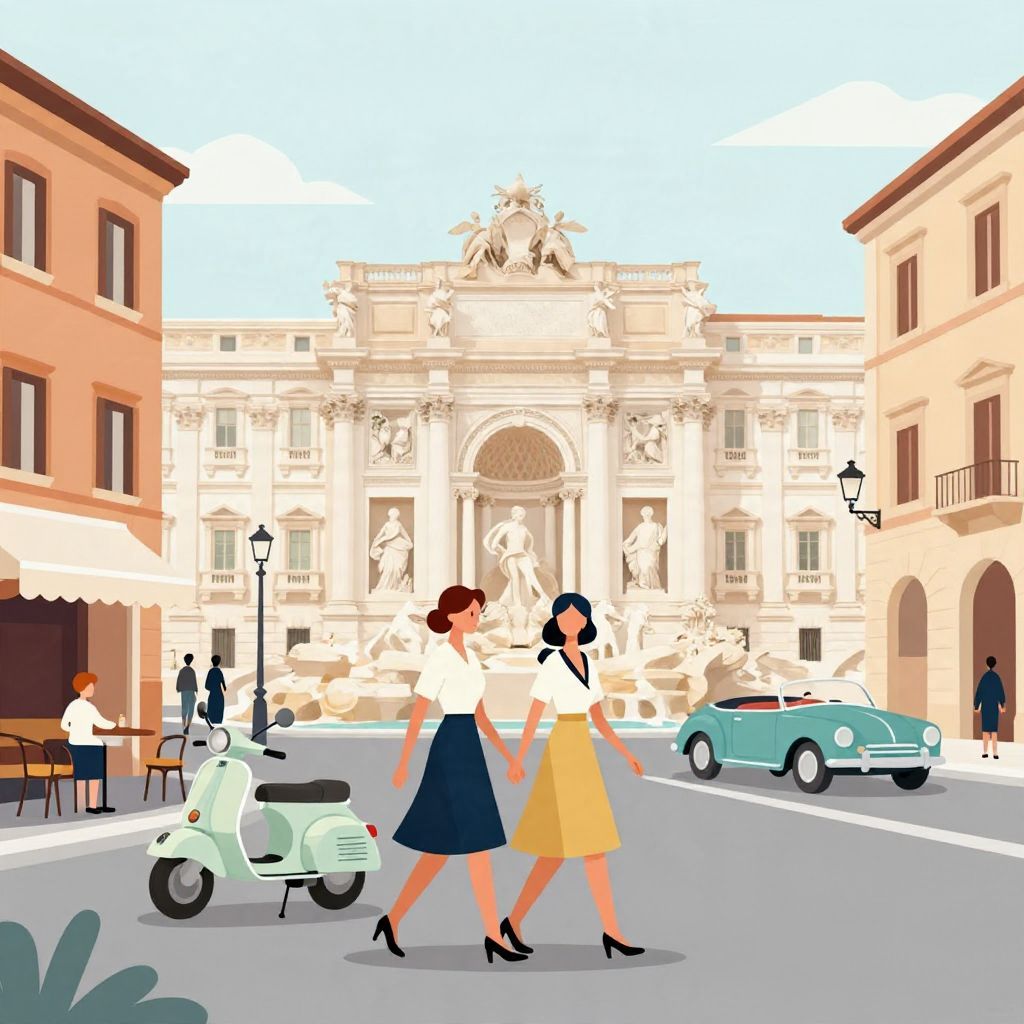
What does la dolce vita mean? Literally, it means “the sweet life” in Italian. Historically, though, the phrase came to suggest more than pleasure or luxury: it evoked a glamorous, carefree, and often morally ambiguous modern lifestyle associated with Rome and postwar Italian culture.
Its most famous meaning was shaped in the 1950s and 1960s, especially by Federico Fellini’s 1960 film La Dolce Vita. The phrase then became a shorthand for celebrity culture, nightlife, and the allure—and emptiness—of modern prosperity.
What does la dolce vita mean?
La dolce vita means “the sweet life.” In historical usage, it refers not just to comfort or enjoyment, but to a stylish, pleasure-filled way of living. After Fellini’s film in 1960, the phrase came to symbolize the glamorous social world of Rome’s cafés, parties, film stars, and journalists, along with the tensions beneath that surface.
Where did the phrase come from?
The words themselves are older than the modern phrase’s fame. Italian has long used dolce to mean sweet, gentle, pleasant, or delightful. La dolce vita was not invented by one person, but the expression became culturally powerful in the mid-20th century, when Italy was rebuilding after World War II and modern consumer culture was expanding rapidly.
Language and everyday meaning
Before it became a global cultural label, the phrase could simply describe a pleasant life. In ordinary Italian, it might suggest ease, enjoyment, or a life free from hardship. But phrases gain historical weight when they are attached to a specific era, and that is what happened here.
Why the phrase became famous in Italy
Postwar Italy experienced dramatic change: economic recovery, urban growth, new media, and a stronger connection to international tourism and celebrity culture. Rome, especially areas around Via Veneto, became associated with stylish cafés, photographers, actors, aristocrats, and outsiders chasing fame. La dolce vita captured that atmosphere.
How Federico Fellini turned the phrase into a cultural symbol
The turning point came with Federico Fellini’s 1960 film La Dolce Vita. The movie followed a journalist, Marcello Rubini, through Rome’s nightlife, scandals, religious spectacle, and social drift. It did not celebrate the “sweet life” in a simple way; instead, it showed glamour mixed with boredom, longing, and spiritual unease.
The film’s historical context
Fellini’s film appeared at a moment when Italy was entering the “economic miracle,” a period of rapid growth in the late 1950s and early 1960s. Consumer goods, fashion, and mass entertainment were becoming more visible. Yet the film also reflected anxieties about modernity, moral drift, and the loss of older certainties.
Why the film mattered
La Dolce Vita was controversial because it challenged conventional ideas about respectability and social order. Its images of nightlife, tabloid culture, and religious iconography made it memorable and debated. The film helped make the phrase internationally recognizable, and after 1960 it often referred to a glamorous but shallow lifestyle rather than simple happiness.
A brief timeline of la dolce vita
The phrase’s meaning developed gradually, but a few key moments explain how it became historically significant.
- Pre-20th century: Italian speakers use dolce vita in a general sense to describe a pleasant life.
- Post-World War II, late 1940s–1950s: Italy rebuilds, urban culture expands, and Rome becomes a center of film, fashion, and social display.
- 1950s: Journalists and observers begin associating Rome’s nightlife and celebrity scene with a glamorous modern lifestyle.
- 1960: Fellini releases La Dolce Vita, giving the phrase global fame.
- 1960s onward: The expression enters international usage as a symbol of luxury, leisure, and sometimes decadence.
What did la dolce vita mean in historical Italy?
In mid-century Italy, the phrase described more than luxury. It pointed to a new social world shaped by film studios, glossy magazines, tourism, and urban nightlife. It was tied especially to Rome, which became a stage for actors, aristocrats, journalists, and photographers. The phrase reflected both admiration and criticism.
Rome as the center of the image
Rome mattered because it combined ancient prestige with modern spectacle. After the war, the city was not only a political capital but also a cultural one. Cinecittà, the film studio complex founded in the 1930s, became central to Italian and international filmmaking. The city’s cafés and boulevards helped create the visual identity of la dolce vita.
The role of the press and paparazzi
The word “paparazzi” entered common usage after Fellini’s film, helping define the relationship between celebrities and photographers. This matters historically because la dolce vita was not just about enjoying life; it was about being seen enjoying life. Public image became part of the lifestyle itself.
Was la dolce vita only about glamour?
No. That is only part of the story. The phrase often suggests champagne, fashion, and elegant evenings, but its historical meaning is more complicated. In Fellini’s hands, and in later popular usage, it also implied emptiness, superficiality, and the search for meaning in a world of distraction.
The tension between pleasure and critique
This is why the phrase has endured. It can be used admiringly, to describe comfort and beauty, or critically, to describe indulgence without depth. Historically, the phrase captured a modern contradiction: prosperity could bring freedom and pleasure, but also restlessness and disillusionment.
Religious and moral undertones
Fellini’s film included scenes involving Catholic imagery and public morality, which sharpened the contrast between sacred tradition and secular modern life. That contrast helped make la dolce vita more than a lifestyle label. It became a commentary on postwar values and the difficulty of finding purpose amid abundance.
How the phrase spread beyond Italy
After 1960, la dolce vita entered international vocabulary. In English and other languages, it often came to mean a luxurious, leisurely, or fashionable life. Over time, the phrase was used in advertising, journalism, travel writing, and popular culture, sometimes detached from its Italian historical setting.
From historical phrase to global cliché
As the phrase spread, it lost some of its original ambiguity. Outside Italy, it could become a shorthand for Mediterranean romance, fine dining, and stylish leisure. Yet that simplified version often ignores the phrase’s critical edge—the sense that such a life may be beautiful but unstable or hollow.
Why the phrase still resonates
The enduring appeal of la dolce vita lies in its balance of desire and doubt. It promises sweetness, but not necessarily happiness. That tension makes it useful for describing modern consumer culture, where pleasure is visible, marketed, and often fleeting.
Historical significance of la dolce vita
The phrase matters because it captures a specific moment in 20th-century European history: postwar recovery, mass media growth, and the rise of celebrity culture. It also shows how a film can reshape language itself. Few phrases so neatly express the glamour and anxiety of modern urban life.
What historians and cultural scholars see in it
Scholars often treat la dolce vita as a cultural lens rather than just a slogan. It helps explain how Italians and outsiders imagined Rome in the postwar era, how media shaped social identity, and how prosperity could coexist with moral uncertainty. Its historical value lies in that layered meaning.
Why it remains relevant today
Modern discussions of celebrity culture, tourism, luxury branding, and social media often echo the same themes. The phrase still works because it names a recognizable pattern: the performance of pleasure in public, and the question of what lies beneath it.
In simple terms, what does la dolce vita mean?
At the simplest level, it means “the sweet life.” Historically, however, it refers to a postwar Italian image of stylish pleasure, especially in Rome, made famous by Fellini’s 1960 film. It suggests glamour, leisure, and beauty, but also excess, emptiness, and the search for meaning in modern life.
So, la dolce vita is not just about living well; it is about a historical moment when Italy’s modern identity, film culture, and international reputation converged. If you are interested in related cultural history, you may also enjoy reading about what carnival meant in historical culture and how spectacle shaped public life, or even broader themes of adventure and image in the history of buccaneers.