
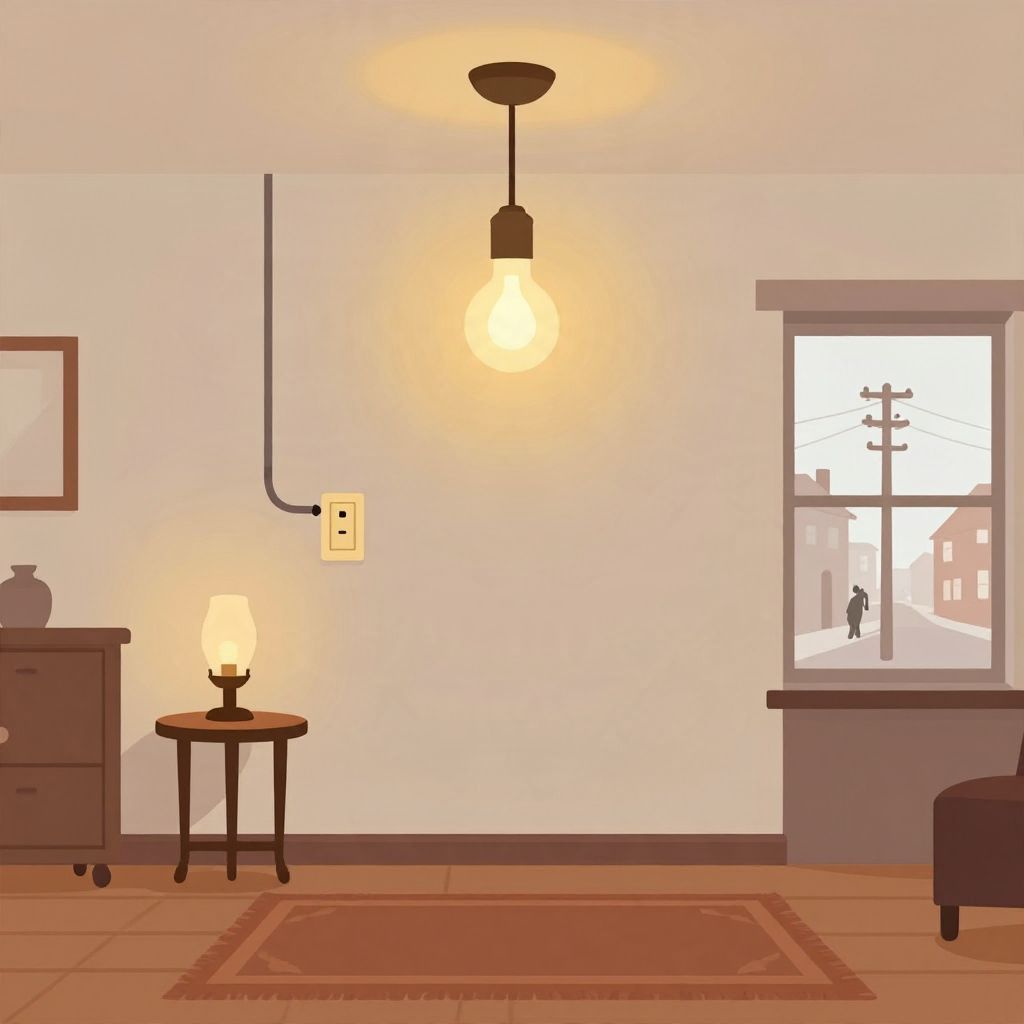
When was electricity invented in homes? The short answer is that electricity was not “invented” for homes in a single moment. It arrived gradually, with practical home electric lighting and wiring appearing in the late 1870s and 1880s, then becoming common in many cities in the early 20th century.
For most households, the real turning point came much later: widespread home electrification in the United States and other industrial countries accelerated in the 1920s and 1930s, and in some rural areas it did not arrive until the 1940s or even later. The history of electricity in homes is therefore a story of invention, infrastructure, and adoption.
When Was Electricity Invented In Homes?
Electricity was not invented in homes at one exact date. The first practical electric lights and wiring for houses appeared in the late 19th century, especially after the 1870s, but electricity became common in ordinary homes only in the early 20th century. In many places, true mass adoption came between about 1910 and 1940.
The First Step: Electricity Before It Reached the Home
Long before houses were wired, scientists and engineers were learning how electricity behaved. In the 18th and early 19th centuries, figures such as Benjamin Franklin, Alessandro Volta, Michael Faraday, and others helped establish the scientific basis for electrical power. Their work did not create household electricity directly, but it made later practical systems possible.
From experiments to usable power
Early electricity was mostly a laboratory curiosity or a form of public demonstration. It could produce shocks, sparks, and small lights, but it was not yet a reliable source of power for everyday life. The key breakthrough was the development of generators, safe wiring, switches, and bulbs that could be used repeatedly and economically.
The Late 1870s and 1880s: The First Electric Homes
The first homes with electric lighting appeared in the late 1870s and 1880s, after inventors and companies began building practical systems. Thomas Edison’s work on the incandescent light bulb and complete electric distribution systems in the late 1870s and early 1880s was especially important. In 1882, Edison’s Pearl Street Station in New York began supplying electricity to a small district, marking a major milestone in centralized electric service.
What “electricity in the home” meant at first
At first, electricity in homes usually meant lighting, not a full range of appliances. Wealthy households, showpiece buildings, and some urban customers were among the earliest users. These early systems were expensive, limited in reach, and often installed in places where electric companies could serve a dense cluster of customers profitably.
Why the first users were mostly urban and wealthy
Early electric service required power plants, poles or underground lines, transformers, meters, and trained workers. That infrastructure was costly. Cities were easier to electrify because homes were closer together, making the system more economical. Rural homes, by contrast, were spread out and far more difficult to connect.
How Home Electricity Spread in the Early 20th Century
By the early 1900s, electricity was moving beyond novelty and luxury. Cities expanded their electric grids, and more middle-class homes began to adopt electric lighting. Over time, electric irons, fans, vacuum cleaners, and other appliances made electricity more attractive because it did more than illuminate rooms.
Key reasons adoption accelerated
- Lower costs as electric generation and distribution improved
- Better appliances that made electricity useful beyond lighting
- Urban growth that made power delivery more efficient
- Marketing and consumer demand from electric companies and manufacturers
Electricity also changed domestic routines. It made evenings brighter, reduced dependence on candles, oil lamps, and gas light, and gradually transformed housework. But this change was uneven. A home might have electric lights while still cooking with coal, wood, or gas and heating water by older methods.
When Did Electricity Become Common in Homes?
Electricity became common in many American and European homes in the 1920s and 1930s, though the pace varied widely by region and income. In the United States, urban electrification advanced faster than rural electrification. By the late 1920s, many city households had electricity, but a large share of rural homes still did not.
The rural electrification gap
One of the most important facts in the history of home electricity is that “common” did not mean “universal.” In the United States, rural electrification lagged far behind cities. The situation improved dramatically after the creation of the Rural Electrification Administration in 1935, which helped finance power lines for farms and small towns. Even then, full coverage took years.
In some countries, electrification followed a similar pattern: first cities, then suburbs, and finally remote areas. In places with limited capital, war damage, or difficult terrain, the process could take much longer.
A Simple Timeline of Electricity in Homes
Here is a clear timeline of the major stages in home electrification:
- 18th century to early 19th century: scientific study of electricity develops.
- Late 1870s: practical electric lighting becomes possible.
- 1880s: first commercial electric systems serve selected homes and city districts.
- 1890s to 1910s: city electrification expands; more middle-class homes gain electric lights.
- 1920s to 1930s: electricity becomes common in many urban homes and increasingly useful through appliances.
- 1930s to 1940s and beyond: rural electrification spreads widely, though not everywhere at the same pace.
What Changed Inside the Home?
Electricity did more than replace lamps. It changed the design and rhythm of domestic life. Homes became brighter at night, safer in some respects than open-flame lighting, and more flexible for work and leisure. Electric appliances gradually altered cleaning, cooking, and entertainment.
Common early household uses
- Lighting
- Electric irons
- Fans
- Vacuum cleaners
- Radios
- Refrigerators, later on
The refrigerator deserves special mention. While early electric lighting spread first, refrigeration became one of the most transformative home technologies of the 20th century. It changed food storage, shopping habits, and health by making it easier to keep perishable food fresh.
Why the Word “Invented” Can Be Misleading
People often ask when electricity was “invented” in homes, but electricity itself was not invented for the home. Electricity is a natural phenomenon. What was invented was the system that made electricity usable in homes: generators, bulbs, wiring, switches, meters, safety devices, and the business model of electric utilities.
Invention versus adoption
This distinction matters historically. A technology can exist for decades before it becomes ordinary. The first electric homes were technological showcases. The common electric home came later, after infrastructure, pricing, and consumer habits changed enough to make electricity practical for everyday life.
Historical Facts That Matter Most
Several facts help explain the rise of electricity in homes:
- The earliest practical home electric lighting appeared in the late 1870s and 1880s.
- 1882 is a landmark year because Edison’s Pearl Street Station began supplying electric power in New York.
- Electricity spread first in cities, not rural areas.
- By the 1920s and 1930s, electricity was common in many homes in industrial countries.
- Full household electrification was uneven and continued into the mid-20th century in some regions.
Why Home Electrification Was So Important
The arrival of electricity in homes was one of the major changes in modern daily life. It extended productive hours after dark, reduced some forms of labor, and made new forms of entertainment and communication possible. It also tied households to larger systems of power generation, regulation, and consumer technology.
That broader significance is why home electrification is often treated not just as a technical milestone but as a social one. It helped create the modern household as people came to expect light at the flip of a switch, appliances that saved time, and services delivered through public utilities.
So, When Was Electricity Invented In Homes?
If you want the most direct historical answer: electricity began appearing in homes in the late 1870s and 1880s, but it did not become common in ordinary households until the early 20th century, especially the 1920s and 1930s. In rural areas, widespread access often came later still. In other words, home electricity was not a single invention but a gradual transformation.
For related household history, you may also want to read about when matches were invented and when indoor plumbing became common, two other everyday technologies that changed domestic life in lasting ways.