
When people ask, “Where did Lewis and Clark start?” they are usually asking where the famous expedition began its journey west. The short answer is that the Corps of Discovery set out from the St. Louis area in May 1804, after spending the winter preparing near the confluence of the Mississippi and Missouri rivers.
But the story begins even earlier, because the expedition’s “start” can mean more than one place: the political center that ordered it, the camp where the men assembled, or the river landing where they first pushed westward. Each of those locations helps explain how the journey unfolded.
Where did Lewis and Clark start?
Lewis and Clark started their expedition near St. Louis, in present-day Missouri, at Camp Dubois on the east side of the Mississippi River. They gathered there in late 1803 and early 1804, then officially began moving up the Missouri River on May 14, 1804. Their journey was commissioned by President Thomas Jefferson after the Louisiana Purchase.
The place most historians mean: Camp Dubois near St. Louis
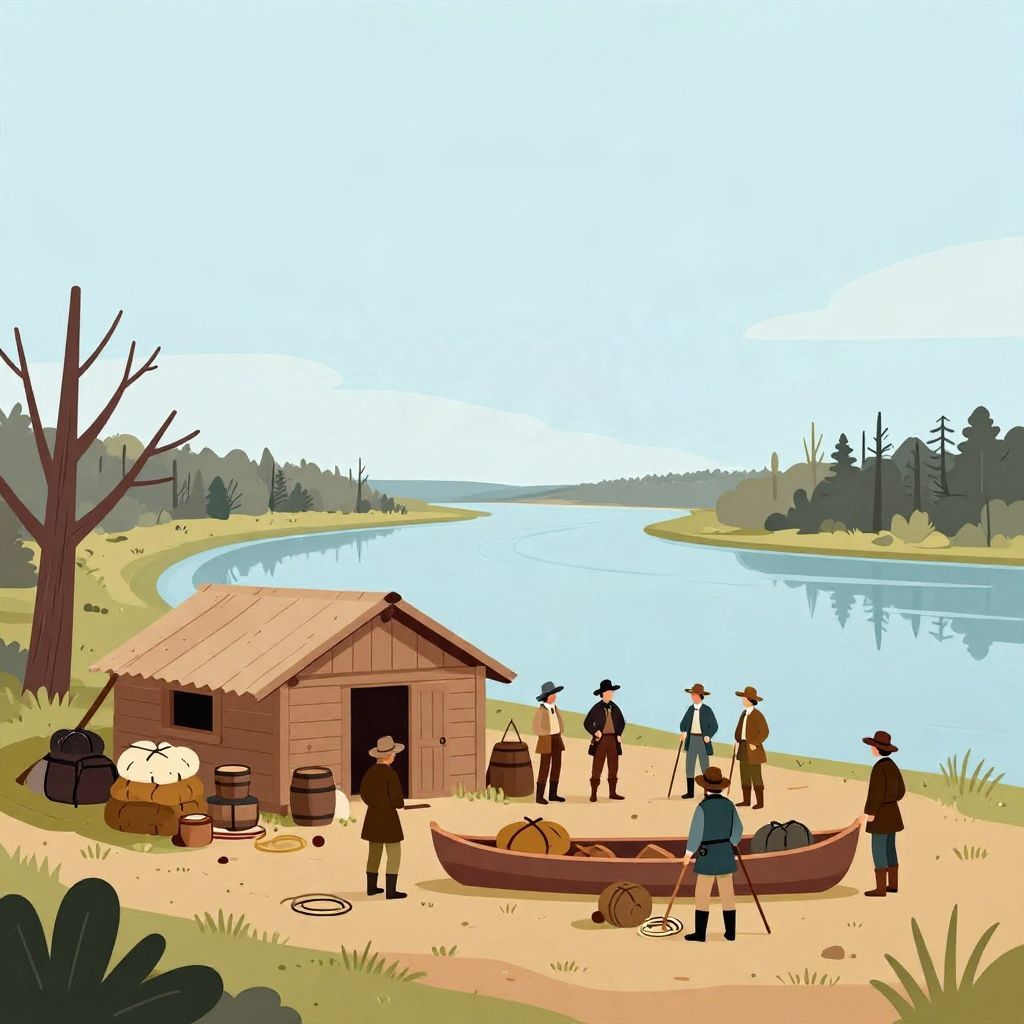
The most accurate answer is Camp Dubois, a winter encampment near what is now Hartford, Illinois, just across the Mississippi from St. Louis. This is where the expedition trained, organized supplies, and formed into a military-style unit before heading west. The location mattered because it gave the men time to prepare for river travel, discipline, and the unknown terrain ahead.
Why not just say St. Louis?
St. Louis is often used as shorthand because it was the nearest major settlement and the expedition’s launching point into the West. However, the men did not simply depart from the town itself. They spent months at Camp Dubois, then crossed to the Missouri side and began their official ascent of the river in May 1804. So “St. Louis” is correct in a broad sense, but Camp Dubois is more precise.
Why the expedition began there
The location was chosen for practical and political reasons. In 1803, the United States had just acquired Louisiana from France, dramatically expanding the nation’s territory. Jefferson wanted to learn more about the land, rivers, plants, animals, and Indigenous nations of the region, and he hoped to strengthen American claims to the interior. St. Louis sat at a strategic gateway to the Missouri River, making it the natural staging point for the expedition.
The role of the Louisiana Purchase
The expedition would not have taken the same form without the Louisiana Purchase. Before the transfer, the region belonged to France in name, though Spain had controlled it for years before that. Once the United States acquired the territory, Jefferson moved quickly to send an exploratory party into the new lands. Lewis and Clark were tasked with mapping routes, gathering scientific information, and establishing contact with Native nations.
How the expedition got started in 1803 and 1804
The expedition did not begin in a single moment. It developed over several months, moving from planning in the East to assembly on the Mississippi frontier. Understanding that sequence helps explain why the question “Where did Lewis and Clark start?” has more than one reasonable answer.
- Early 1803: Jefferson begins planning an expedition to explore the trans-Mississippi West.
- Spring 1803: Meriwether Lewis is chosen to lead the mission.
- Late 1803: Lewis travels west and joins William Clark near the Mississippi frontier.
- Winter 1803–1804: The men train and prepare at Camp Dubois.
- May 14, 1804: The expedition officially begins its westward movement up the Missouri River.
Lewis and Clark as co-commanders
Although Meriwether Lewis was the expedition’s principal organizer and William Clark was not formally made a co-captain by the federal government, the two men functioned as joint leaders. Their partnership was important from the start. Lewis handled much of the planning and scientific instruction, while Clark brought experience in frontier travel, mapmaking, and command. The expedition’s success depended on both men working together.
What happened at Camp Dubois?
Camp Dubois was more than a campsite. It was a place of preparation, discipline, and uncertainty. The Corps of Discovery recruited soldiers, gathered supplies, built boats, and practiced the routines they would need on the river. They also had to deal with the ordinary problems of frontier life: weather, illness, supply shortages, and the challenge of keeping a mixed group organized and motivated.
Training for the journey
The men learned to handle boats, maintain equipment, and live under military discipline. This mattered because the expedition was not a casual trip; it was a government mission crossing a vast and little-known region. The winter camp allowed the leaders to test the group before they faced the Missouri River’s strong current, shifting sandbars, and long distances between settlements.
The official departure date: May 14, 1804
If the question is asking when Lewis and Clark “started” in the sense of leaving on the expedition, the key date is May 14, 1804. On that day, the Corps of Discovery began its journey up the Missouri River. This is the date most commonly used in histories of the expedition because it marks the beginning of the westward trek that made Lewis and Clark famous.
Why this date matters
May 14 is important because it distinguishes preparation from action. The months before were essential, but the expedition’s actual movement into the interior began then. From that point on, the party traveled farther from American settlement, encountering new landscapes and many Indigenous communities whose knowledge shaped the expedition’s progress.
What route did they take from the start?
From the St. Louis area, Lewis and Clark traveled up the Missouri River. That river was the main highway into the interior of North America. Their route took them through what are now Missouri, Kansas, Nebraska, South Dakota, North Dakota, Montana, Idaho, and Oregon before they reached the Pacific Coast and returned east.
The Missouri River as a frontier road
The Missouri was central to the expedition because it offered a navigable path into the continent, at least for part of the way. The river was not easy to travel. Its currents, bends, and seasonal changes made progress difficult. But it was still the best-known route for moving inland from the Mississippi Valley, which is why the expedition began there rather than farther east.
What was the historical background?
The Lewis and Clark expedition belonged to a larger era of U.S. expansion, scientific curiosity, and competition over the North American interior. Jefferson hoped the journey would help the young republic understand its new lands and strengthen its position against European rivals. At the same time, the expedition entered territories already inhabited and governed by many Native nations, whose presence shaped every stage of the journey.
Not just exploration, but diplomacy
Lewis and Clark were not simply explorers in an empty wilderness. They were moving through lands with established Indigenous political systems, trade networks, and territorial claims. Their instructions included diplomacy: they were to meet Native leaders, present gifts, and seek peaceful relations. In practice, the expedition depended heavily on Native guidance, food, geography, and diplomacy to survive.
Common confusion about the starting point
There are a few reasons people give different answers to the question of where Lewis and Clark started. Some refer to the expedition’s planning location, some to its winter camp, and some to the exact point where the boats first moved upriver. All three are connected, but they are not identical.
- Washington, D.C. or Monticello: These were planning centers, not the departure point.
- St. Louis: Common shorthand for the expedition’s launch area.
- Camp Dubois: The best answer for the actual staging ground.
- May 14, 1804: The date the expedition formally got underway.
Why historians use precise language
Historical questions often sound simple but involve layers of meaning. In this case, “start” can mean the administrative beginning, the physical gathering place, or the first day of travel. A careful answer should include all three, while making clear that Camp Dubois near St. Louis is the most precise location.
Why the starting point still matters today
The place where Lewis and Clark started is more than a map detail. It reveals how the expedition was organized, why the Mississippi-Missouri corridor mattered, and how the United States began pushing into the transcontinental West. The start of the journey also reminds us that exploration was not just about movement; it was about state power, diplomacy, science, and the lives of Indigenous peoples already living there.
So, if you are looking for the simplest answer: Lewis and Clark started near St. Louis, at Camp Dubois, and officially began their westward expedition on May 14, 1804. For more background on the era, see what happened in 1803 and what the Northwest Ordinance was.